Microchipping Dogs Saves Lives
Clients often ask, “Would you do it if it was your dog?” In answer to microchipping, I would, and I did. Microchips are slightly bigger than a grain of rice. They go under the skin between a dog’s shoulder blades. They send a radio signal that can be scanned for identification purposes. Meet Lyta, Missy and Merlin. They are my lovely Shepherds and I microchipped them. If you would like your pets microchipped, call Dr Truli’s toll-free line (877) 378-7854 to schedule a house call today.
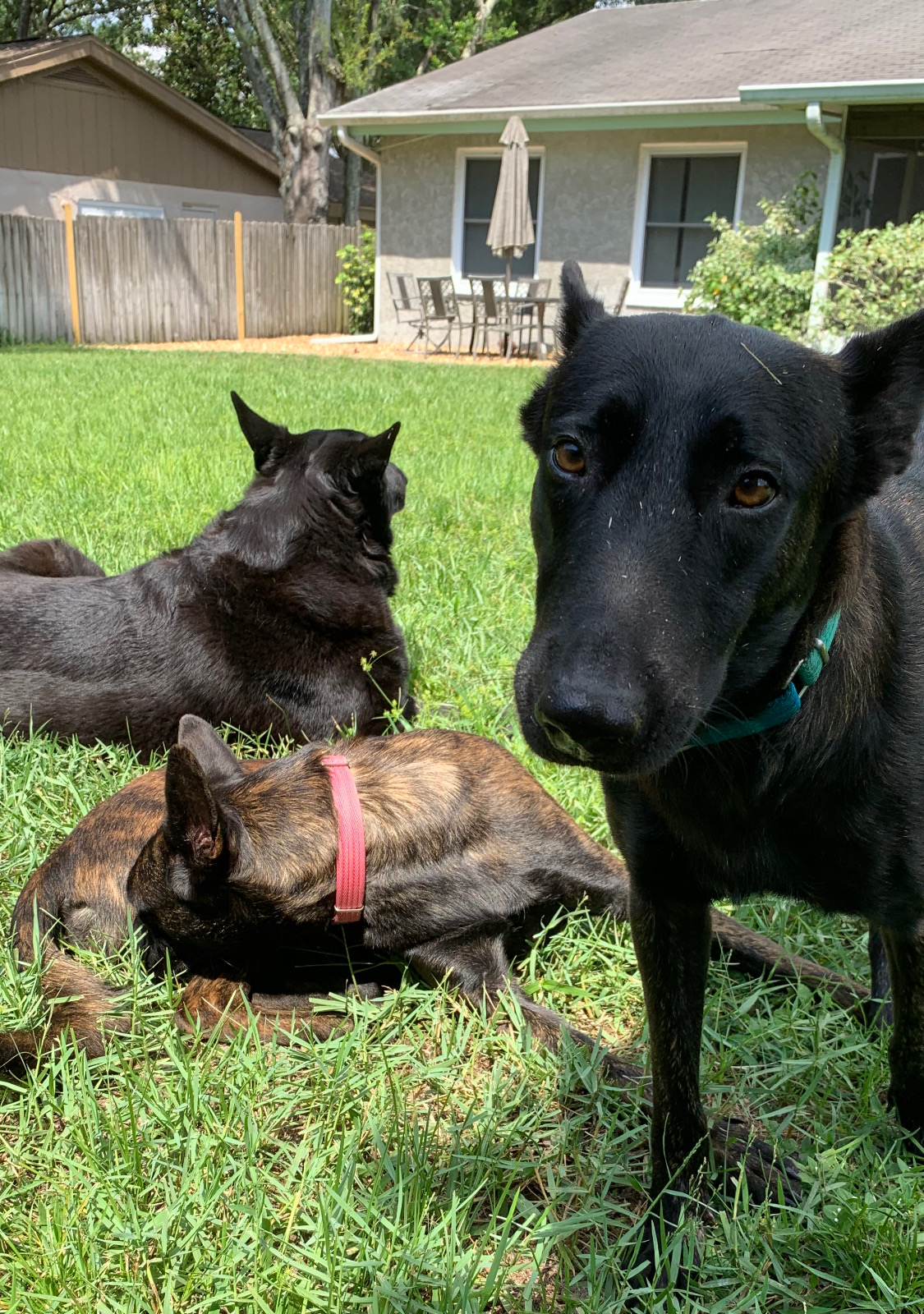
My 3 Shepherds have microchips
“I provide microchipping services in the comfort of your home for cats, dogs and ferrets,” says Dr. Truli. “Professional microchipping takes 1 second. The chip should last their lifetime.”
- Lifetime Registration included (no additional charges ever)
- International travel and US travel compliant
- Lost pet reunion with your family
- Quick, convenient and comfortable in your home
One benefit of having Dr. Truli microchip your pet is the lifetime registration. For one up-front payment, you get the chip and your pet is registered for life in the recovery database. This means you can add new addresses and contact information for the life of your pet without ever paying anything additional.
A second benefit is the microchips are US and International standard chips. This means you can use the microchip for ID for Rabies titers, EU Pet Passports, and international travel documents.
The biggest benefit is any veterinary hospital, animal control officer, or animal shelter should be able to scan for the microchip number, call the database, and access your contact information quickly. Pets that become run away, get lost, or get separated from their family in an accident or a storm can be quickly reunited with their family.
Call Dr Truli toll-free today and schedule a microchipping appointment in your home. (877) 378-7854
How do I avoid Anesthesia for my Older Dog?
Anesthesia can age an already older pet. There may be groggy hours or days of recovery, digestive upset, stiffness or achyness from positioning during the procedure. You may be wondering if anesthesia is the only way to go? And if it is, what can you do to help your dog bounce back better than before the anesthesia? A holistic house call veterinarian with over 20 years experience, Dr Truli offers tips and alternatives you may not have already thought of.
-
Get a second opinion
- After 20 years of surgeries, Dr Truli’s Tampa Bay area practice is now 100% house calls with no surgery. “If I recommend surgery, I make zero money from that recommendation. You know I truly feel the surgery is in your pet’s best interest,” says Doc Truli.
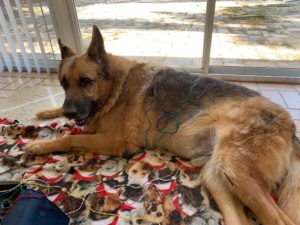
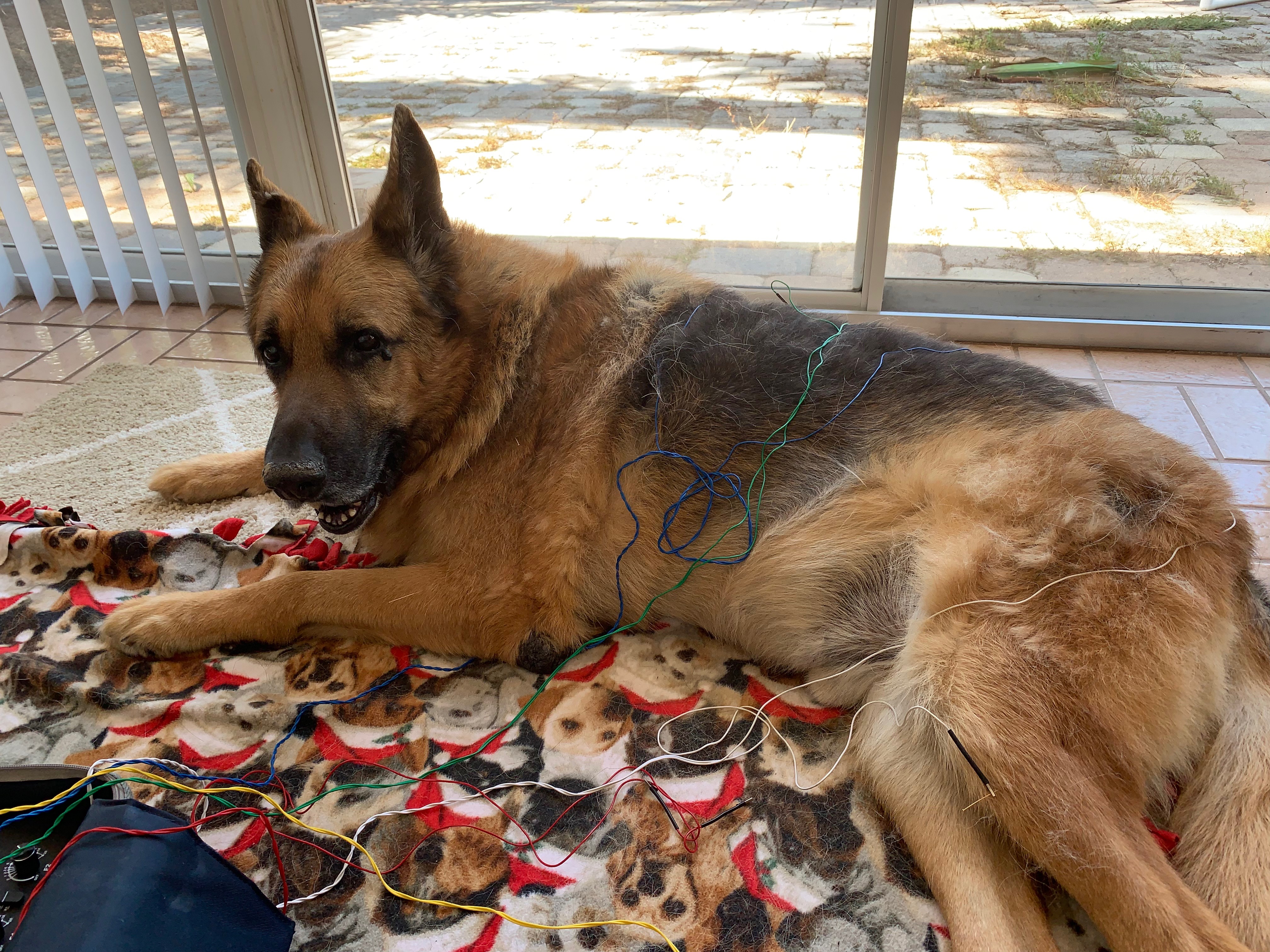
Partly paralyzed German Shepherd gets electro-acupuncture to help his back. Surgery is very risky with 6 ruptured back discs in a row! (see the wires on his side?)
- After 20 years of surgeries, Dr Truli’s Tampa Bay area practice is now 100% house calls with no surgery. “If I recommend surgery, I make zero money from that recommendation. You know I truly feel the surgery is in your pet’s best interest,” says Doc Truli.
-
Get a proper diagnosis
- diagnosis: vomiting versus regurgitation “Vomiting involves active abdominal retching. If it ‘just comes up’ especially after your pet has just been sleeping, it is likely regurgitation. Why does it matter? If it is vomit, we look in the abdomen for the problem. If it is regurgitation, we look in the chest,” says Doc Truli. You might be getting x-rays of the wrong part of the body!
- diagnosis: diarrhea versus constipation “Diarrhea and constipation can look identical. Your dog is doing the squat-walk around the yard and nothing comes out. Most people assume it is constipation. Usually it is diarrhea. Opposite treatment,” says Doc Truli.
- diagnosis: coughing versus choking “Coughing can look like choking. Choking is a life-threatening emergency. If you think your dog is choking, do not hesitate to go to the pet ER,” Doc Truli.
- diagnosis: bacterial skin infection versus yeast infection versus skin cancer “Bacteria, yeast, ringworm, mites and skin cancer can look identical. You need proper non-invasive testing,” says Doc Truli.
-
Ask explicitly about alternatives to surgery
- alternative: new medical treatments “Will acupuncture work just as well as or better than surgery?” asks Doc Truli. What else might work?
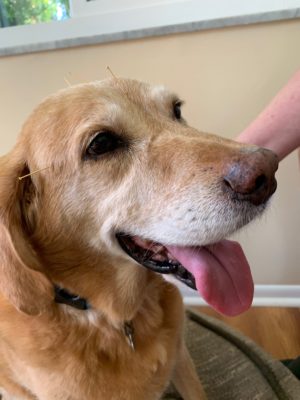
Beau has 2 brain tumors identified on MRI. They are inoperable. He enjoys his acupuncture and it helps him sleep soundly through the night. The specialist gave him 2 weeks to live. We just celebrated week 5!
- alternative: rest and painkillers “Does the surgery improve the outcome, or is it the same? Many times knee surgery can be avoided with rest, painkillers and physical techniques like professional massage and exercises for healing,” sys Doc Truli.
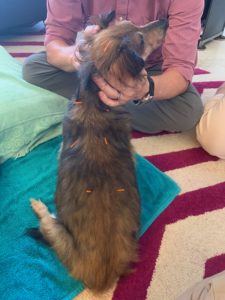
Acupuncture has been proven at least as effective as back surgery in many studies.
- alternative: how many dogs get better on their own? If you do nothing, will your dog get better? The classic example is ear hematoma surgery. A dog will likely get better on its own without surgery, but it can be painful and take longer than if you have a surgery performed.
- alternative: new medical treatments “Will acupuncture work just as well as or better than surgery?” asks Doc Truli. What else might work?
-
Can the procedure be done with local numbing?
- local anesthesia reduces need for deep anesthesia
- many skin tags and small lumps and skin biopsies can be performed with local numbing. A calm, complaint dog that does not mind laying on a table under surgical lights is the ideal patient for non-anesthesia procedures.
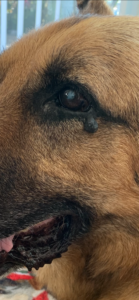
This eyelid lump looks easy to remove. But part of good surgical planning is anticipating and planning for every possible problem. Like “Shepherd no like! Syndrome” rendering surgery impossible mid-way through the procedure.
- many skin tags and small lumps and skin biopsies can be performed with local numbing. A calm, complaint dog that does not mind laying on a table under surgical lights is the ideal patient for non-anesthesia procedures.
- your dog needs help to decrease anxiety and pain with local anesthesia “Local anesthesia numbs the sensation from the area. But most dogs do not understand the hospital environment and feel anxious. Anxiety increases perception of pain,” says Doc Truli
- local anesthesia reduces need for deep anesthesia
-
Can the procedure be done with light sedation?
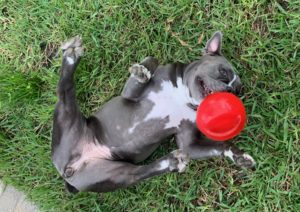
Can surgery be done with light sedation? You tell me!!
- light sedation: lump removal small lumps in a calm dog, especially on an easy to heal area like the trunk of the body or the top of the head are candidates for non-anesthesia surgery
- light sedation: diagnostic testing
- ultrasound usually no sedation is needed. Some dogs fidget or pant and must have a light sedative so the ultrasonographer can see the computer images.
- allergy skin testing is performed with light sedation. It may be more difficult to explain to your itchy dog why they are being shaved in a dermtologist’s office than explaining skin testing to your child.
- diagnostic biopsy, especially bone marrow biopsies can be quite painful and scary. Sedation is considered necessary for bone marrow biopsies.
-
Does my dog need anesthesia?
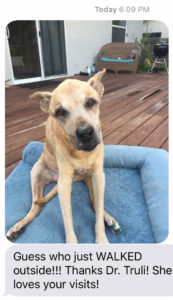
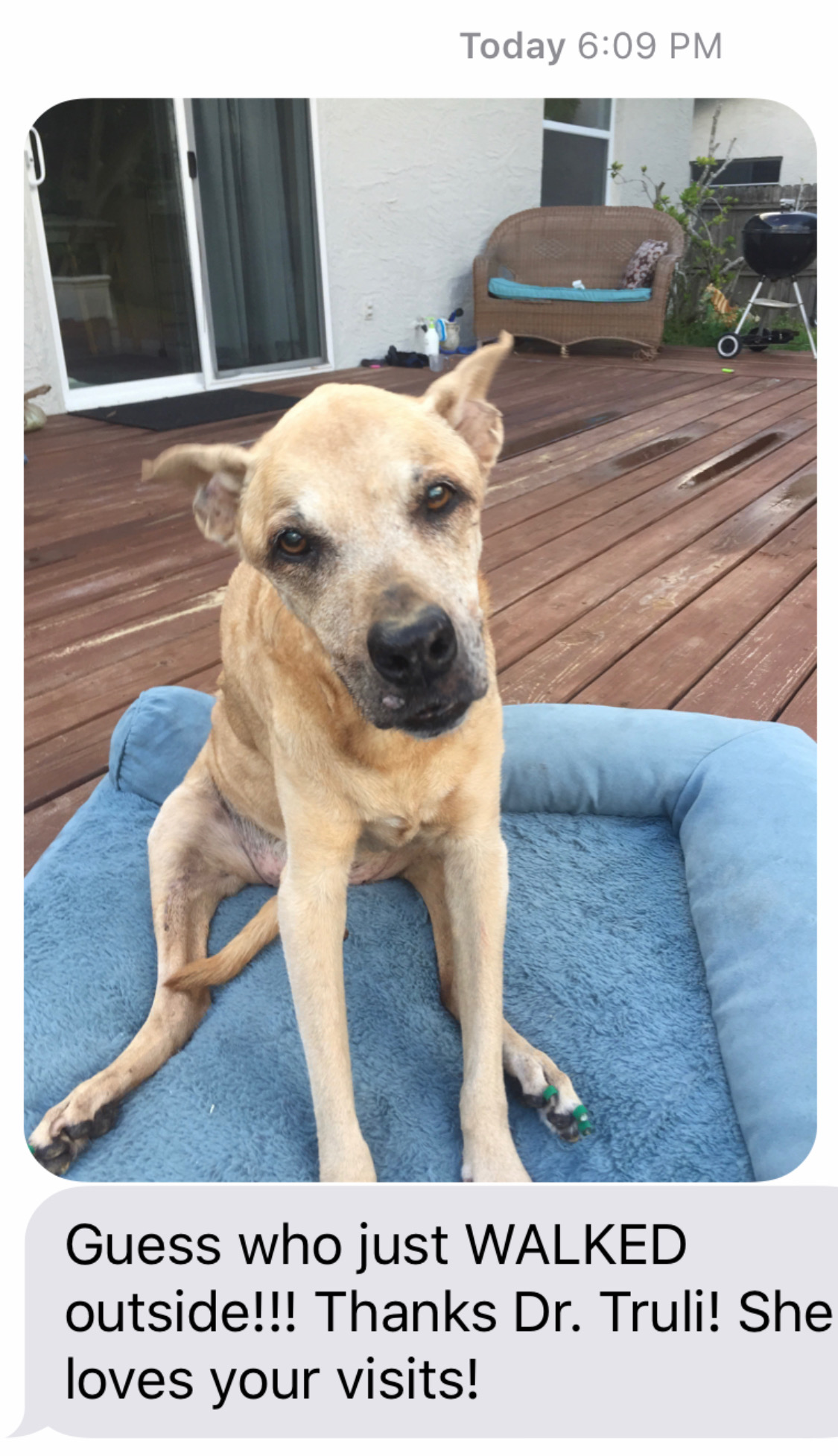
This girl would likely not survive surgery. Happy Patient after massage, acupuncture and injections to help severe arthritis & weakness.
- anesthesia: would the procedure be less stressful for my dog?
- tumor removal in a nervous dog. Will your dog remember the procedure and never accept a veterinarian’s help again unless zonked by sedation? Perhaps it is better to let your dog sleep through this episode, instead of developing a mental complex.
- anesthesia: would the procedure be faster?
- if your dog needs to be held still. Think about your dog standing and sitting, standing and sitting, panting, spinning, while your veterinarian tries to suture closed an incision on your dog’s side. It is likely to take an hour instead of 10 minutes!
- anesthesia: would the results be better?
- more thorough visualization
- ability to move the body parts and get to the area “I admit, back in the day, sometimes I wish I would have put certain dogs under anesthesia instead of taking 4 nurses and an hour to do a 1 nurse 10 minute procedure with only local anesthesia,” says Doc Truli.
- is the procedure impossible without anesthesia?
- dental x-rays. Nope. No. It is not possible to take diagnostic quality dental x-rays in an awake dog. Why? If you ever had dental x-rays, remember when they said, “Now hold your breath for a minute?” That’s why.
- painful surgeries: bone, knee, hip, back. Just grueling. Only battlefield conditions would make me want to do these surgeries without anesthesia.
- anesthesia: would the procedure be less stressful for my dog?
-
What can I expect my dog to go through if they do not have the surgery?
- Always ask yourself and your veterinarian: is the surgery better than the problem in the first place? For example, bilateral mastectomy on a 12 year old dog with pre-cancerous lumps. An intensive, extensive large surgery might make her weaker.
- “I saw a dog years ago with a large red lump on the top of his nose. It was a mast cell tumor. Surgery was needed to cure it. But the family did not want his nose disfigured and frankly, it was an expensive surgery. The dog lived 3 more happy years, then suddenly passed from cancer-related disease. 15 was pretty good!” says Doc Truli.
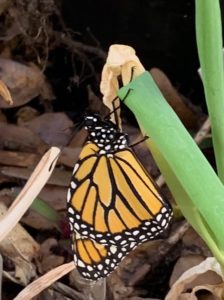
Just because it’s cool: 1 minute old Monarch butterfly just emerged from its cocoon on my spring onion stalk.

Call or email Dr Truli today! Call toll-free (877) 378-7854 or email DrTruli@VetVMD.com
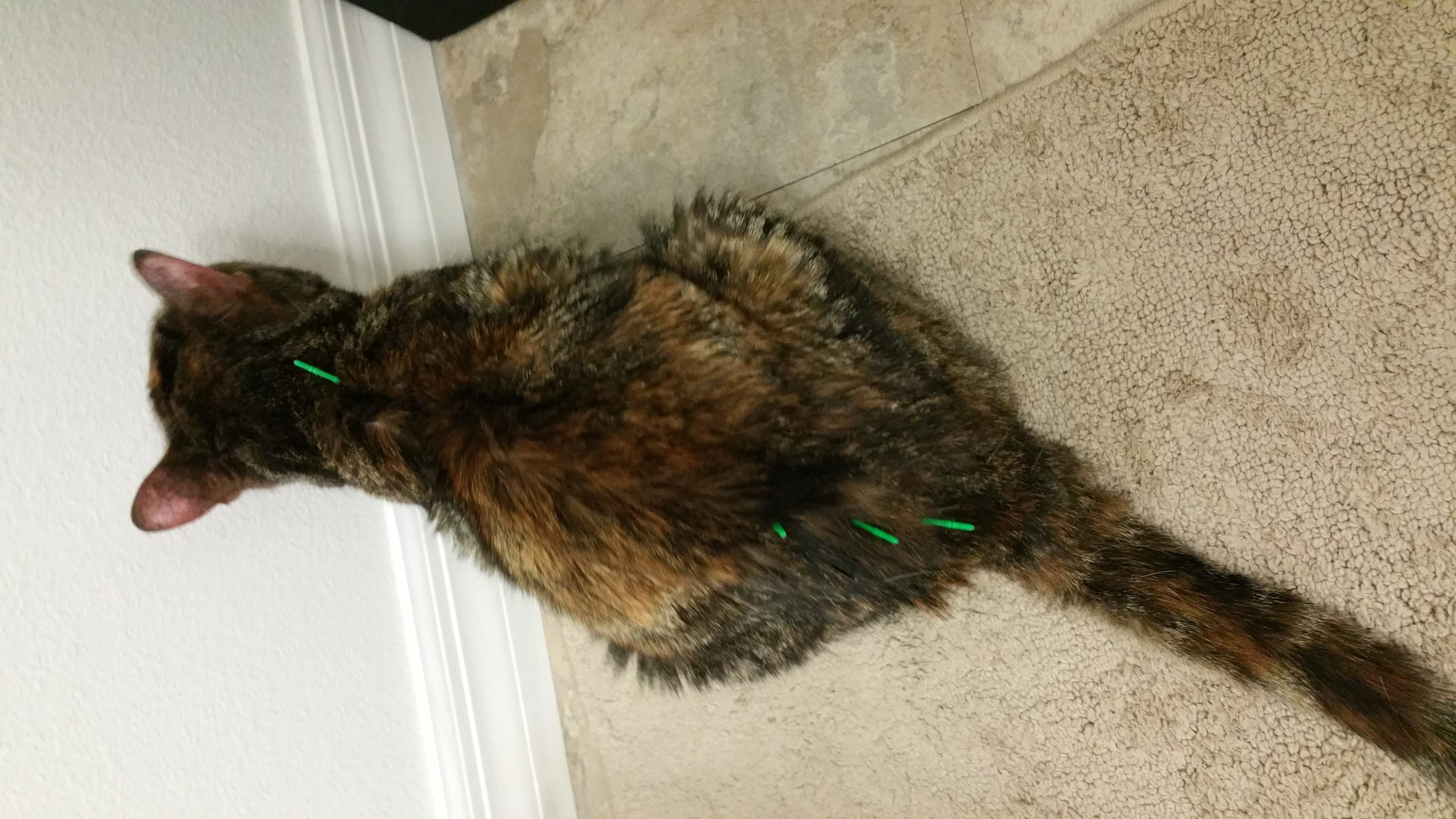
“My Cat Is Getting Old.”
Really? Old age is not a disease.
Here are some common things Doc Truli hears when a cat actually has arthritis, disc disease or hip dysplasia:
- “She takes a long time to line up a jump.”
- “He doesn’t get up on the bed anymore.”
- “She hates when I touch her lower back.”
- “He used to chase the lizards all.the.time.”
- “I thought she was just getting old.”
If you notice your cat’s habits and behavior changing, there’s a good reason. You should schedule a check-up with your trusted family veterinarian or an integrative, holistic-minded veterinarian.
Why Slow Twitch and Fast Twitch Muscles Matter to Your Cat
Your cat will never admit it, but they care about fast twitch muscles especially. Why? Cats have more fast twitch muscles than people and dogs. What on earth are fast twitch muscles? Let me explain.
There are so-called slow twitch and fast-twitch muscles in the body. The slow twitch are what we generally use for prolonged activity, like distance running. Cats have more fast-twitch muscle fibers than humans. That’s why the Cheetah holds the mammal land-speed record and not a human!
Fast-twitch muscles have explosive-type action. For example, a cat has many more fast-twitch muscles in their haunches than humans. They use them to jump from the floor to the top of a grandfather’s clock in one leap, for instance. Most dogs and humans cannot create a burst of muscle activity that launches the body up 10 or 20 times their height! That would be like an average person jumping up to a balcony on a 5 or 6 floor building in one jump. That is what cats do when they jump unto your door frame, or the kitchen cabinets, or the grandfather’s clock, or an unfortunate curtain rod.
Of course, not all cats are that motivated or athletic, but even a ordinary cat can jump up onto the bed. That is 4-5 times their height! The kitchen counter…can your dog get up there acutely, confidently in 1 leap? We expect our cats to make a jump like that unless they are a differently-abled cat. We expect it so much that – be honest- we either get startled and alarmed if they miss, or we stifle a muffled laugh. Because cats usually don’t miss. That’s fast-twitch muscles in action.
Why Fast Twitch Muscles Matter to Your Older Cat
The Type II fast twitch muscles deteriorate quicker than the Type I slow twitch muscles as we age. The fast twitch muscles help us with that burst of muscle activity we need to get up out of a comfy chair – or off the toilet! We start having trouble “getting up,” and start relying on that brushed stainless steel helper-handle in the handicapped stall at a restaurant. But really, we notice we need to push up off the chair arms instead of just using our legs as we age. That is fast twitch muscle loss. And we lose it before the slow twitch muscles.
Now, imagine you are a cat. You are made of fast-twitch muscles compared to your humans! So what goes first? Your ability to “get up.” First the cabinet-tops, then the counter, then the bed, then the sofa, then the stairs, then…you “sleep a lot.” (More than a younger cat.) So likely the very first sign your cat is aging and needs holistic help is inability to jump and “get up” like they used to.
What About the Cat Arthritis?
Arthritis is thought to be a degenerative condition. In other words, it doesn’t happen over night. We miss the signs along the way that our pets are headed for pain. Loss of fast-twitch fibers evidenced by decreased jumping are subtle early signs your cat could use some veterinary help. Treatments like cold laser therapy, EMF, medical massage, physical therapy, nutritional support, acupressure, acupuncture and electro-acupuncture show promise to help cats age gracefully. These treatment modalities are all the practice of veterinary medicine in the State of Florida. Be certain the person you hire to help you is licensed to practice on your cat.
-Dr Truli is available for in-home evaluations for the Tampa Bay, Florida area. Please call (877) 378-7854 for appointment availability.
If you are not in the Tampa, Florida area, you can find a Integrative Medicine veterinarian by:
- ask your veterinarian if they have training in these modalities or if they can refer to a trusted colleague in your area
- go to tcvm.com under resources and “find a practitioner” – this is a worldwide search database
- go to ahvma.org under practitioner search – this is mostly United States, but also some worldwide members in the database
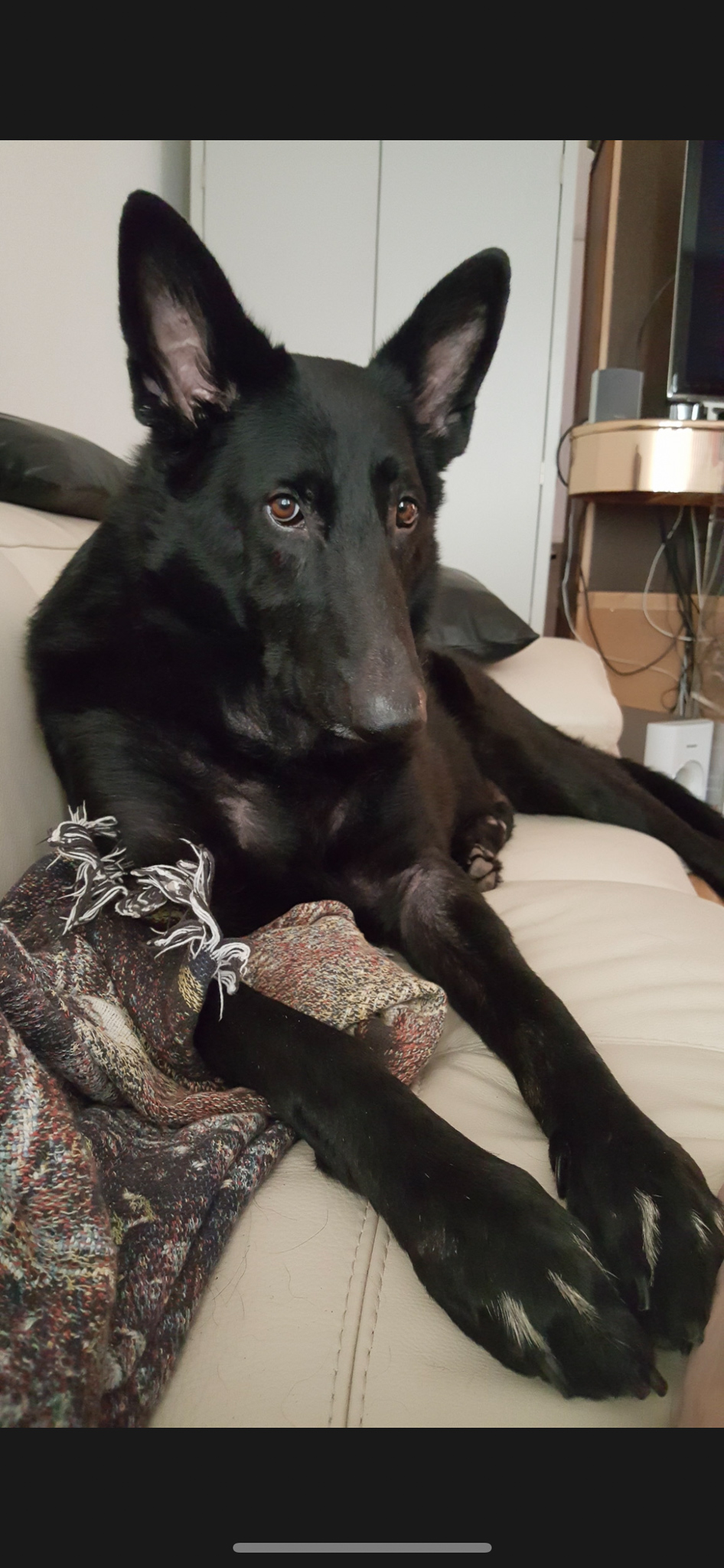
When Should You NOT Vaccinate
If your dog had a documented veterinary-treated vaccine reaction, they should not receive that vaccine again. If your dog’s close relatives or family have documented reactions, you likely should not vaccinate your dog. If the reaction was to a legally required Rabies vaccine, it may still be available as a vaccine for your dog if your dog is pre-treated to help prevent anaphylaxis. Tell your veterinarian about vaccine reactions and bring the documentation to the visit. They will advise you.
What Likely IS a Vaccine Reaction:
- anaphylaxis – this is an emergency, go to the vet!
- hives
- lowered blood pressure
- shock
- face swelling
- seizures
- coma
- paralysis
- pass out
- stumble, stagger, “drunk”
- vomiting and diarrhea (may or may not be, call the vet)
Possibly not an Allergic Vaccine Reaction- ask your vet
- feeling tired
- sleeping more for 12-24 hours
- not eating breakfast
- a little soft stool
- tenderness at the injection site
- lump that goes away
-Dr Truli provides as much time as you need to discuss lifestyle, risks, and your concerns about vaccines. Vaccines are not “business as usual” and you need a veterinarian and veterinary team who understands you are the best pet parent when you question the standard-of-care.
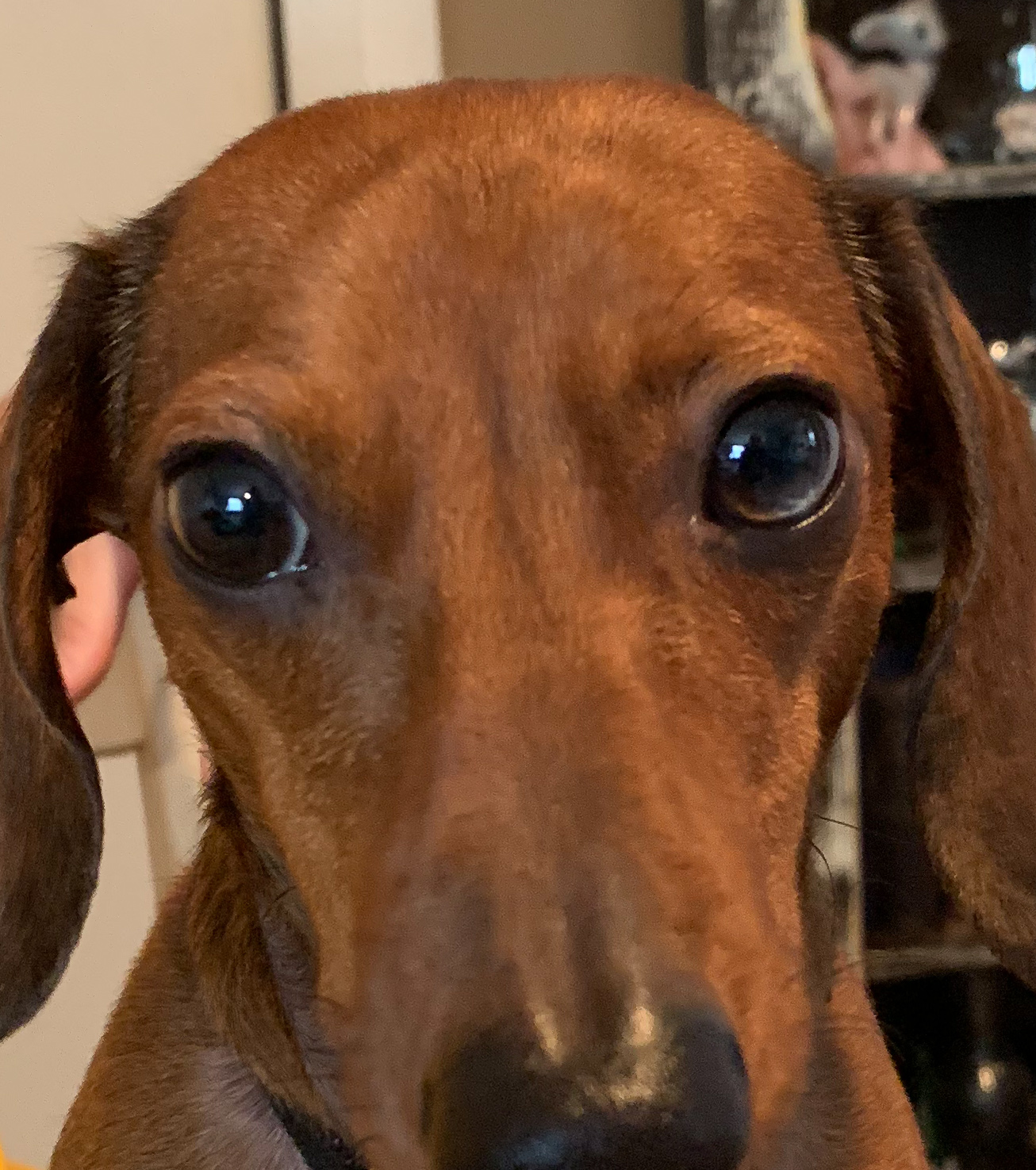
“I don’t want to give my dog any unnecessary vaccines.”
Who does? thinks Doc Truli.
We get the point. You want a veterinarian and veterinary team that is thoughtful and specific about what vaccines they recommend for your puppy or dog and why. Unfortunately, many veterinary teams offer “customized packages.” You may pay less for the package and get more, but you may get vaccines you don’t need. For example, have you heard a friend say, “they told me it would cost more to take the bordetella vaccine out of the package. So I just went ahead and got it anyway.”
It hardly makes sense, does it?
Prescription for Care
Vaccines should only be administered to healthy animals. It says so on the package! Your veterinarian needs to consider your pet’s lifestyle, the prevalence of the disease in your area, the route(s) of transmission, the severity and forms of the illness, whether it is transmissible to humans or not, and the effectiveness of the vaccine.
Your previous experiences with certain diseases, your risk aversion (how bad will you feel if your dog caught a rare, painful, but preventable disease?), and your preferences for medicalization for your family will guide your decisions.
Rabies Vaccine
For instance, most people do not have personal experience with Rabies. (Most veterinarians do.) But the disease is deadly to humans, expensive and painful to treat in humans (if you know you have been exposed and get the treatment right away), deadly to our dogs and cats, horses, and most other domestic animal species. Rabies is relatively cheap to prevent. Veterinarians have a public health duty to society to help stop rabies from spreading.
There are possible side effects from the vaccine. They are statistically rare. They can be deadly. If you decline a rabies vaccine in case there is a side effect, you really cannot understand what you are risking for your pet and your family unless you have been through it before. If you have had rabies in your family, I bet you will want that vaccine. Like, yesterday!
The seriousness of the public health risk, the deadliness of rabies, and the ease of spread in wildlife populations are 3 good reasons it is the law to vaccinate domestic animals in the US.
Distemper Vaccine
Distemper is an often fatal dog virus. It spreads through secretions, especially snotty noses in crowded environments like some animal shelters. It causes a really high fever and pneumonia symptoms and if the dog survives, they have neurologic signs like seizures when they are older. The vaccine works well and the disease is bad. It is considered a dog “core” vaccine in the US.
Here’s a little-known reason why this vaccine is important: distemper mutates and crosses into other species than dogs. For instance, dog distemper virus kills sea lions really well. And we do not want that! You are helping other innocent animals when you provide protection for your dogs.
Parvo Virus Vaccine
Parvo virus is a very contagious dog virus that causes vomiting and bloody diarrhea. You carry the virus on your shoes and clothing and do not know you are bringing it home with you. Many infected puppies die from it. Adult dogs can get very sick. It is difficult to save them with or without intensive care in the hospital. The vaccine is effective and also considered a core vaccine for dogs.
Other Vaccines
There are several other common dog vaccines available in 2018. Parainfluenza, Hepatitis, Bordetella, Canine Influenza Types 1+2, Leptospirosis, Coronovirus and Lyme disease to name a few. They are considered non-core vaccines and should warrant an especially careful discussion with your veterinarian.
A Word About Thimerosal
Thimerosal is ethyl mercury. It is found as a preservative in some dog vaccines. If a vaccine says “preservative-free” on the label, it may contain minute amounts of thimerosal. If it says “thimerosal-free” it contains no thimerosal. Of course, we would like to decrease lifetime exposure to mercury in any ways we can control. Using thimerosal-free vaccines is one was to accomplish this.
Market availability and manufacturing change, so a list will not suffice to be posted here. Your veterinarian or veterinary technician can provide the information for you for the vaccines they recommend. Sometimes compromises must be made if a valuable useful vaccine is unavailable thimerosal-free at the time.
You can also ask the brand name and look up the “package label insert” for the product. They are usually posted online and you can read it for yourself.
-Doc Truli provides holistic house calls to the greater Tampa Bay area. Many, many clients call Doc Truli for an objective, thoughtful consultation about vaccines without recrimination or hard feelings.
“The best pet parents question the standard of care and want better for their loved ones,” Doc Truli.
Email DrTruli@VetVMD.com any time of day or night to find out appointment availability for your area. (Doc Truli understands these pet concerns keep us up at night. She will get back to you in the morning!)
“Is there a blood test for cancer in dogs?”
“I hear this question all the time. I used to have to say no.” says Doc Truli. “Now there is a clinically available test.”
Veterinary Diagnostic Laboratories in California have adapted blood tests from human medicine for dogs. They have spent 11 years working on the technique and validation of the tests. For 4 years, they have offered a test for veterinarians to prescribe in their practices in the US.
Cancer Blood Test for Dogs
The test is called the InCase Wellness to screen for markers of possible cancer. The procedure is a simple blood draw for your pet. The veterinarian must then process and prepare the sample specifically for the testing. The InCase Wellness tests for TK1 cancer marker, CRP (C-reactive protein) inflammation marker, and your veterinarian can request a Vitamin D3. Vitamin D3 is sub-optimal or low in 75% of the dogs tested. It is easy to fix and retest to make sure you have not given too much. (Vitamin D3 causes gastrointestinal distress, kidney failure and death when it is too high.)
Cancer Remission
The TK1 and CRP tests can be used to identify when a dog is in remission. It is testing especially useful in lymphoma cases and many other types of cancer. The tests can also be used to detect if a dog is coming out of remission before the dog feels sick again.
You can read more about these stunning and helpful cancer tests for dogs at vdi labs.
-Dr Truli provides VDI testing such as the InCase Wellness, Cancer monitoring tests Vitamin D3 testing in a comforting house call environment.
Call, email or text for appointment availability. Provide your name, phone number, street address, and a brief description of your pet’s diagnosis or current problem.
Leave a message and the doctor will call you back in 24 hours or less: 877-378-7854.
Text 813-714-7863 and Dr Truli will text.
Or email DrTruli@VetVMD.com and Dr Truli will email back.
Pet Oncology House Call Care Part 4: “What do I feed my dog with cancer?”
If you are reading this after Christmas 2018, I bet you skipped to this article to read first. Right?
This is the big question. What do we feed dogs and pets with cancer? Most people who have done a little bit of internet research are interested in a low or no-carbohydrate diet for their cancer patients.
The basic answer is: science does not have a consensus about what we should feed dogs. Especially dogs with cancer.
What is the Deal With Carbohydrate and Cancer?
The deal is, there is some research to show that cancer cells can use carbohydrate energy faster and better than the body can. Especially high glycemic index carbs like sugar, fruit juice, white bread and processed grains and sugars. These are items that should be minimized in the diet anyway. It is no surprise that it may be even more helpful to minimize them in a compromised cancer patient.
The idea is to starve the cancer by feeding mostly protein and fats. There are some issues with this. One issue is the fats may be difficult for your dog to digest. In Traditional Chinese Veterinary Medicine (TCVM) theory, most, if not all, cancer patients have compromised digestion. You must be cautious of replacing carbohydrate calories with fat calories. You do not want to trigger pancreatitis or diarrhea.
One issue with protein is frankly, it is the most expensive source of calories. This may not matter for a 10 pound (4.8 kg) Chihuahua. It can be devastating for a family with a 100 pound (45 kg) Rottweiler who eats 3 pounds (1.7 kg) of meat a day. Carbohydrates are filling, provide fiber for probiotics to flourish in the gut, and are usually affordable.
Improve the Diet
“I suggest you focus on improving your dog’s diet, not perfecting it,” says Doc Truli.
Nutrient calculations vary from crop to crop, year to year anyway. Dogs vary from week to week in their absorption and metabolic rates. You should have expert veterinary advice to chose a diet or make a balanced home-cooked recipe for your dog.
How do You Find a Veterinary Nutritionist?
Nutrition Specialists
There are less than 100 veterinary nutritionist in the United States. Most of them work in agriculture, the food industry or government. Some of them work in University Veterinary training programs and have appointments with clients or consults with veterinarians in their home state. Some veterinarians have personalized training in nutrition They are not specialists, but they offer more guidance than just selecting an appropriate prescription diet.
The American College of Veterinary Nutrition bestows Diplomat status on qualified veterinarians. This specialty requires years of Internship and Residency training, peer-reviewed publication and rigorous examination. It is a specialty just as Surgery or Internal Medicine is a specialty.
Florida
In Tampa Bay, Florida, you an schedule a house call consultation with Dr Truli. Nutrition is the practice of veterinary medicine, so remote consults with a veterinarian you and your dog have not met are not appropriate. If you live in Florida and cannot see Dr Truli, the University of Florida Vet School Integrative Medicine department has 2 nutritionists who will consult with your veterinarian to design a custom feeding plan for your dog.
Worldwide
You can also search worldwide at tcvm.com under “Resources” and “Find a practitioner” and the key shows you which veterinarians are certified in TCVM Food Therapy.
–Dr Truli provides holistic house call vet services to Tampa Bay area, Florida. Specific advice about whether or not your dog needs carbohydrate restriction is provided after a thorough evaluation.
Read more tomorrow about a simple blood test that can help diagnose cancer in dogs or help to tell if your dog is in remission or coming out of remission.
Call, email or text for appointment availability. Provide your name, phone number, street address, and a brief description of your pet’s diagnosis or current problem.
Leave a message and the doctor will call you back in 24 hours or less: 877-378-7854.
Text 813-714-7863 and Dr Truli will text.
Or email DrTruli@VetVMD.com and Dr Truli will email back.
“I love the house calls. But what can I do between visits to make my dog better?”
Yesterday we learned dogs can have nice, relaxing acupuncture in their own home to treat cancer symptoms like pain, anxiety, not eating and weight loss. Have you heard of medical massage for dogs?
Medical Massage for Dogs – Tui-na an mo
What? Traditional Chinese Veterinary Medicine has adapted an ancient art and practice of medical massage called Tui-na an mo (pronounced twee-nah-on-mow). It means – generally – push, pull, grasp, pinch. For thousands of years, people had known and figured out how to feel better through the power of touch.
Categories of Canine Medical Massage
Different categories of touch affect the body in known and specific ways. There is pushing, pressing, rubbing, patting, pinching, pulling, swinging, stretching, carrying and wrenching (like what the chiropractor does!) Dog cancer patients respond well to the massage therapy. However, one dog may like pressing-type techniques and another dog loves having their backside above their tail rubbed.
While there are no books for Tui-na for pet owners, there is a nice book called Acu-Dog: A Guide to Canine Acupressure by Snow and Zidonis. There’s an Acu-Cat and Acu-Horse, too!
How is Medical Massage for Dogs Different than Petting my Dog?
Massage Benefits the Massager and the Massagee
In some ways they are similar. When you pet your dog, both your dog and you release bonding hormones, happy, relaxation hormones and neurochemicals, slow and calm your heart rates and generally have a sense of well-being. This effect goes both ways. You help your dog and they help you.
Massage Technique and Dose
***A big note of caution: do not massage the cancer itself or open sores or infected areas.
The differences between medical massage and petting are the technique and the dose. The dose if the pressure and the time amount of the application of the massage technique.
You can learn fundamental massage techniques that relax your dog, help digestion, and help lower pain and anxiety. You can practice with your dog several times a day.
Dr Truli will test and discover what techniques your dog accepts and likes. She can then teach you 1 or 2 per session that you can practice until you and your dog become comfortable.
-Dr Truli provides vet house call services to the greater Tampa Bay area
Tomorrow we will learn more about Carbohydrates and Cancer
Call, email or text for appointment availability. Provide your name, phone number, street address, and a brief description of your pet’s diagnosis or current problem.
Leave a message and the doctor will call you back in 24 hours or less: 877-378-7854.
Text 813-714-7863 and Dr Truli will text.
Or email DrTruli@VetVMD.com and Dr Truli will email back .
“I don’t even know if I want my dog to have chemo. What else can I do?”
Yesterday, we learned your dog was diagnosed with cancer and you want to know what more you can do for them. You learned you can make a palliative care comprehensive plan, you can treat your dog with real food, and you need specific lifestyle advice from a trained veterinarian.
You know the animal hospital is offering more testing or follow-up testing, supportive care like intravenous fluids and injectable medications, medications to control nausea, vomiting, increase appetite, reduce stomach acids, handle pain. Once they have outlined the diagnosis and the future outlook, the veterinary oncologist offers radiation therapy, surgery or chemotherapy. Or maybe they have nothing positive to offer in your particular dog’s situation. But you just know there is more you can do.
House call vet acupuncture
Acupuncture Benefits for a Dog with Cancer
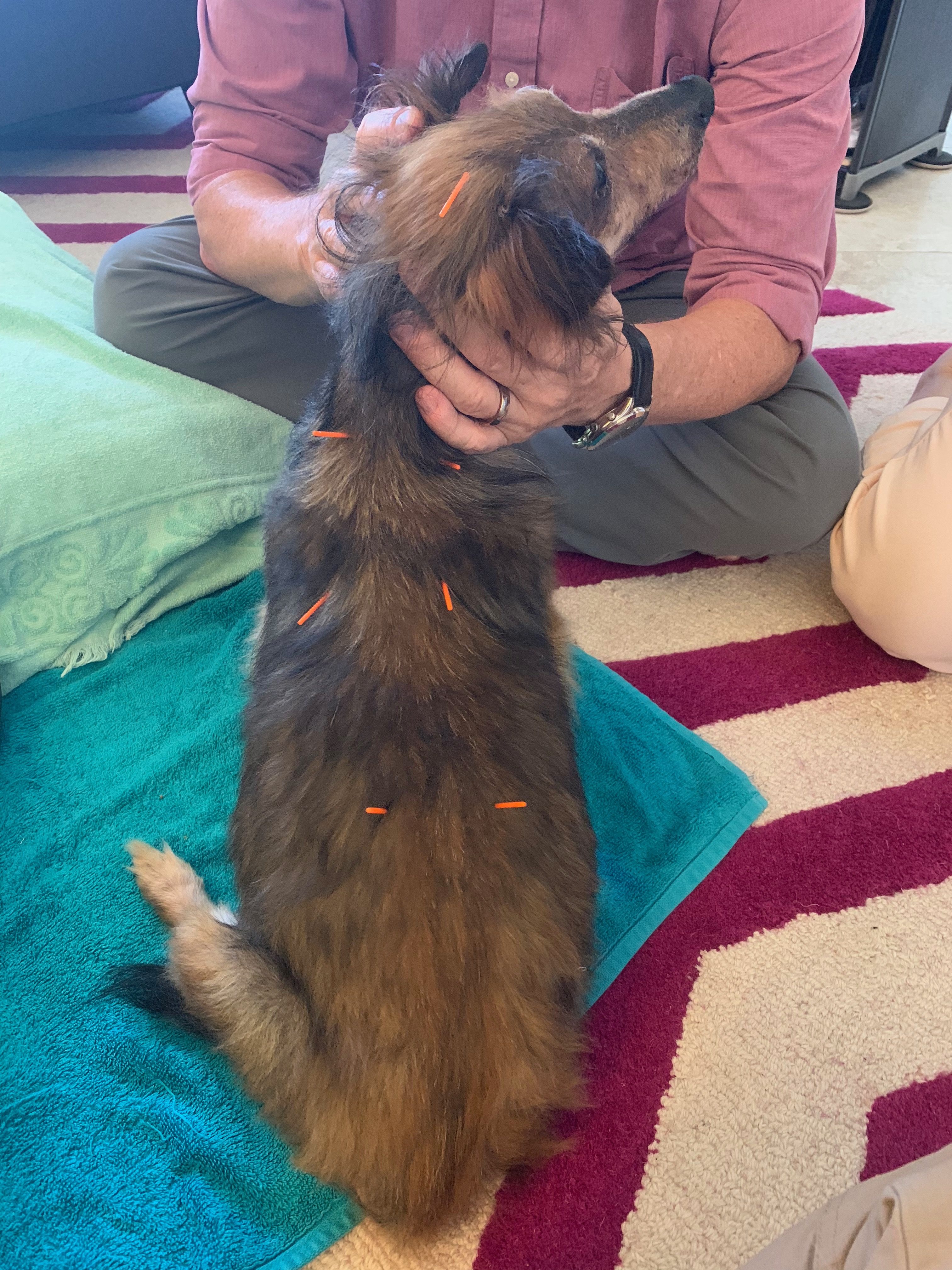
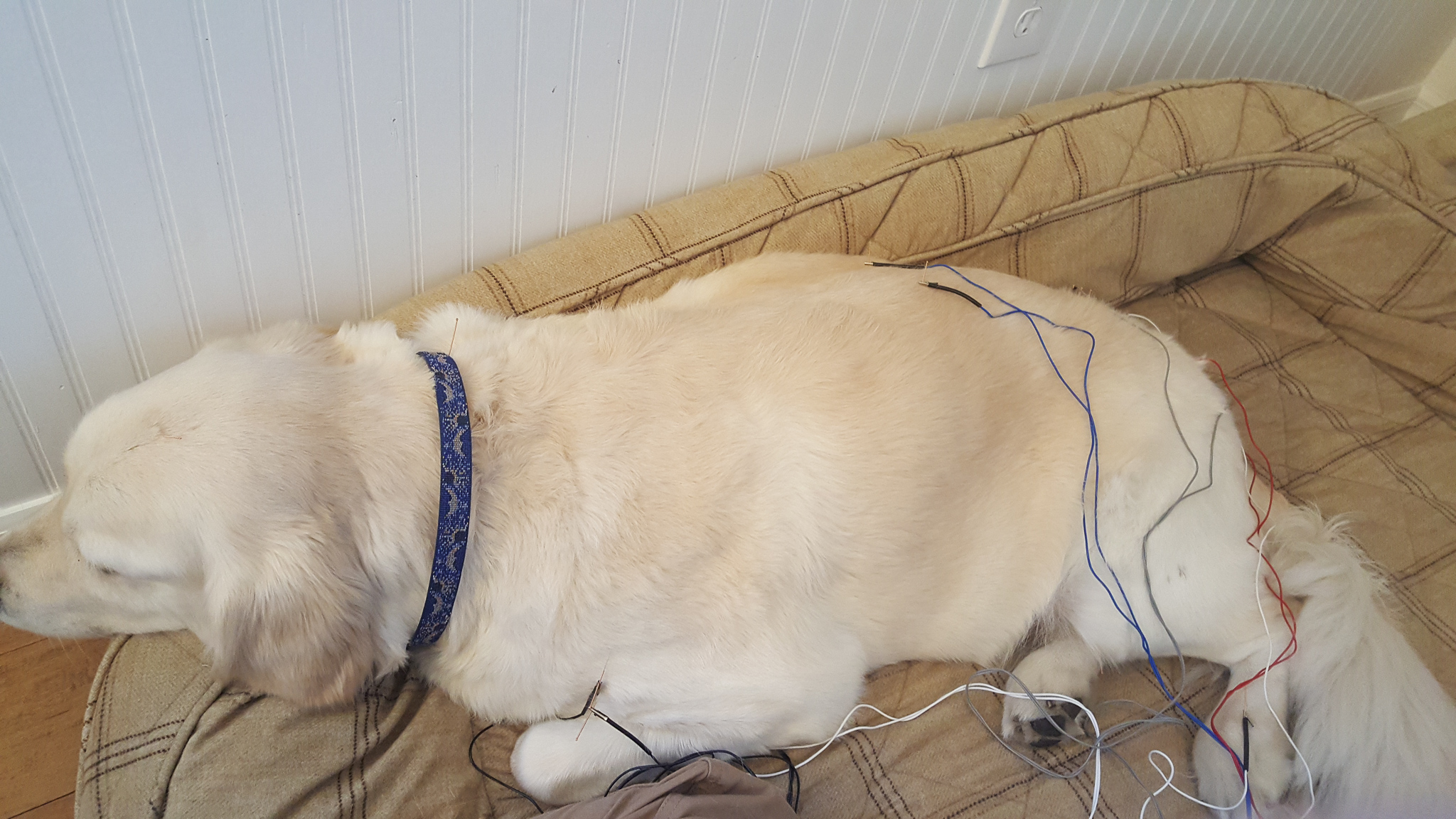
Acupuncture can boost energy, promote appetite, treat vomiting, and most importantly, treat pain, anxiety and insomnia. That sounds useful for a cancer patient! Acupuncture uses FDA-approved sterile single-use medical devices called acupuncture needles inserted by a trained, licensed veterinarian to achieve the benefits you want for your dog.
Acupuncture in the House Call is Fun and Relaxing
House calls are perfect for acupuncture! Your dog can sit on the floor, lie on his favorite spot on the sofa, rest on the lanai in the sun. Your other pets can lie side-by-side for support if they are good like that. You can take a break from your work-at-home job, make a cup of tea and sit with your dog and Dr Truli for the therapy. Your dog makes natural endorphins, gets a happy high, releases natural opioids into his system and generally falls asleep during the acupuncture treatment.
What You Can Expect from Acupuncture
Acupuncture has a cumulative effect on the body. This means the more often your dog experiences the acupuncture treatment, the better his body will respond.
“The brain recruits more areas to help with successive acupuncture treatments.” says Doc Truli.
Cancer patients benefit from 8-16 sessions in the first 4-8 weeks of treatment. Oncology acupuncture treatments are scheduled every 3-4 days for the first month or two. Once the body is stabilizing, the new food is accepted, and the medication and/or supplement protocols are stable we often go to an every 2-4 weeks protocol.
-Dr Truli offers holistic house calls for pets in the greater Tampa Bay area
Read more tomorrow about Massage Therapy to help Canine Cancer Patients
Call, email or text for appointment availability. Provide your name, phone number, street address, and a brief description of your pet’s diagnosis or current problem.
Leave a message and the doctor will call you back in 24 hours or less: 877-378-7854.
Text 813-714-7863 and Dr Truli will text.
Or email DrTruli@VetVMD.com and Dr Truli will email back .
“My dog has been diagnosed with cancer and I want to know what else I can do.”
A cancer diagnosis for your pet is scary. The uncertainty. The stories from friends and family. The expense. Let’s face it, we do not need a reason to deny, doubt, or wish a cancer diagnosis was incorrect or exaggerated. The guilt about not having pet insurance. (Only 3 out of 100 Americans have pet insurance. You can dispose of that guilt immediately.)
Beyond the Specialty Hospital Part 1
If your dog is diagnosed with cancer, a referral to a veterinary oncologist is often useful. These veterinarians are board certified internal medicine specialists with further training in oncology. They know the breeds and the odds. The know the strange and the usual. They also know brand-new research and they often are the lead investigators studying new drugs and treatments. Their opinions are useful and worth every dollar invested.
However, they are not palliative care experts. They are not nutrition experts. Nor are they lifestyle coaches. If your pet has cancer or suspected cancer, you could use all three of these advisors! A well-educated, experienced holistic or integrative medicine can help you with palliative care plans, nutrition and lifestyle and physical medicine enhancements or alternatives to your oncology plan of treatment.
Palliative Care for Pets
Palliative care means care that makes someone feel better. Palliative care is not intended to cure the patient. It is intended to make whatever time remains the best quality possible. The first veterinary textbook in the new hospice and palliative veterinary care specialty was published in February 2017. Hospice and Palliative Care for Companion Animals: Principles and Practice by Amir Shanan, Jessica Pierce and Tamara S. Shearer is a wonderful guide for veterinarians to help their patients.
Nutrition and Food as Medicine for Canine Cancer Patients
“She’s in remission already! I asked the oncologist how long we need to continue chemotherapy. She didn’t know what to say because she’s never seen a dog go into remission so fast,” said Heidi from South Tampa, Florida.
Dogs love food. We can always find ways to feed them healthier. If they are undergoing chemotherapy, we can manage the most common side effects of chemotherapy. We can help the body make formed stool, keep the appetite up and keep the muscles and body strength up throughout the chemotherapy regimen.
Lifestyle Coaching for Canine Cancer Patients
“I know she is weak and tired. Should my dog sleep all day, or should I encourage him to get outside and sniff around the neighborhood?” asked Jon from St Petersburg, Florida.
“This is a common question I get asked all the time with my cancer patients,” says Doc Truli, holistic house call vet for the Tampa Bay area. “Every pet needs their healthcare provider to help their human design guidelines for how much to rest, how much to ‘push it,’ whether to get a young dog to invigorate an older dog, whether to re-arrange parts of the house to keep the cancer patient comfortable and the grand-kids safe from the crabby chemo patient.”
Holistic house call care gives you the comprehensive planning and the guidance and check-ins and check-ups to give you peace of mind that you are doing everything you can to help your dog and the pace and adjustments are just right.
-Dr Truli
Dr. Truli provides holistic vet house call services to the Tampa Bay, Florida area.
Call, email or text for appointment availability. Provide your name, phone number, street address, and a brief description of your pet’s diagnosis or current problem.
Leave a message and the doctor will call you back in 24 hours or less: 877-378-7854.
Text 813-714-7863 and Dr Truli will text.
Or email DrTruli@VetVMD.com and Dr Truli will email back .
Read more about dogs and house call cancer care tomorrow!