How Did That Huge Hole Get in This Cat’s Face?
Including Advice for Catching an Uncatchable Cat
Sometimes you must catch an independent or frightened cat who does not understand why he or she needs to go to the vet.
Sparky Needed to See the Veterinarian
Sparky might not be the handsomest cat in the world, and he hates staying inside all the time. His fur is brittle and dry. His body a little skinny and tough. He wanders the neighborhood and refuses to stay in the house. An unneutered male cat, he runs when anyone tries to pick him up, but otherwise, he purrs, stretches, rubs, and enjoys human companionship.
Sparky risks deadly Feline Leukemia virus (FeLV) from hissing, licking, sex, or fighting with infected cats outside. He also risks Feline Immunodeficiency virus (FIV) from sex and fighting. Since he is one of a group of about 20 cats that come to the back door for plates of food each day, his humans care for him and love him, but cannot offer the preventive care and testing that a pampered house cat might enjoy. Besides, Sparky abhors the car!
So when Sparky showed up with a gigantic hole in the side of his face, his people took a large comforter blanket and quickly scooped him up and put him in a cat carrier even before Sparky knew what was happening!
Tru Tips to Catch a Cat
“Half of my cat appointments each day show up late. At least one a day does not manage to make the appointment at all! Why? Because cats can be very tough to catch. Even when they are sick and need help,” says our holistic veterinarian.
Sometimes you just have to catch a cat for their own good. You might feel like a terrible person for tricking them and upsetting them. Cats often argue and resist help, even when they are very sick. Resolve to help the cat no matter how much he or she complains and resists!
Catch Your Cat for an Appointment by Shutting Extra Rooms Off the Day Before the Appointment
Most cats are not difficult to catch. The cats are not mean and they do not hate their family. The problem with catching the cat lies in the people’s technique and the cat’s lack of experience with being carried. If you carry and life your cat several times a day. Maybe take walks to the food bowl, then catching your cat for a physical is no big deal.
Some cats hate to be lifted or touched, except on their terms. A cat that only comes to you on their own terms is difficult to catch on schedule on the day of a vet appointment!
The night before the appointment, find your cat. Shut your cat into one small room. If that is impossible, then shut all the doors to other rooms. You will cut your cat-finding and cat-digging-out activities considerably! Try to keep the cat out of a room with a large bed under which to hide! (It can be difficult to get them out in the morning!)
If your cat is under the bed, try getting the vacuum out and setting it as if you are going to start vacuuming. Turn it on for noise and most cats will run out from under the bed!
To Catch a Cat: Offer a favorite food and grab the cat
Be rotten. Catch ’em while they are eating! The down-side is this: if you miss, the cat will not trust you for a while, or ever. Do not attempt this technique unless you are sure it will work right the first time; you will not get a second chance.
Habituate the Cat to the Carrier
Be sly. Put the food in a carrier for a week. As your cat gets comfortable with the crate, even if you cannot actually touch your cat or lift your cat, at least Kitty will not panic so much when you finally shut the door. Again, be decisive. If you bungle the door-shutting, kitty is probably done with eating out of that carrier!
Advanced Cat-Catching Technique
The Pillow Case
Be quick. Get an old pillow case. The sturdier the fabric, the better.
Bunch up the pillow case like you do a sock before you put it on your foot.
Slip the case over the cat’s head from above (when he’s not looking, preferably with his head plastered in a food bowl.)
Slide the case over the body; get those hind legs and claws in there quickly!
The Key to the Pillow Case Technique
Then *KEY* slide the cat bundle in a case into a hard-sided cat carrier. If kitty is still wrapped, you may carefully open the case and let the cat turn around and breathe fresh air. At this point, some cats are already carving their way out of the pillow case with their angry stabby claws, and you need not worry about their breathing situation; they will take care of that!
Shut the carrier door before you lose the cat!
Feral Cat / Barn Cat-Catching
Dish Drainer Squish
For professional-strength cats, like a running, feral barn cat, get a plastic coated wire dish drainer. When the cat runs up a wall, quick press-smoosh the cat to the wall. You must press firmly or you will lose the cat. Slide the cat down the wall into a waiting container. Preferably use a container with air holes.
Spring-Loaded Trap
For professional-strength cats with non-agile people, as a last resort, you may catch the cat in a trap. A Have-a-Heart type trap (Brand Name: Havahart) is a wire cage with a weighted bait plate for food. (Hardware stores sell or rent them. Many Animal Control departments loan or rent traps.)
When the cat goes inside and eats, a latch trips and the door behind the cat closes suddenly. You can imagine the terror and shock a feral (wild) cat feels when the door closes. Because the cat could hurt itself, or have a heart attack from fear and panic, do not ever leave a trap unattended for more than a few minutes. It is best if you watch from a house window.
“Be careful with a cat trap. To prevent injury to the cat, do not use these traps in excessively hot or inclement weather or the cat could easily die from stress and exertion.” says our holistic veterinarian.
Sparky’s Cat Bite Abscess
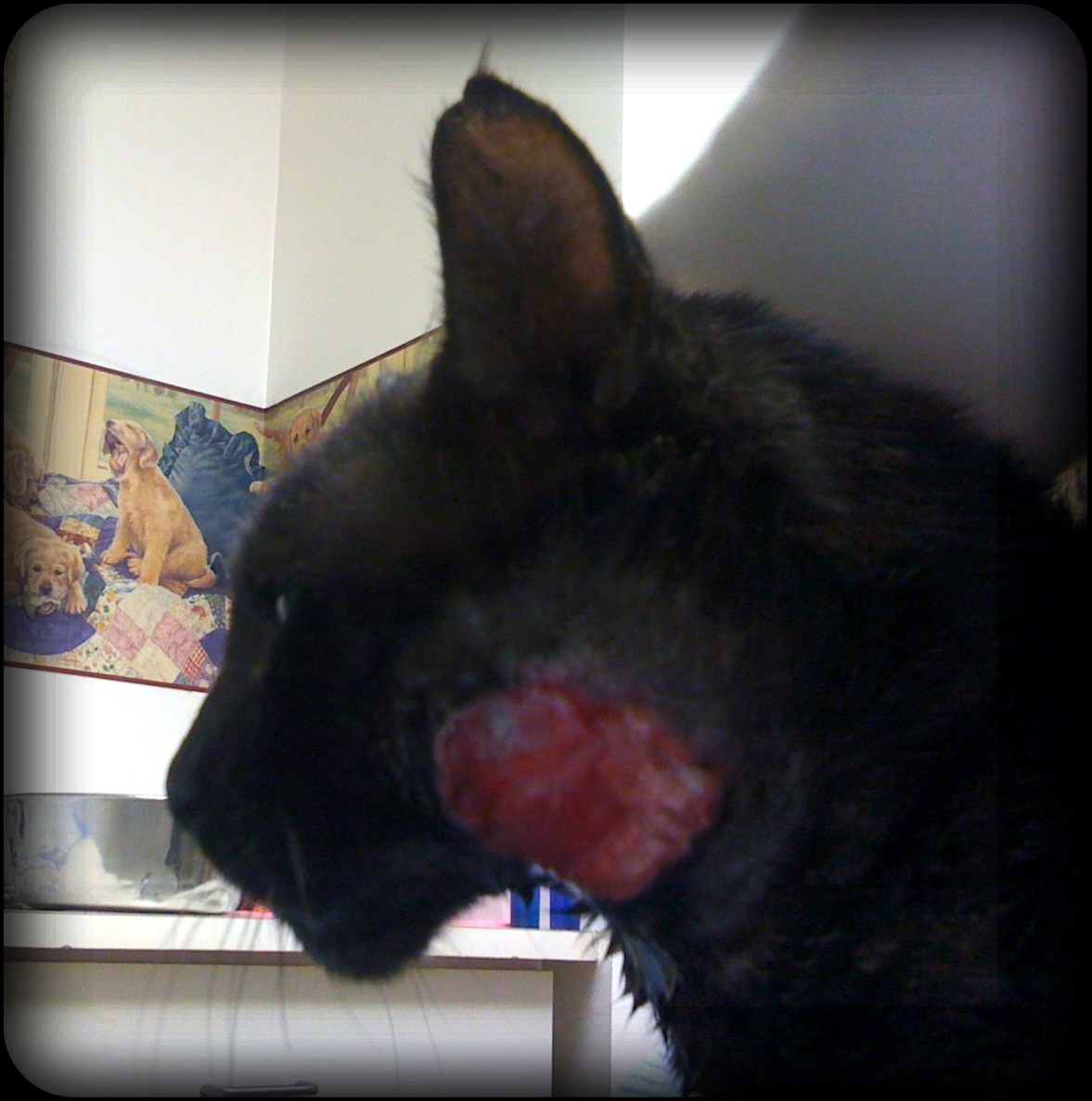
That red spot is a hole with no skin over it!
Sparky came to our holistic veterinarian in a hard-sided carrier. Even though he lived outside all the time, he came for a bowl of canned cat food each morning. When his people saw the wound, the got the carrier right away. While Sparky was still eating, they quietly and calmly picked him up, and put him directly into the carrier they had waiting right by the food dish. He was not happy, but he was safe for transport to the animal hospital.
A huge patch of skin was missing from the side of his right cheek.
“Is it a tooth root abscess?” asked his dad.
“No, this is an infected, old bite wound,” said our holistic veterinarian.
“Do you think an opossum bit him? Or maybe he got in a fight with a rat,” asked dad.
“No, cats care about other cats. An infected bite is almost always from a cat fight,” said the Doc.
Cat Bite Abscess Treatment
Believe it or not, Sparky let our holistic veterinarian clean the wound with dilute iodine antiseptic solution. Some bits of necrotic, grey, dead connective tissue peeked out from the edges of the pink, healing wound. Sparky allowed Doc to trim the grey dead stuff with sterile surgery scissors. Most cats require anesthesia for this cleaning because their fear and pain drives them to struggle to escape. Sparky just sat on the examination table and purred.
A dirty, infected wound of this type cannot be surgically sealed closed without trapping infection inside the body. Plus, the skin can heal amazingly large holes (up to 2 cm across) through biological processes called contraction (pulling the edges in to the center), and re-epithelialization (re- epi – theel – ee – al – i – zay – shun). In re-epithelialization, the body sends new, thin, pink skin cells over the defect. This is not a whole new thick skin with hair follicles and all the skin structures, but the thin pink “scar” serves the purpose of closing the wound without a skin graft surgery.
When Sparky comes for his 2-week recheck, our holistic veterinarian will post the pictures. Sparky’s giant hole in his face might heal without any surgery!
How Could Angel’s Family Respond Perfectly to a Dog Bite Attack?
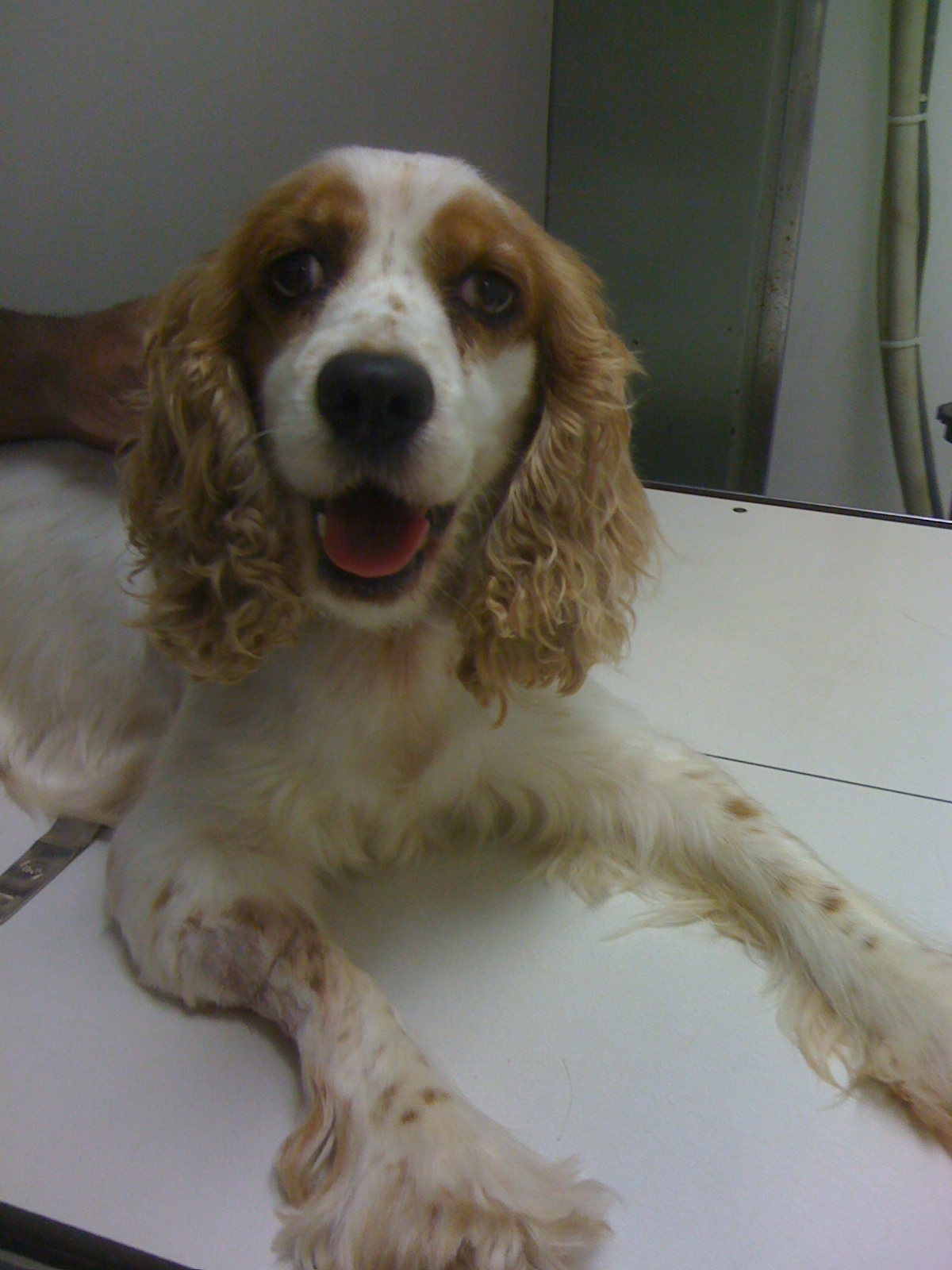
Cocker Spaniel with swollen leg
When a little Party-Color Cocker Spaniel suffered bite wounds from the neighbor’s dog, her parents did not know how to respond. The neighbor knew some dog first aid and applied his knowledge as best he could. No one thought to go to the animal emergency room, even though they lived in a major metropolitan city in the US, 10 minutes from a 24/7 animal e.r.! Quick thinking and proper urgent care would have allowed Angel to avoid extra pain and heal faster without surgery. read more…
These three pet-parents stand out for their devotion, hope, optimism, and dedication to learning to offer whatever their pet needs to be happy and comfortable.
You’ve Come a Long Way, Mommy
This first pet parent is a single woman on her mid-forties, divorced, with two beautiful Persian cats. She loved her cats, but she did not realize her older cat, Simon, was in complete and utter kidney failure, with hypercalcemia and hypertension until he needed intensive care just to get him through the first night.
Does not sound very impressive, right?
Listen to this: not only did Simon get better. Mom gives him his subcutaneous fluids, special food, hypertension meds, kidney meds, and vitamins every day. This cat has such a poor prognosis (Phosphorus of 24, people…the vets out there know what I’m talking about), that the internist called our holistic veterinarian to ask what the autopsy showed! read more…
Fat Dogs Epidemic in US
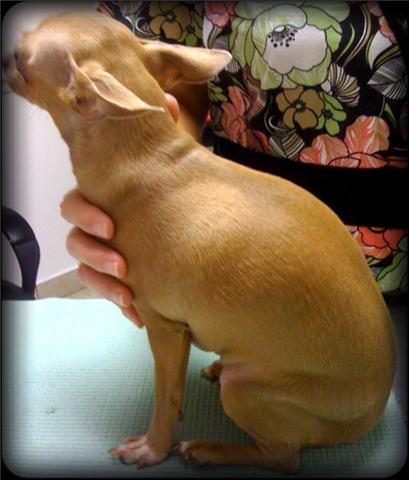
Well, we finally made our dogs as needy, neurotic, and fat as the average American! 65% of American dogs are fat. Many are obese. No one seems to either 1) know it, or 2) think it’s a big deal.
Here’s how you know if your dog is fat:
- Cannot feel or count the ribs.
- Cannot see a waistline from the side.
- Cannot see a waistline from the top.
Simple.
A fat dog is a “big” deal.
If your dog is fat, he or she will:
- Suffer arthritis, bronchitis, collapsing trachea, or heart failure much more easily than a thin dog.
- Die 2-4 years before he or she should.
2-4 years to a chihuahua or a labrador is like 20 years for us! Imagine that!
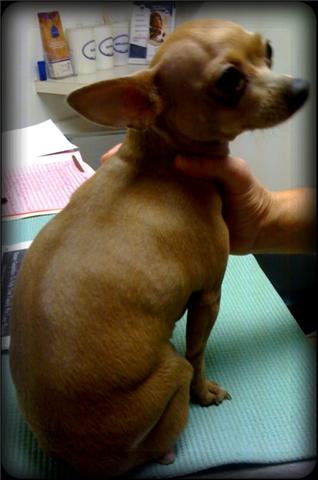
fat fetching chihuahua coquette
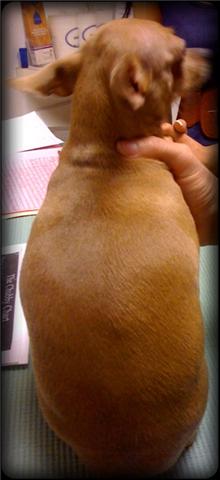
fat back chihuahua
fat side chihuahua
Get the skinny on your dog’s diet.
