How to Tell If Your Cat is in Pain
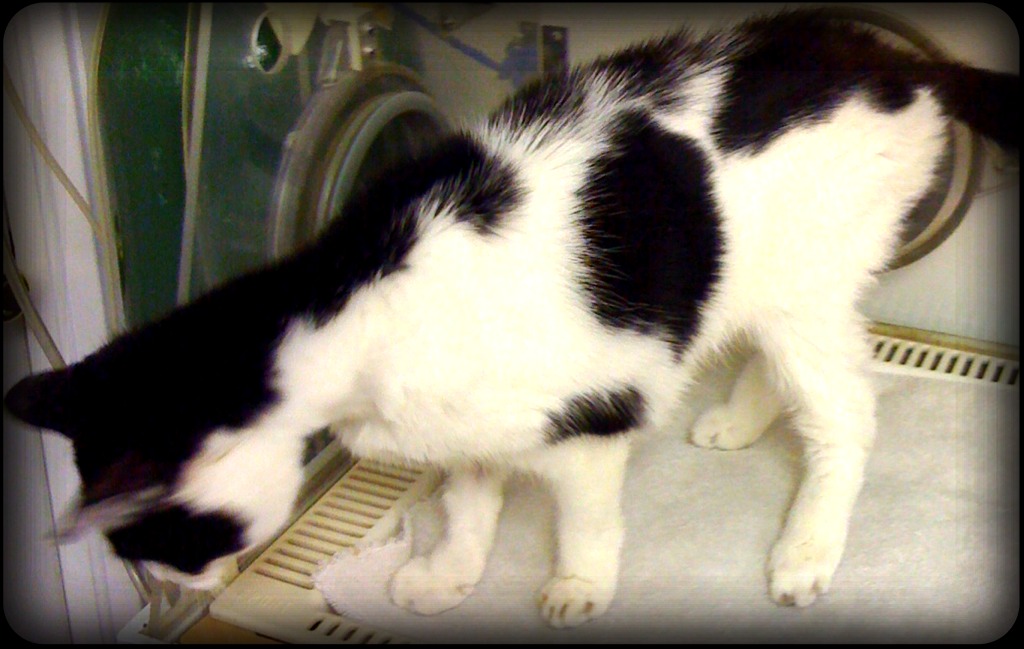
Does this cat look like she's in pain?
Cats Hide Their Pain Exceptionally Well
Holly, a seventeen-year-old domestic short-hair cat came to see me for weight loss and not wanting to eat for 3 days (we call this symptom anorexia in veterinary medicine, but I prefer the term inappetence, because it does not resemble the psychological and physical disease many people suffer by the same name.)
She gradually lost weight over the past 6 months. Holly was 11 pounds in June, and only 5 1/2 pounds when this picture was taken in the hospital.
Holly died the following afternoon.
I do not mean to be melodramatic, but to illustrate a point. This cat suffered from pancreatic cancer for 6 months, without her family realizing she was sick until it was too late to help her or to ease her pain. Many, many people can miss the signs of illness and pain in a cat, because cats hide their pain from us. (Look at the first picture above. Holly knew I was visiting her, so she “faked it.” Many studies have shown pets will do this to please us, and then quiver in misery after we leave the room, as proven by hidden camera technology.)
When Holly thought I wasn’t looking, without opening her baby incubator I had set her in for warmth and extra oxygen, I snapped the following pictures:
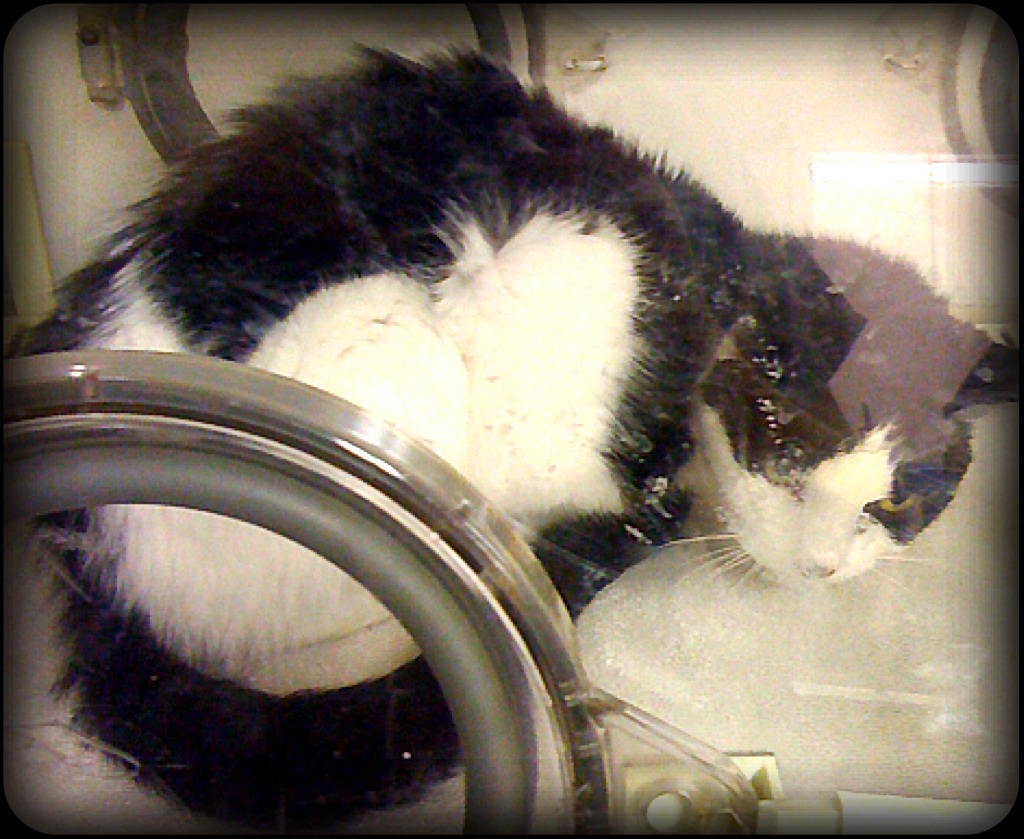
Note the hunched back and head down near to the floor with paws gathered up under the body.
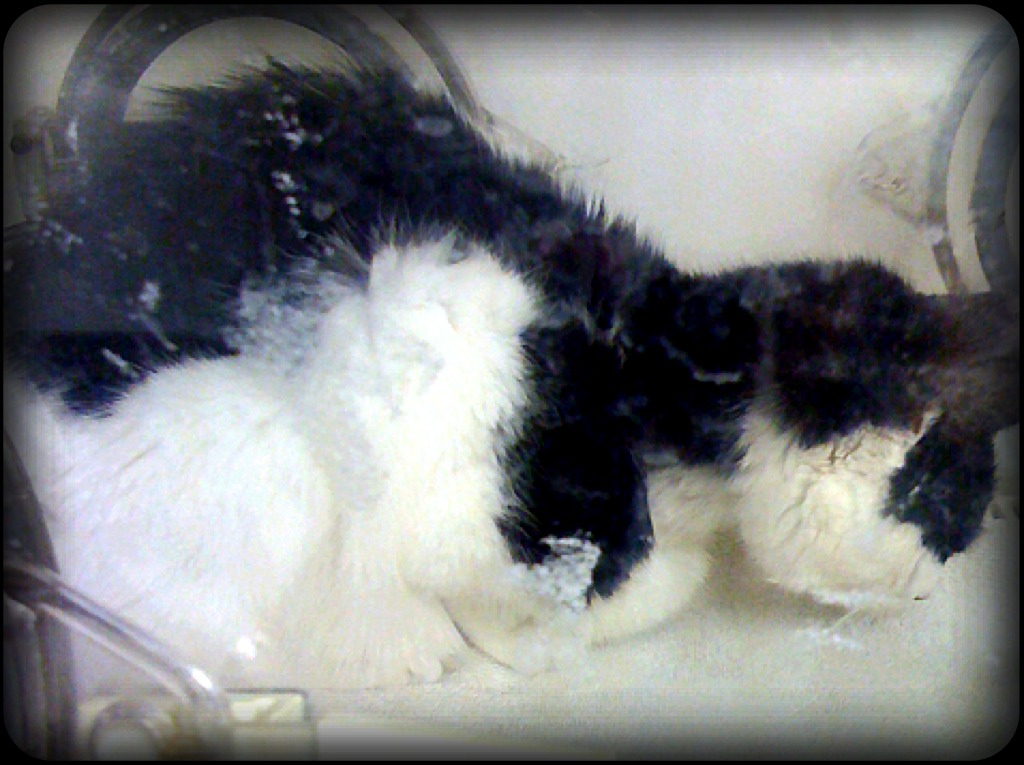
Holly shows us abdominal pain by sitting up on her paws, back arched, nose to floor.
(In case you worry that I let Holly suffer in pain, rest assured she received strong opioid painkillers. Unfortunately, certain types of painful conditions, like pancreatic cancer, still cause pain unless the patient undergoes anesthesia. Sometimes a constant rate infusion CRI of painkillers works.)
5 Signs A Cat is in Pain:
- Behavior change. Noisy cat is quiet, quiet cat vocalizes.
- Hiding, withdrawn, reclusive.
- Sitting hunched with back arched, paws gathered under the body, nose resting on the floor, eyes closed.
- Purring does not mean a cat is happy! Some cats purr to comfort themselves when they hurt.
- Distant or faraway look to the eyes, like cat thinks about internal pain, instead of noticing the external environment.
5+ Signs a Cat Might be Sick:
1. Eating more or less. Or nothing. A fat cat can die if they refuse food for 3-4 days in a row (hepatic lipidosis.)
2. Vomiting.
our holistic veterinarian summarizes recent thinking in feline internal medicine, “Vomiting hairballs is not normal for cats! Veterinarians used to believe hairball vomiting was a normal cat function; vomiting is abnormal. Something is wrong; see your vet!”
3. Drinking lots of water.
“Cats were desert animals thousands of years ago. They usually drink very little compared to dogs.”
4. Loosing weight for no reason. This can be difficult to appreciate when you see your cat every day.
Look for: bony hips, spine prominent, shoulders visible, ribs visible, temples atrophied and gaunt-looking.
“If your cat is not on a weight control diet, and his or her exercise has not increased significantly (like you moved to a gigantic house), then weight loss is a sign of illness.”
5. Diarrhea, Coughing, Sneezing, Yellow or green discharge coming out of anywhere on your cat.
6. Signs of pain like hiding, change in verbosity, change in voice, eye pain like blinking and tearing, and squinting…
Get Your Cat to the Veterinarian You Trust With Cats!
If you know your cat is ill, and the question is more about quality of life, see our holistic veterinarian’s Pet Quality of Life discussion.
P.S. Added March, 2010, More How to Tell If Your Cat Is in Pain after an Auto Accident.

A painful reminder. My cat died of pancreatic cancer, and even the vets didn’t figure it out until he had a huge tumor. It was horrible.
I’ve been waffling on asking you about this, but having read this post, I’m asking for your help: A family member has a 13-year-old cat that doesn’t live with her due to another’s allergies. She went to visit her cat (and family) and discovered that she had lost two pounds! She looked scrawny and bad, and my friend was very upset. The person who cares for the cat loves her, but she doesn’t really understand pet care very well. She told her she had been eating a lot less lately. She normally gets kibble, so they bought wet food, and she ate quite a bit.
They took her to the vet, who ran blood work. I thought, based on what I’ve read on your blog and other lists I’m on, and the fact that she started eating again, that it might be pain from dental problems (and hopefully not diabetes or kidney stuff, etc.).
The upshot is that the vet said all her bloodwork is normal (though he did not give them a copy of it), and that “she doesn’t have any teeth”! When my friend asked what that meant, he said that she was missing half or more of her teeth, but the ones left look fine, and that therefore it can’t be her teeth. (Essentially, what can you do for teeth if there are none?) He said he has feline patients who have no teeth and can still eat kibble.
Although she is eating more now and has regained half a pound, there are still times she doesn’t act entirely herself, which seems like it’s connected to food/eating. I am concerned that this is not a good vet and that either the cat does have something dental wrong that requires dental x-rays, or that there is something else wrong that maybe can’t be gleaned from bloodwork.
What would you suggest? Does what this vet said make sense to you?
hi, my cat has recently started being very jumpy and he is scared of things lying around on the floor like shoes, he has also ran into the sofa twice in the last week. do you have any ideas of what is up with him and wheather it is worth booking him into the vets?
thanks matt