Doubtful Italian Greyhound

Doubtful Italian Greyhound
Many Pets Harbor Hidden Painful Periodontitis
Or, How an Italian Greyhound Ends up Needing 17 Teeth Extracted...
Periodontal Disease refers to problems with the bone, gums, tough little fantastic periodontal ligaments inside the sulcus (tooth socket), basically everything around the tooth itself.
Doc Truli fills us in,”A careful exam of each tooth and 6 points of the gingiva around each tooth, and dental radiographs (x-rays) reveal hidden periodontal disease. There is no other way to find out what is wrong with your pet’s teeth. This examination requires general anesthesia, every time, every pet.”
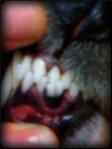
Crossbite in a mixed breed dog.

Crossbite in a mixed breed dog.
Dental Healthcare starts as a Puppy and Kitten
No kidding! Your precious pup or kitten needs to be assessed right from the start for oral health status. Some life-long problems can be prevented as young as 8 weeks old! read more…
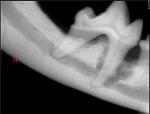
Half of this tooth is sitting in an abscess. Can you tell which half?
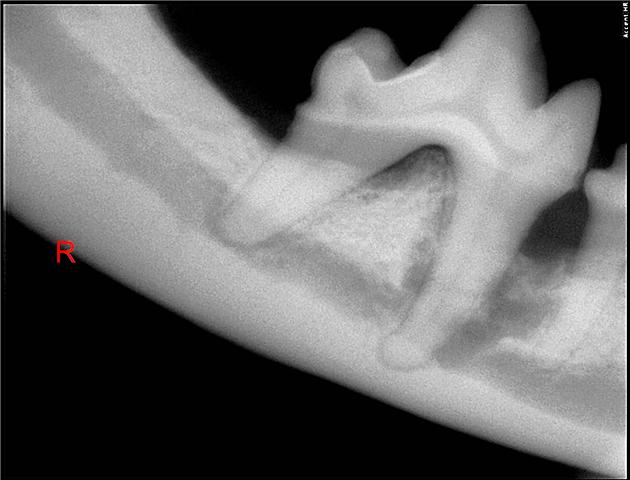
Half of this tooth is sitting in an abscess. Can you tell which half?
February is National Pet Dental Health Month in the U.S.
Doc Truli declares Earth Pet Dental Health Month. Everyone is welcome to help their pet feel better, look younger, and live longer! The Doc will devote a series of posts all month long just to pet dental health.
Proper dental care adds 2-4 healthy years to a pet’s expected lifespan. And old-age diseases like arthritis delay for 2-4 years, too.
Would you like your Chihuahua to live to be 18, instead of 14? Of course you would!

Kitten gets her first bath, note the soapy tub and the rinse tub

Be sure you firmly and gently hold the kitten. She's looking for a shoulder to...climb!

Kitten is still wet from her bath

Kitten is gently towel dried until she fluffs, we changed towels several times

Cats do not require too many baths. But, when you find a kitten on the street and take the little tyke home, you need to bath away the fleas and grime, maybe lice and ticks, too.
read more…

Does this cat look like she's in pain?
Cats Hide Their Pain Exceptionally Well
Holly, a seventeen-year-old domestic short-hair cat came to see me for weight loss and not wanting to eat for 3 days (we call this symptom anorexia in veterinary medicine, but I prefer the term inappetence, because it does not resemble the psychological and physical disease many people suffer by the same name.)
She gradually lost weight over the past 6 months. Holly was 11 pounds in June, and only 5 1/2 pounds when this picture was taken in the hospital.
Holly died the following afternoon.
read more…


This little shih tzu pretzeled himself when Doc Truli scratched his tail base.
7 Signs of Canine Discomposure
How can you interpret if your dog itches?

Beautiful Liz practices, "If I can't see you, you can't see me at the vet's office."
Sometimes a Cat Itches All the Time!
A beautiful brown-black long-hair tabby kitten stared out of her black Sherpa soft-sided carrier. She hissed. Our formal introduction deteriorated into cajoling and negotiating as I snuck a full physical examination in between angry kitten hisses. My first visit with little Liz ended 20 minutes after our introduction. She was obviously displeased with me. I fell in love with her.
read more…
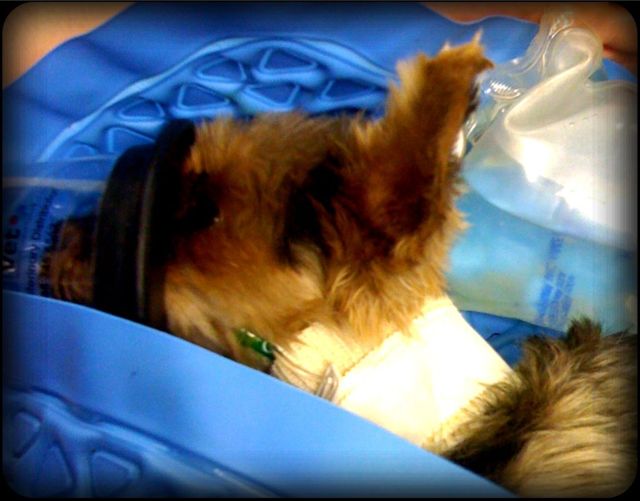


“There’s a lady on the phone. She says her dog is having trouble breathing. Can she bring the dog in now?” my Saturday receptionist asked, phone receiver dangling from her fingers.

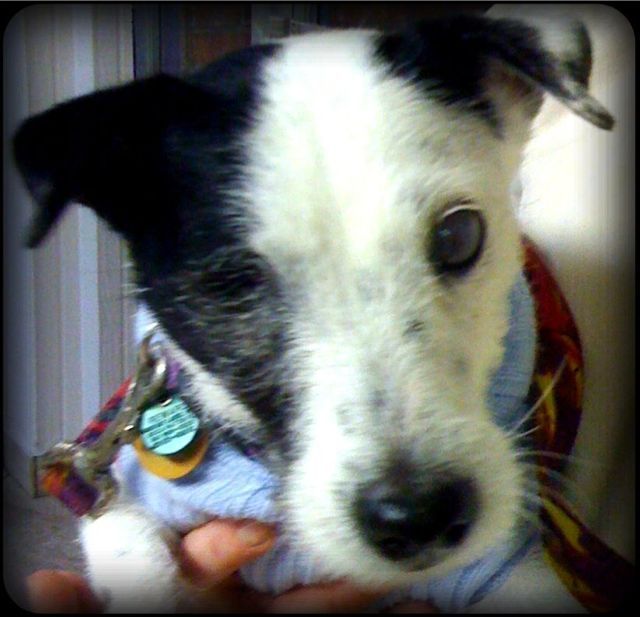
If you have a Parson’s Russell Terrier (aka Jack, JRT), whether your dog be smooth coat or rough coat, sudden blindness can hit at any time. These terriers are genetically prone to anterior lens luxation.