The Rash Problem
Sheila was a four-year-old spayed orange-black -and-white short-haired cat with a nasty red bumpy rash on her stomach.
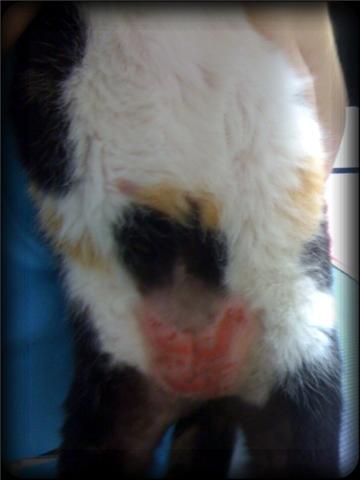
This painful rash appeared spontaneously, not as a result of licking.
Sheila also had tiny red bumps lining the edges of both her ears. She licked her belly throughout most of the night and had barbered the fur on her belly down to a fine fuzz. She hated having her ears, paws, or back touched, and was generally, difficult to comfort or show affection to.
Like most cats with her symptoms, Sheila ate well. Occasionally she would vomit just foamy liquid, or a little hair from licking too much. She liked to sit and look at birds outside the living room window and liked to rub against her people’s legs in the kitchen to meow for food.
“Doctor, this rash just showed up,” said Sheila’s mom.
“Let’s take a look,” said our holistic veterinarian. read more…
Why Does my Puppy’s Breath Smell so Bad?
Romeo was a 10-month-old Brindle Chihuahua with halitosis (hal -i -toe- sis). That’s doctor-speak for bad breath.
“Doctor, why does my 10-month-old Chihuahua have such bad breath?” said Romeo’s dad.
One look under his lip revealed the answer.
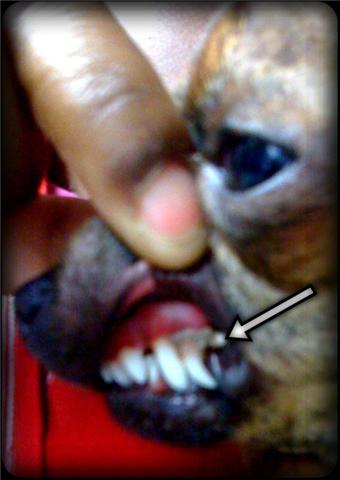
The arrow points to a retained deciduous canine tooth with golden, shaggy muck stuck to it.
“Romeo’s maxillary deciduous canine tooth is retained,” thought our holistic veterinarian.
“Romeo’s left upper baby canine tooth didn’t fall out on time,” said our holistic veterinarian.
Romeo had two other retained canine teeth and a retained upper incisor front tooth as well.
“Romeo needs surgery right away to remove the abnormal tooth before it causes further damage and infection in the mouth,” said our holistic veterinarian. read more…
The Chihuahua Manual
Purse Ninja Pocket Guide
Information you need to know about your Chihuahua
Dear Chihuahua Fanatics,
Originally published April 26, 2010, my first Chihuahua Manual has already been updated, per customer enthusiasm. I know these little “land sharks,” as veterinarians like to call them, are secretly the most lovable, fun, and heart-grabbing dogs. My Chihuahua, Chiquita Bovita (white with black Holstein cow spots) was my diminutive soulmate. Stop fighting and misunderstanding your Chihauhua today and get that perfect companion you dreamed of in the first place!
Please enjoy The Chihuahua Manual, Purse Ninja Pocket Guide!
Yours,
Our holistic veterinarian
Retail Price $24.99 Updated Chihuahua Manual ONLY $9.99


THIS FULLY SEARCHABLE AND INDEXED EBOOK WILL HELP YOU:
- Learn to raise a Chihuahua who is so friendly, your friends just can’t believe it!
- Select a bed for your Chihuahua that makes house training quick and clear!
- Use the comprehensive first year Chihuahua medical budget to pay for everything you need and nothing you don’t!
- Save money by choosing the best pet insurance plan!
- Learn the surefire solution to preventing low blood sugar in teacup Chihuahuas
- Learn the secrets to effective house training
- Have a Worry-free Chihuahua: learn when shaking, dancing, rolling, and refusing to budge are normal
- Gear up for adventure with your Chihuahua: cars, boats, even motorcycle Chihuahua gear
- Learn the secret to happy Chihuahuas and children
- Learn how to leverage a pet sitter for a happier Chihuahua
- Learn games Chihuahuas Love to Play
All updates will be provided FREE to Chihuahua Manual Purchasers!
Excerpt from “Playing Games With Your Chihuahua” Chapter of The Chihuahua Manual:
“Chihuahuas are supposed to be lap dogs. But, in their role as personal appendages, they also relish a little privacy. Not much, but a little bit. Does your Chihuahua take a piece of food and run under a chair to work on it? (Be sure the eating area is safe, peaceful and quiet.) Do dog bones and treats pile up under the bed and sofa? Or under the pillows in the corners of the sofa? This is the Chihuahua need for privacy, not a terrier-like burrowing fixation. A toy basket or toy box, a sleeping crate, and a family with people who pay attention and design their daily schedule to include the puppy give a Chihuahua a sense of steadiness and security. Respect the little one’s very little needs for privacy. After all, your Chihuahua will probably sit on your arm, lap, or chest 90% of the time you are not working, a little kitchen area, bathroom, sleeping area, and toy chest of his or her own is not too much to ask!”
Our holistic veterinarian shares the love of Chihuahuas and the insight of a veterinarian in The Chihuahua Manual: Purse Ninja Pocket Guide. Join the fun today! Updates are free. Get more and more medical advice and heartwarming Chihuahua stories for just one purchase price.
“I love Chihuahuas, Chi CHi CHI! I hope you’ll take advantage of my hard work and insight and get your own copy of The Chihuahua Manual today, and free Updates as I continue to add Chihuahua advice and inspirational Chihuahua Stories. All Chihuahuas, all the time!” says our holistic veterinarian.
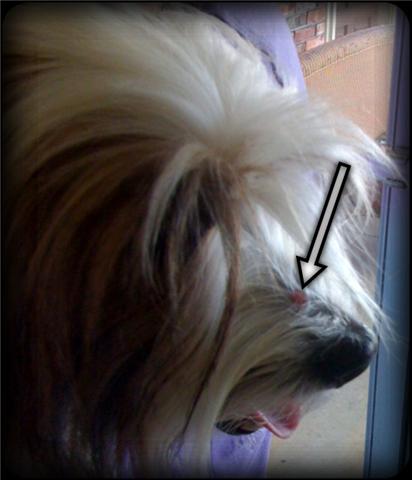
Tibetan Terrier Bump
A two-year-old Tibetan Terrier beauty rescued from the pound when she was one, Lucy was the pride of her pappa’s life.
“Doctor,” whispered her concerned human,”Lucy has this mass, this growth, this…thing on her nose. There was nothing, and them suddenly, there it was. I hope it’s nothing bad.”
This is a difficult moment in any pet parent’s life. You’ve noticed a mass. You ponder how it came to be. You hope you can think of a “good” reason for the lump.
“The cat scratched Lucy two weeks ago when they were playing. Maybe it’s an infection?” said the dad.
“Don’t tell me it’s anything bad.” read more…
The Vomeronasal Organ
The Vomeronasal Organ in most vertebrates performs the complex chemical analysis.
If you see your dog or cat “licking” at urine and then seemingly pushing the tongue up on the palate, like a wine connoisseur, or if you see them sniff with their mouth partly open, eyes slit, and then maybe drool profusely, and maybe chomp or swish their lips like a fine wine taster, that’s the use of the vomeronasal complex. They are performing a phlehmen (pronounced flay-men) gesture, or phlehmen response. Some dogs may look like they are smiling, crinkling their nose, almost sneezing, while they perform the phlehmen response.
Human Sixth Sense
Click here for Bryn Mawr College’s Interdisciplinary Serendip Community discussion of “The Sixth Sense: The Vomeronasal Organ” in humans, and the scientific evidence that we may also have this sixth sense!
Return to Bennie’s Story.
Tru Tip
If you found this page surfin’, and searchin’, or combing through Site-Map, and you like science, society, service, philosophy, and interdisciplinary cooperation in exploring life’s questions, Check out the Serendip link (above). You will have direct access to professors, researchers, thinkers, and an interactive research and thinking community.
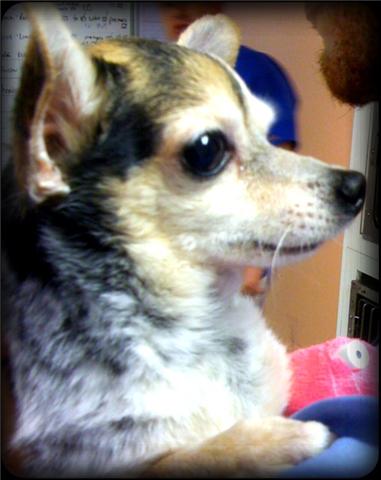
Is there a treat involved in this office visit?
We Want Our Chihuahuas to Live Forever!
Chihuahuas are not only lap dogs and purse ninjas, they are confidantes and best friends. We want them to stick around a long time.
Chihuahuas Live Longer Than Big Dogs
Usually, a small dog like a Chihuahua will have an expected lifespan of 12-14 years. The oldest Chihuahua our holistic veterinarian has treated was 20 years old when he passed away from heart disease.
2 Best Things to do to Extend Your Chihuahua’s Life
You can do two specific things to help your Chihuahua live a long, healthy life:
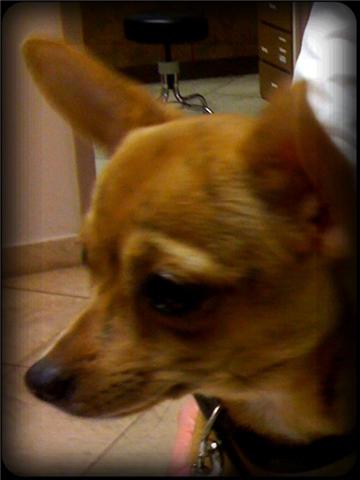
Worried Chihuahua
How Do You Know if your Chihuahua has a Headache?
If your chihuahua is quiet, lethargic, flinches or cries out at the slightest touch, especially on the head area. If your little chihuahua friend is holding both eyes 3/4 closed and then opens then when a bright light or sharp noise cracks in the room, suspect a headache.
Chihuahua with Concussion Symptoms
Rocky was tired, whining, holding his eyes shut, he barely wanted to move, and did not want to eat.
A red bump stuck out on the side of his little skull above his right ear. Most Chihuahuas have thin fur on their scalps. Bruises are easier to see than with most other breeds of dogs. read more…
