What Most Pet Parents Already Know
If you’re already feeding a quality omega-3 supplement, you probably know some of the basics: cheap supplements often use an “ethyl ester” form that’s less bioavailable (a simple, if slightly odd, home test — letting the oil sit in a styrofoam cup for about 15 minutes — will show it eating through the cup if it’s ethyl ester form). You may know that oily fish like mackerel, sardines, and anchovies, or a few weekly cooked egg yolks, can provide omega-3s without a supplement — and that heavy-metal accumulation in large predatory fish like salmon means sourcing matters, whether from krill, New Zealand mussel, or verified low-mercury fish oil. You may also know that while seaweed-derived omega-3s can support a vegetarian dog’s coat, they won’t deliver the same anti-inflammatory benefit as marine-sourced EPA.
What’s Harder to Know Without Testing
Even well-informed pet parents run into a wall here: there’s no way to reliably calculate the “right” dose of omega-3 for an individual dog or cat from formulas alone. Littermates on identical diets can show meaningfully different omega fatty acid profiles in their red blood cell membranes — which is the current gold-standard way to measure this, though it’s a technically demanding test to run well.
Why Testing Can Be Worth It
More isn’t automatically better with omega-3s — they can accumulate to problematic levels, can be difficult for some pets to digest, and quality supplementation isn’t cheap. Testing (a small blood sample sent to a specialized lab) tells you and your veterinarian whether your current dose is actually therapeutic — recent research has shown some pets need meaningfully more than label-dose omega-3 to see real benefit for joints, heart, or kidney support, while others may already be getting enough.
How Ancient Law Pet Wellness Can Help
Ordering and interpreting omega fatty acid bloodwork is something to arrange through your veterinarian. Once you have those results, our TCVM Food Therapy consulting can help translate the numbers into a practical feeding and supplementation plan — sourcing decisions, dosing adjustments, and how to fit omega-3 support into your dog or cat’s broader diet. Reach out at JLaw@VetVmd.com or call/text (813) 816-1759.
Roughly half of American pets deal with allergies — so if more than one pet in your household is affected, it’s likely just genetics or shared environment, not something you did wrong. Diagnosing an allergic pet is part medicine, part detective work, and it can involve more testing than pet parents expect. Here’s a general framework, and a checklist to help you track what’s been ruled out.
The General Approach
A thorough workup typically starts with your veterinarian ruling out or treating anything that could be making things look worse than a “pure” allergy would — general health issues, secondary skin infections, parasites. From there, a food elimination trial and nutritional support come next, followed by excluding other skin diseases, and finally allergy-specific testing and treatment if needed.
What a Full Investigation Can Include
- A thorough physical exam
- Flea prevention and treatment (roughly half of dermatology specialist visits turn out to be a flea problem — if you can rule this out yourself, you may save a vet visit)
- Treatment of secondary skin infections, so the underlying allergy pattern is easier to see clearly
- Skin scrapes for mites, tape cytology for yeast/bacteria, ear cytology for concurrent ear infections
- Bloodwork: CBC, chemistry panel, thyroid screening, fecal parasite exam, heartworm test (and feline leukemia/FIV testing for cats)
- A trial of omega-3s and vitamin E
- A proper food elimination diet, typically run for 8-12 weeks
- Lime-sulfur dips to rule out mange or infections that didn’t show up on initial testing
- A skin biopsy in more stubborn cases
- Allergy blood serum testing or intradermal skin testing, usually requiring sedation and specialist interpretation
Your veterinarian will guide treatment for any secondary infections along the way, and may prescribe anti-itch medication for comfort while the investigation — which can take months — plays out. If something else turns up during testing, like low thyroid function, treating it sometimes helps the allergy symptoms settle down on its own.
One common question: why not just try an antihistamine first? Only about 10% of dogs and cats respond meaningfully to antihistamines alone, which is part of why the fuller workup above tends to be worth the time.
How Ancient Law Pet Wellness Can Help
The diagnostic testing above — bloodwork, skin scrapes, allergy panels — should go through your veterinarian. Where our team comes in is the food elimination side: our TCVM Food Therapy consulting helps you design and stick with a proper elimination diet, and factor in food-energetics principles once you and your vet have a clearer picture of what’s driving your pet’s allergy pattern. Reach out at JLaw@VetVmd.com or call/text (813) 816-1759.
A Familiar Frustration
Many holistic-minded pet parents eventually ask the same question: are we just managing my dog’s symptoms, or actually addressing what’s causing them? More than half of dogs seen by veterinarians are diagnosed with allergies, inflammatory bowel patterns, or cancer — and many also deal with storm phobia or separation anxiety that gets pushed to the back burner while the itchy skin or upset stomach gets the appointment’s attention. Conventional treatment for these conditions often means ongoing medication and management rather than resolution — which can feel financially and emotionally draining even when it’s technically “working.”
What “Root Cause” Actually Means
“Root cause” can be a moving target — like a child’s endless chain of “but why?” questions. There’s rarely one single ground-floor answer, but there are usually deeper threads worth pulling on. A few common ones:
A More Complete Diagnostic Picture
Sometimes what looks like an isolated symptom traces back to something broader that hasn’t been tested for yet — low thyroid function, Cushing’s disease, or environmental toxin exposure. A thorough review of your dog’s full medical history with your veterinarian, combined with any gaps in testing, can surface these possibilities.
The Gut Biome
The gut-skin axis, gut-mind axis, and gut-joint axis are all active areas of research connecting digestive health to allergy, mood, and joint symptoms. Fecal testing can now map the bacteria and other organisms living in a dog’s gut. From there, your veterinarian may discuss diet changes, probiotics, specific fiber types, or in more involved cases, fecal microbiota transplantation — all treatment decisions that should be made and monitored with veterinary guidance.
Functional Nutrition
This is essentially vitamin, mineral, and whole-food investigation aimed at getting the body’s baseline function back on track. A striking statistic: research suggests roughly 75% of dogs in the U.S. have insufficient vitamin D3 levels, and a large majority have an unfavorable omega-3 to omega-6 ratio in their blood. Your veterinarian can order testing for these markers as part of a functional nutrition workup.
Herbal Support
Herbal medicine can meaningfully support a wide range of conditions, but self-directed herb use based on internet advice carries real risk of side effects or wasted time on the wrong approach. Herb selection and dosing should go through a trained practitioner working alongside your veterinarian.
Beyond the Physical
Sometimes a dog has been through diet changes, biome work, herbal support, and physical therapy and still seems anxious, guarded, or prone to relapse. In these cases, a deeper inherited pattern or a past injury (including vaccine reactions) may be at play, and further workup with your veterinarian — potentially including classical homeopathic evaluation, which some veterinarians offer as a specialized service — may be worth exploring.
How Ancient Law Pet Wellness Can Help
The diagnostic workup, lab testing, and prescription-level treatment for any of the threads above should go through your dog’s veterinarian. Where our team fits into the root-cause picture: TCVM Food Therapy is one of the most direct levers pet parents can pull themselves, addressing the functional-nutrition and food-energetics side of the equation, and our Herbal Wellness Protocols consulting helps you source and safely administer herbs your veterinarian or a trained herbalist has recommended. Reach out at JLaw@VetVmd.com or call/text (813) 816-1759 to talk through where your dog’s case might benefit from a food-first approach.
The canine gut biome is the natural community of microorganisms — bacteria, fungi, and more — living in your dog’s intestines. Keeping it healthy supports far more than digestion: it plays a role in skin health, immune function, mood, and sleep.
Where Does the Gut Biome Come From?
Puppies get their starting biome from their mother during birth, and nursing on healthy milk keeps it diverse and balanced. If a puppy’s mother wasn’t healthy, or the puppy faced early-life stress — a puppy mill, homelessness, worms, kennel cough — the gut biome may start out unbalanced. Courses of antibiotics for puppy diarrhea are another common disruptor, sometimes affecting gut balance for months or years afterward.
What Happens When the Gut Biome Is Unbalanced?
Symptoms can range from mild to serious. On the milder end: allergies, diarrhea, vomiting, gas, restless sleep, anxiety, recurrent skin or ear infections, and paw licking. Left unaddressed, chronic imbalance is linked to inflammatory bowel disease, autoimmune or endocrine conditions, severe anxiety, and in the most severe cases, recurrent multi-drug-resistant infections or even cancer risk.
What Can Be Done?
Fecal testing can now show what a dog’s gut biome community actually looks like, and researchers know what a healthy biome looks like for dogs on raw versus prepared diets (they’re a little different). From there, a treatment strategy — which may include diet changes, targeted probiotics or prebiotics, and in more involved cases fecal microbiota transplant capsules under veterinary supervision — can help rebalance the community, generally reassessed after about 30 days.
Diet Is Your Biggest Lever
Food is one of the most powerful tools for shaping a healthy gut biome day to day — the fiber sources, protein quality, and overall balance of a dog’s diet directly influence which microbial populations thrive.
How Ancient Law Pet Wellness Can Help
Gut biome testing and any medical treatment protocol should be coordinated with your dog’s veterinarian. Where our team comes in is TCVM Food Therapy — building a diet and feeding plan designed to support a healthy, diverse gut biome and address the food-related root causes of common symptoms like skin issues, digestive upset, and low energy. Reach out at JLaw@VetVmd.com or call/text (813) 816-1759 to get started.
What It Is
Veterinary Medical Manipulation (VMM) — sometimes called veterinary spinal manipulation, or “animal chiropractic” in everyday language — is a hands-on technique for assessing subtle restrictions in joint motion and gently freeing them up to move in a healthy, pain-free way. Beyond joint mobility, practitioners report benefits for nervous system regulation and overall body function.
Reported Benefits
Pet parents and practitioners report VMM can help with:
- Reducing or eliminating pain
- Increasing range of motion
- Calming anxiety and resetting an overactive nervous system
- Supporting immune function
- Countering cognitive decline in aging pets
- Enhancing performance for sport, working, or active dogs
- Helping puppies recover from birthing injuries
- Supporting recovery in previously abused or traumatized pets
Signs Your Pet Might Benefit
- Visible pain or discomfort
- A change in how they stand or move (a leg held forward, out to the side, or back)
- Limping
- Not looking up or turning their head the way they normally would
- Behavior changes
- Performance issues in sport or working dogs (missed jumps, loss of tracking, dock-diving injuries)
- Cognitive decline or “sundowning” in senior pets
- Rough puppy play that seems to leave lingering stiffness
Who Performs It, and Why That Matters
This is where it’s important to be precise: in Florida, Veterinary Medical Manipulation is legally performed by a licensed veterinarian with specialized certification training (commonly through Chi University’s small-animal VMM program). In some other states, human chiropractors may also treat animals if they’ve completed specific additional certification — but the legal requirements vary significantly state to state.
In untrained hands, spinal and joint manipulation can cause more harm than good, and there are contraindications (a fresh bone fracture, for example) that only a qualified examiner can rule out first. If you think your pet might benefit from VMM, the right first step is a conversation with your own veterinarian — ask whether they perform it themselves, or can refer you to a certified veterinary chiropractic/VMM provider in your area.
How It’s Typically Delivered
A certified practitioner works with precise knowledge of the anatomy of each vertebra, muscle, tendon, and ligament attachment along the spine. The technique aims to trigger immediate relaxation and pain relief, with a cascading effect on nervous system, muscle, tendon, and connective-tissue healing that deepens over repeated sessions. How many sessions a pet needs varies enormously — a young, otherwise healthy pet with a single mild restriction might see permanent improvement after one visit, while an older pet with long-standing dysfunction (say, a healed non-surgical cruciate injury) may benefit from ongoing monthly sessions.
As a general timeline: nerve function can improve within minutes of a session, muscle healing takes weeks, tendon and ligament healing takes months, and reorganizing connective tissue (fascia) can take several months of consistent work.
VMM and Acupuncture
Some practitioners use acupuncture or laser acupoint therapy to relax spasming muscles before a VMM session, since the two modalities can work well together. Whether that combination makes sense for your pet is a conversation to have with whichever certified veterinary provider you’re working with.
How Ancient Law Pet Wellness Can Help
Veterinary Medical Manipulation itself is a licensed veterinary act — your own veterinarian is the right resource to determine if it’s appropriate for your pet and to perform it or refer you to a certified VMM/animal chiropractic provider. Where our team fits in: our Tui-na Massage and Canine Rehabilitation sessions offer a complementary, non-regulated, hands-on approach to circulation, mobility, and comfort that pairs well alongside any manipulation therapy your vet recommends. Reach out at JLaw@VetVmd.com or call/text (813) 816-1759 to talk through whether Tui-na or Rehab could support your pet’s mobility goals.
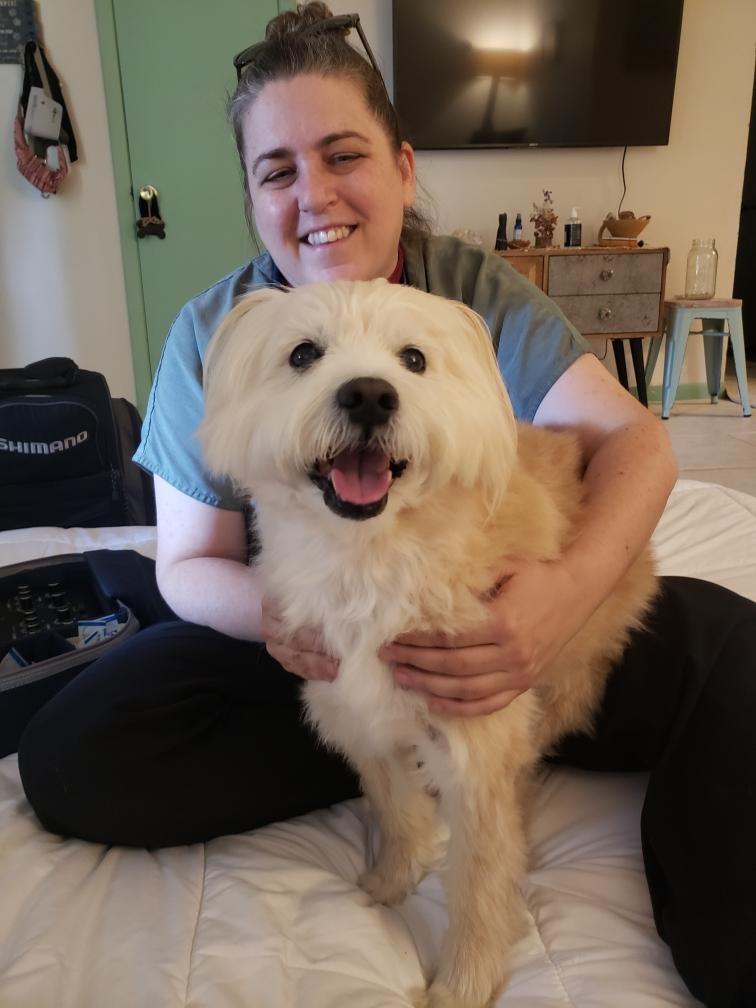
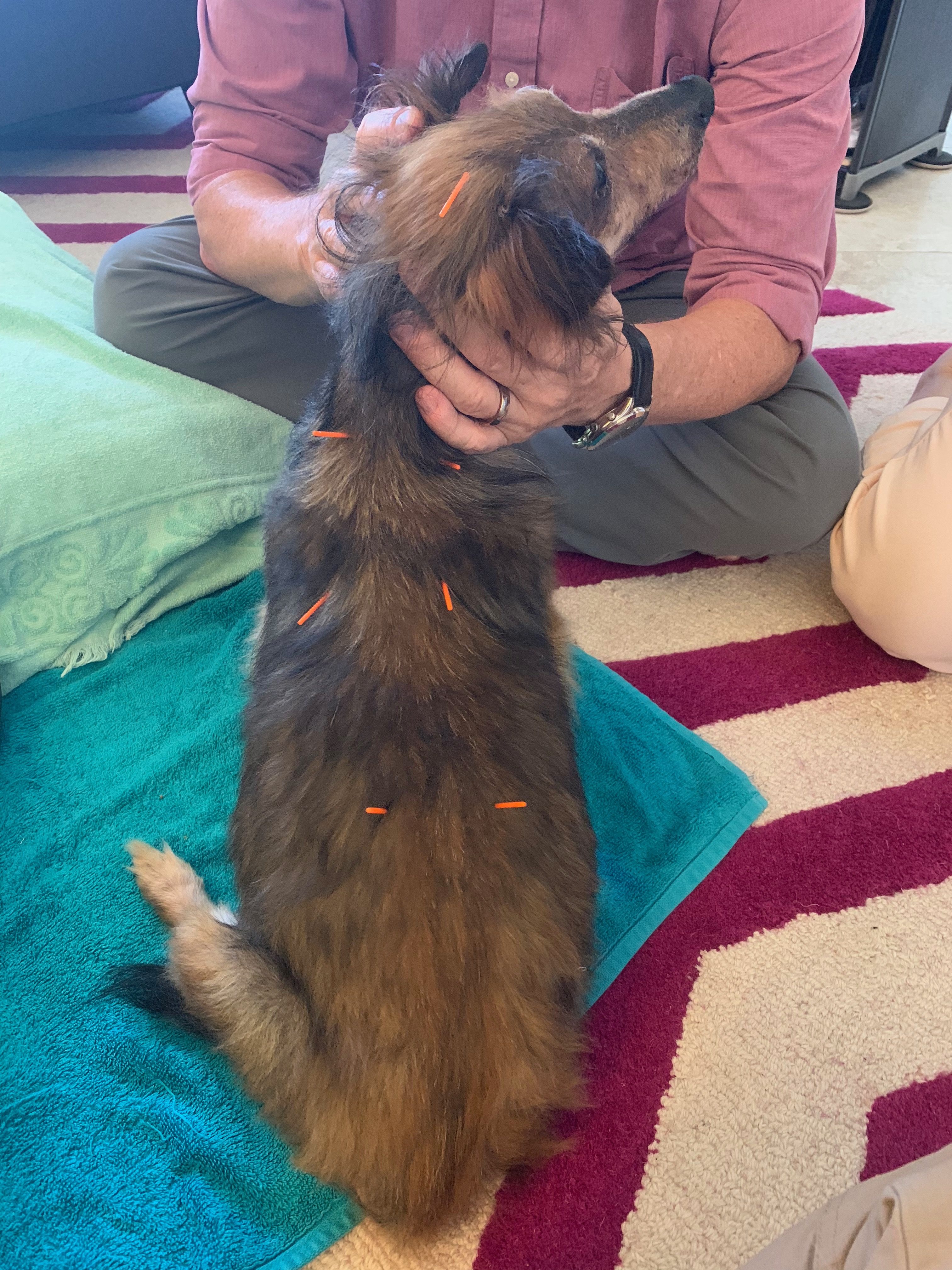
Big doggy smile during acupuncture!
Food Allergy Elimination Diets Can be Tricky
As anyone who has suspected their dog has a food allergy can attest, we wish there were accurate saliva or blood tests to make the food allergy diagnosis easy. However, the interpretation of these tests is unreliable. Saliva or blood tests for food allergies may not be as helpful as we would like.
The gold standard for dog food allergy testing is an allergy elimination diet. You can learn a step-by-step allergy elimination protocol here.
5 Common reasons a “perfect” dog food allergy elimination diet trial fails
The usual reasons a food allergy elimination trial fails:
- lack of committment from everyone in the family
- food falling from the table, especially with little kids in the house
- dog steals cat food. or kitty “snax” out of the litter pan or the garden
- medication or supplements with unsuspected allergens, like “real beef flavor”
- neighbors/friends giving biscuits you do not know about
An unusual reason a dog food allergy elimination diet had to be restarted from the beginning

My friend Benji
Let me introduce Benji. Benji is a much beloved mixed breed long-haired blonde. He has every attention and care that a devoted human can provide. Three weeks into his eight week dog food allergy elimination trial diet, our holistic veterinarian received a text unlike any other.
“Omg Benji ate a piece of styrofoam”
“He ate a whole one of these pieces”
Omg my dog ate a foam packing peanut
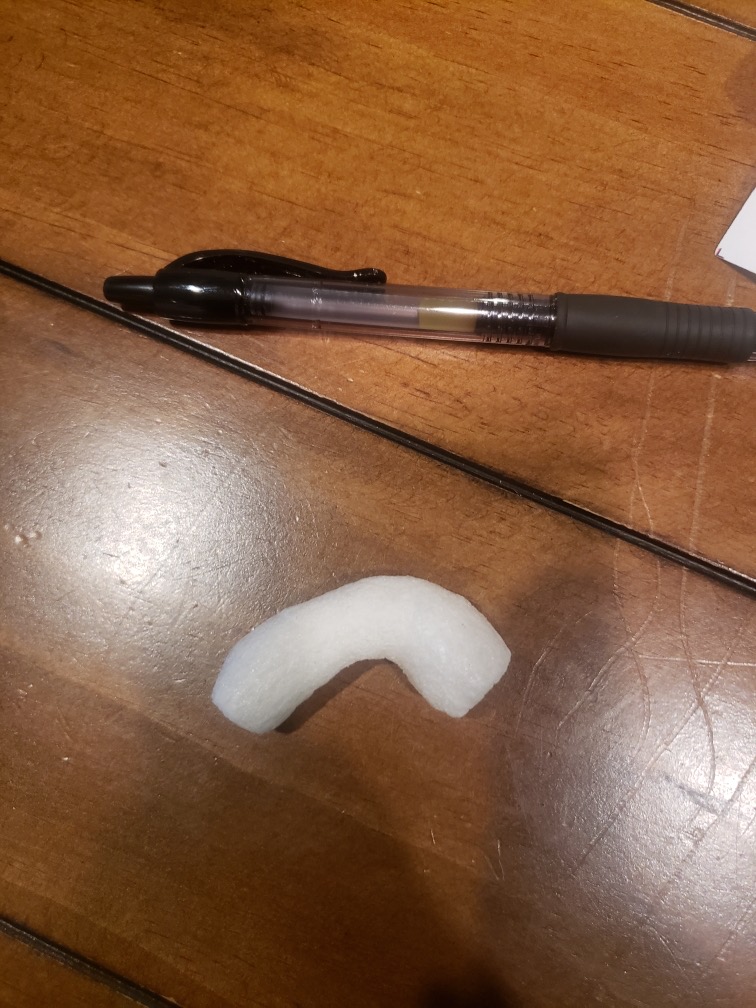
Our holistic veterinarian advised Benji’s mom to apply water to the foam packing peanut and see if it melted. It did!
The Good News and the Bad News
Good news: not a foreign body obstruction.
Bad news: possible break in Benji’s dog food allergy elimination diet.
Turns out, these packing peanuts are made of planet-friendly starch. They melt in water and do not add to landfills or waste disposal problems.
However, the starch comes usually from sorghum or from corn. We suspected Benji is allergic to corn! This little “snack” of packing material was a violation of Benji’s dog food allergy elimination diet protocol. We had to restart his 8-12 week “clean” diet in case the packing material was made of a starch that triggered his allergies.
Our holistic veterinarian Learned Yet Another Way a Dog Food Allergy Elimination Diet Can be Messed-Up
Turns out, environmentally-friendly packing peanuts can ruin a dog food allergy elimination trial! Let’s keep those packing “peanuts” away from your allergic dog.
Acknowledgement: Special thanks to Benji and his person Liz for the learning experience, beautiful pictures and permission to share this story. -Our holistic veterinarian September 1, 2021, Palm Harbor, Florida, USA. To schedule an appointment email contact us.
Our holistic veterinarian can teach you how pain management can benefit your pet
The International Academy of Veterinary Pain Management is an organization of health care practitioners including, veterinarians, medical doctors, veterinary technicians, and other licensed health care practitioners who have committed to practice, study and research non-human (animals’) pain management from an allopathic, rehabilitation and/or acupuncture and Traditional Chinese Medicine basis.
How Does Excellent Pain Management Help My Pet?
You would think this answer was obvious, wouldn’t you? We do not want any of our family members to be in pain- especially our animal family. We design and manage our pets’ lifestyles, including their food, exercise and entertainment. We could argue we have a special responsibility to be mindful and considerate when planning for our pets’ comfort and enjoyment.
Creative and forward-thinking pain management can help in ways we cannot intuit. For example, can we help our pets digest better and enjoy their food if they are not in pain? Can we help them live longer, need less surgeries, feel less itchy? Absolutely. If our pets are happy and energetic and relaxed, are we healthier and more relaxed? Absolutely. Attention to your pets’ happiness and health makes your whole family- pets and people- healthier.
What is New or Interesting About Pain Management?
We can prescribe allopathic medications – like non-steroidal anti-inflammatory painkillers. We can prescribe herbal formulas. We can use electromagnetic devices like the Assisi Loop. We can perform hands on therapies like massage, laser treatment, acupuncture, osteopathy, medical manipulation (like chiropractic adjustments in humans.) We can ensure modern anesthetic protocols that minimize pain.
But what is new and interesting is the new specialty of palliative care medicine and the relatively new study of rehabilitation and physical therapy techniques for pets. The application of functional neurology, nutritional response testing and tui-na (pronounced twee-nah) medical massage for the benefit of our animal friends and companions is exciting and meaningful work. Your pet can benefit from these sciences and technologies, whether they are new or ancient.
Does My Pet Have to Be in Pain to Benefit from Pain Management?
This Olde English Bulldogge is a prime candidate for pain recognition training because she is rambunctious.
No! They do not.
You can learn pain management concepts and techniques to identify when and if your pet is in pain. You can learn how to manage small injuries and oops! to prevent chronic pain or weakening of knees, shoulders, hips and back. You can learn healthy lifestyle choices to keep your pet out of pain like what to feed, what to supplement and how to train for maximum fun and minimum injury. Your trusted neighborhood veterinary team should be available to help teach you and check in with you so you can manage your pets’ lifestyle for optimum pain avoidance.
Text (813) 714-7863 and share your name, number, email, address, pet’s name, and urgency of situation to request to become a client or for more information.
Professional Guidance for Canine Yeast Dermatitis
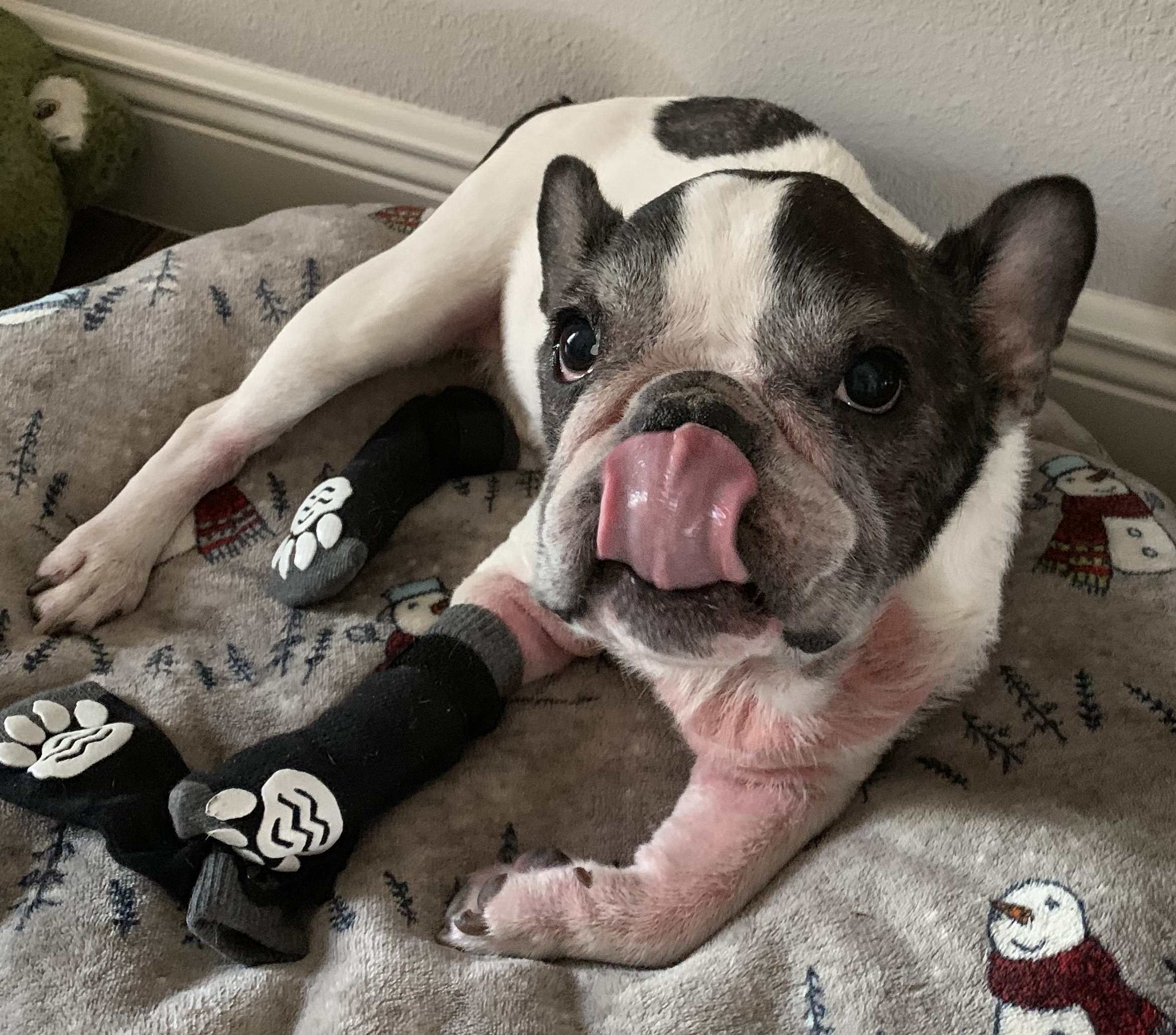
My poor itchy legs!
You know the smell. That yeasty, warm, sickly smell coming from your dog’s head or skin or their bed? The skin is red or bright pink. It is dry with flakes and itches like crazy. You have gone to the veterinarian 4-6 times in the past 2 years and you are frustrated with the money spent and the lack of results. You are researching holistic vets on the internet to find relief for your dog. You desperately need professional veterinary guidance.
Here’s What Goes Wrong with Chronic Dog Skin Infections
Which one are you?
How do I avoid Anesthesia for my Older Dog?
Anesthesia can age an already older pet. There may be groggy hours or days of recovery, digestive upset, stiffness or achyness from positioning during the procedure. You may be wondering if anesthesia is the only way to go? And if it is, what can you do to help your dog bounce back better than before the anesthesia? Our holistic veterinarian offers tips and alternatives you may not have already thought of.
-
Get a second opinion
- Ancient Law Pet Wellness is a 100% house call practice and does not perform surgery. “If I recommend surgery, I make zero money from that recommendation. You know I truly feel the surgery is in your pet’s best interest,” says our holistic veterinarian.
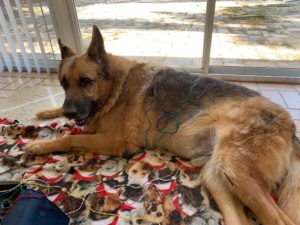
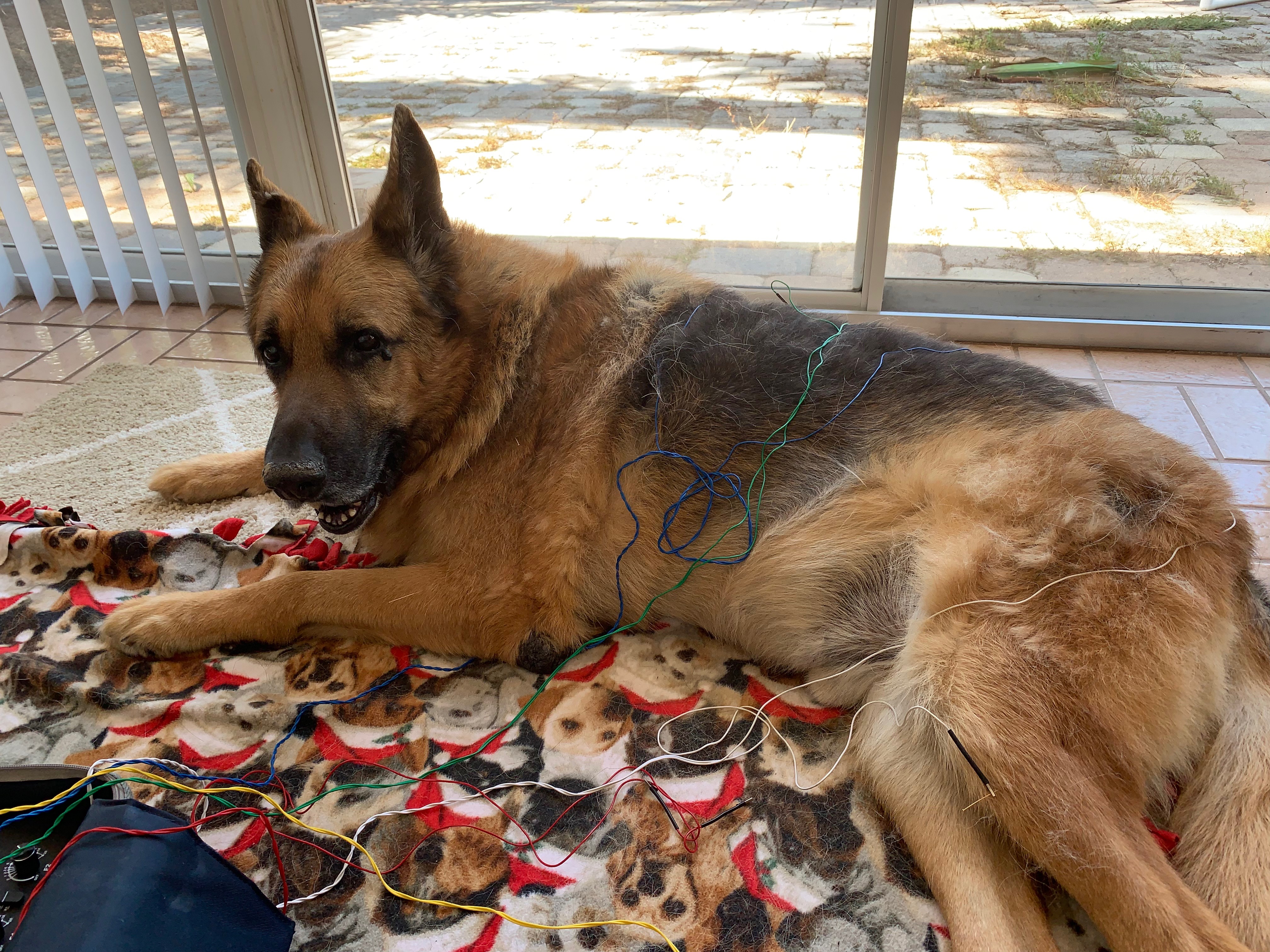
Partly paralyzed German Shepherd gets electro-acupuncture to help his back. Surgery is very risky with 6 ruptured back discs in a row! (see the wires on his side?)
- Ancient Law Pet Wellness is a 100% house call practice and does not perform surgery. “If I recommend surgery, I make zero money from that recommendation. You know I truly feel the surgery is in your pet’s best interest,” says our holistic veterinarian.
-
Get a proper diagnosis
- diagnosis: vomiting versus regurgitation “Vomiting involves active abdominal retching. If it ‘just comes up’ especially after your pet has just been sleeping, it is likely regurgitation. Why does it matter? If it is vomit, we look in the abdomen for the problem. If it is regurgitation, we look in the chest,” says our holistic veterinarian. You might be getting x-rays of the wrong part of the body!
- diagnosis: diarrhea versus constipation “Diarrhea and constipation can look identical. Your dog is doing the squat-walk around the yard and nothing comes out. Most people assume it is constipation. Usually it is diarrhea. Opposite treatment,” says our holistic veterinarian.
- diagnosis: coughing versus choking “Coughing can look like choking. Choking is a life-threatening emergency. If you think your dog is choking, do not hesitate to go to the pet ER,” our holistic veterinarian.
- diagnosis: bacterial skin infection versus yeast infection versus skin cancer “Bacteria, yeast, ringworm, mites and skin cancer can look identical. You need proper non-invasive testing,” says our holistic veterinarian.
-
Ask explicitly about alternatives to surgery
- alternative: new medical treatments “Will acupuncture work just as well as or better than surgery?” asks our holistic veterinarian. What else might work?
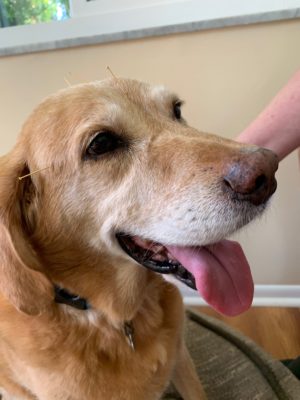
Beau has 2 brain tumors identified on MRI. They are inoperable. He enjoys his acupuncture and it helps him sleep soundly through the night. The specialist gave him 2 weeks to live. We just celebrated week 5!
- alternative: rest and painkillers “Does the surgery improve the outcome, or is it the same? Many times knee surgery can be avoided with rest, painkillers and physical techniques like professional massage and exercises for healing,” sys our holistic veterinarian.
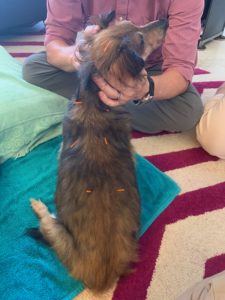
Acupuncture has been proven at least as effective as back surgery in many studies.
- alternative: how many dogs get better on their own? If you do nothing, will your dog get better? The classic example is ear hematoma surgery. A dog will likely get better on its own without surgery, but it can be painful and take longer than if you have a surgery performed.
- alternative: new medical treatments “Will acupuncture work just as well as or better than surgery?” asks our holistic veterinarian. What else might work?
-
Can the procedure be done with local numbing?
- local anesthesia reduces need for deep anesthesia
- many skin tags and small lumps and skin biopsies can be performed with local numbing. A calm, complaint dog that does not mind laying on a table under surgical lights is the ideal patient for non-anesthesia procedures.
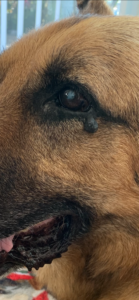
This eyelid lump looks easy to remove. But part of good surgical planning is anticipating and planning for every possible problem. Like “Shepherd no like! Syndrome” rendering surgery impossible mid-way through the procedure.
- many skin tags and small lumps and skin biopsies can be performed with local numbing. A calm, complaint dog that does not mind laying on a table under surgical lights is the ideal patient for non-anesthesia procedures.
- your dog needs help to decrease anxiety and pain with local anesthesia “Local anesthesia numbs the sensation from the area. But most dogs do not understand the hospital environment and feel anxious. Anxiety increases perception of pain,” says our holistic veterinarian
- local anesthesia reduces need for deep anesthesia
-
Can the procedure be done with light sedation?
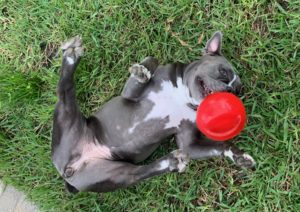
Can surgery be done with light sedation? You tell me!!
- light sedation: lump removal small lumps in a calm dog, especially on an easy to heal area like the trunk of the body or the top of the head are candidates for non-anesthesia surgery
- light sedation: diagnostic testing
- ultrasound usually no sedation is needed. Some dogs fidget or pant and must have a light sedative so the ultrasonographer can see the computer images.
- allergy skin testing is performed with light sedation. It may be more difficult to explain to your itchy dog why they are being shaved in a dermtologist’s office than explaining skin testing to your child.
- diagnostic biopsy, especially bone marrow biopsies can be quite painful and scary. Sedation is considered necessary for bone marrow biopsies.
-
Does my dog need anesthesia?
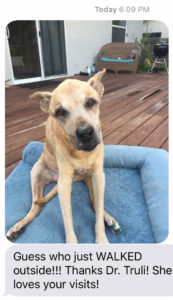
This girl would likely not survive surgery. Happy Patient after massage, acupuncture and injections to help severe arthritis & weakness.
- anesthesia: would the procedure be less stressful for my dog?
- tumor removal in a nervous dog. Will your dog remember the procedure and never accept a veterinarian’s help again unless zonked by sedation? Perhaps it is better to let your dog sleep through this episode, instead of developing a mental complex.
- anesthesia: would the procedure be faster?
- if your dog needs to be held still. Think about your dog standing and sitting, standing and sitting, panting, spinning, while your veterinarian tries to suture closed an incision on your dog’s side. It is likely to take an hour instead of 10 minutes!
- anesthesia: would the results be better?
- more thorough visualization
- ability to move the body parts and get to the area “I admit, back in the day, sometimes I wish I would have put certain dogs under anesthesia instead of taking 4 nurses and an hour to do a 1 nurse 10 minute procedure with only local anesthesia,” says our holistic veterinarian.
- is the procedure impossible without anesthesia?
- dental x-rays. Nope. No. It is not possible to take diagnostic quality dental x-rays in an awake dog. Why? If you ever had dental x-rays, remember when they said, “Now hold your breath for a minute?” That’s why.
- painful surgeries: bone, knee, hip, back. Just grueling. Only battlefield conditions would make me want to do these surgeries without anesthesia.
- anesthesia: would the procedure be less stressful for my dog?
-
What can I expect my dog to go through if they do not have the surgery?
- Always ask yourself and your veterinarian: is the surgery better than the problem in the first place? For example, bilateral mastectomy on a 12 year old dog with pre-cancerous lumps. An intensive, extensive large surgery might make her weaker.
- “I saw a dog years ago with a large red lump on the top of his nose. It was a mast cell tumor. Surgery was needed to cure it. But the family did not want his nose disfigured and frankly, it was an expensive surgery. The dog lived 3 more happy years, then suddenly passed from cancer-related disease. 15 was pretty good!” says our holistic veterinarian.
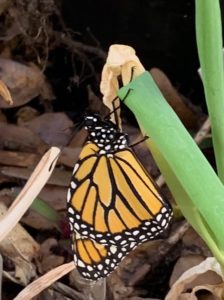
Just because it’s cool: 1 minute old Monarch butterfly just emerged from its cocoon on my spring onion stalk.

Call or email our holistic veterinarian today! Call toll-free(813) 816-1759 or email contact us
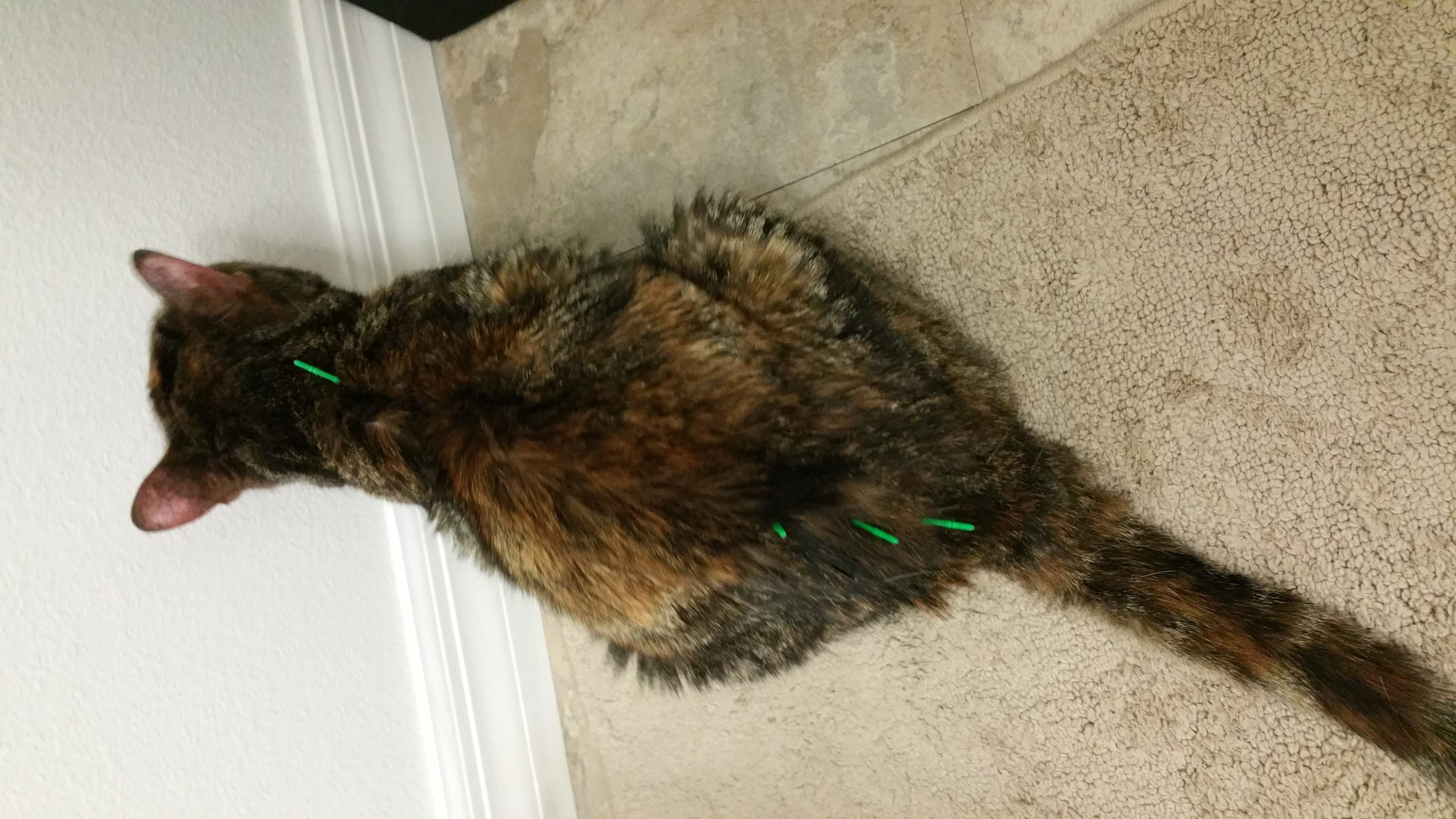
“My Cat Is Getting Old.”
Really? Old age is not a disease.
Here are some common things our holistic veterinarian hears when a cat actually has arthritis, disc disease or hip dysplasia:
- “She takes a long time to line up a jump.”
- “He doesn’t get up on the bed anymore.”
- “She hates when I touch her lower back.”
- “He used to chase the lizards all.the.time.”
- “I thought she was just getting old.”
If you notice your cat’s habits and behavior changing, there’s a good reason. You should schedule a check-up with your trusted family veterinarian or an integrative, holistic-minded veterinarian.
Why Slow Twitch and Fast Twitch Muscles Matter to Your Cat
Your cat will never admit it, but they care about fast twitch muscles especially. Why? Cats have more fast twitch muscles than people and dogs. What on earth are fast twitch muscles? Let me explain.
There are so-called slow twitch and fast-twitch muscles in the body. The slow twitch are what we generally use for prolonged activity, like distance running. Cats have more fast-twitch muscle fibers than humans. That’s why the Cheetah holds the mammal land-speed record and not a human!
Fast-twitch muscles have explosive-type action. For example, a cat has many more fast-twitch muscles in their haunches than humans. They use them to jump from the floor to the top of a grandfather’s clock in one leap, for instance. Most dogs and humans cannot create a burst of muscle activity that launches the body up 10 or 20 times their height! That would be like an average person jumping up to a balcony on a 5 or 6 floor building in one jump. That is what cats do when they jump unto your door frame, or the kitchen cabinets, or the grandfather’s clock, or an unfortunate curtain rod.
Of course, not all cats are that motivated or athletic, but even a ordinary cat can jump up onto the bed. That is 4-5 times their height! The kitchen counter…can your dog get up there acutely, confidently in 1 leap? We expect our cats to make a jump like that unless they are a differently-abled cat. We expect it so much that – be honest- we either get startled and alarmed if they miss, or we stifle a muffled laugh. Because cats usually don’t miss. That’s fast-twitch muscles in action.
Why Fast Twitch Muscles Matter to Your Older Cat
The Type II fast twitch muscles deteriorate quicker than the Type I slow twitch muscles as we age. The fast twitch muscles help us with that burst of muscle activity we need to get up out of a comfy chair – or off the toilet! We start having trouble “getting up,” and start relying on that brushed stainless steel helper-handle in the handicapped stall at a restaurant. But really, we notice we need to push up off the chair arms instead of just using our legs as we age. That is fast twitch muscle loss. And we lose it before the slow twitch muscles.
Now, imagine you are a cat. You are made of fast-twitch muscles compared to your humans! So what goes first? Your ability to “get up.” First the cabinet-tops, then the counter, then the bed, then the sofa, then the stairs, then…you “sleep a lot.” (More than a younger cat.) So likely the very first sign your cat is aging and needs holistic help is inability to jump and “get up” like they used to.
What About the Cat Arthritis?
Arthritis is thought to be a degenerative condition. In other words, it doesn’t happen over night. We miss the signs along the way that our pets are headed for pain. Loss of fast-twitch fibers evidenced by decreased jumping are subtle early signs your cat could use some veterinary help. Treatments like cold laser therapy, EMF, medical massage, physical therapy, nutritional support, acupressure, acupuncture and electro-acupuncture show promise to help cats age gracefully. These treatment modalities are all the practice of veterinary medicine in the State of Florida. Be certain the person you hire to help you is licensed to practice on your cat.
-Our holistic veterinarian is available for in-home evaluations for the Tampa Bay, Florida area. Please call(813) 816-1759 for appointment availability.
If you are not in the Tampa, Florida area, you can find a Integrative Medicine veterinarian by:
- ask your veterinarian if they have training in these modalities or if they can refer to a trusted colleague in your area
- go to tcvm.com under resources and “find a practitioner” – this is a worldwide search database
- go to ahvma.org under practitioner search – this is mostly United States, but also some worldwide members in the database
