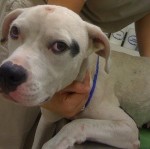
american bulldog beauty!
american bulldog beauty!
A Dog Found Running the Streets
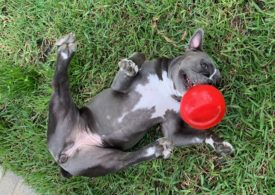
Wonderful, caring receptionist finds frightened stray American Bulldog-looking dog by the neighborhood supermarket. Beautiful, neglected 10-month-old white and black-spotted American Bulldog female looks up at Doc Truli with melty-brown big, trusting eyes. That’s got to be one of the hardest parts about treating stray dogs: almost all of them are trusting and forgiving. Dogs are amazing!
This little girl had a litany of common street dog ailments and medical needs, while being basically healthy and completely treatable. We named her “Sweetie.”
Top Ten Curable Problems a Stray Dog is Likely to Have
- Intestinal worms. Especially hookworms and roundworms. Sweetie had hookworms. Treat with prescription-strength dewormer.
- Unspayed. Spay ASAP. Spaying and neutering makes a dog less likely to roam. If you find a stray, they were roaming when you found them!
- Fleas. A good bath in any foaming shampoo kills the fleas, you don’t need toxic flea shampoo.
- Ticks. Pick them off or get a prescription tick dip at the vet’s. Ticks can require 2 or 3 dips until they are gone.
- Bacterial Dermatitis. Sweetie had bumps and crusts of scabs here and there all over her body. She needed some prescription antibiotics. With a vet’s prescription, Publix offers 2-week’s worth of Cephalexin, an appropriate antibiotic for most bacterial skin infections in dogs, free!
- Starvation. Sweetie was about 5.5 kg (12 lbs) underweight. Add food! She gained 2 kg (about 5 lbs) in 4 days!
- Ringworm. Sweetie was infected with ringworm fungus, particularly on her ears. Check out this classic ringworm picture! Ringworm gets into your home easily. The microscopic fungal spores rub off everywhere the dog goes and they can be carried on air currents everywhere dust can be found. Environmental contamination is a big deal! Keep the stray dog in a bathroom or crate until you see the vet! Ringworm is also Zoonotic, meaning the ringworm infects people, too! Wash your hands after touching the dog and do not sleep with the dog until it is cured, whatever you do! If you notice itchy spots or red bumps on your skin, see your doctor right away! Diagnosis and Prescription Ringworm Treatment from the vet are mandatory to keep your family safe from ringworm!
-
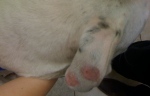
Ringworm Fungus on a Dog's Ear
Mange. Most stray dogs have come in contact with mange mite-infected wildlife, other dogs, or cats. The mite insects are too tiny for you to see with your eyes, but they cause crusted, super-itchy lesions on the paws, ear edges, face, around the eyes, and sometimes thick piled-up scabs all over the body. A really terrible mange infection will cause most of the fur to fall out and thick folds of dark pink, angry, sore skin to crust over and just hang in folds. A dog can die from severe generalized mange , as the skin is the largest organ, and the largest immune system defense of the body. See the veterinarian for safe and effective mange treatment; do not be lured into toxic home remedies!
- Thunderstorm phobia and Separation Anxiety. If your stray dog is in good shape. Nails trimmed, collar on, no fleas, not skinny, odds are the dog ran away. And odds are he or she ran away because of a panic attack. Watch carefully and schedule a veterinary appointment if you see signs you dog is anxious, vocalizing, soiling the house, or shaking during storms or during the first ten minutes when you leave the house.
- Loneliness. The #1 Reason to Keep a Stray Dog: Share the Love you and Your family have to give. It will come back to you 1000 times!

Sweetie received Lyme-Sulfur Dips weekly and Prescription medication for the ringworm. After 4 weeks, Doc Truli spayed her. She is still looking for a forever home as of October 3, 2010!
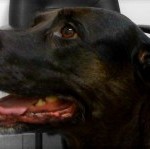
Happy, energetic working dog
Happy, energetic working dog
Dog Tail Bleeding is Difficult to Stop
If you don’t have this problem, you probably will not get how important this advice is for some poor dog out there in the world!

The bald area has bumps and cracks that bleed when the wagging tail hits walls and the sides of the sleeping kennel.
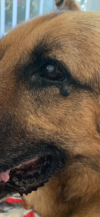
Some dogs wag their fool tails so hard, they crack the skin open near or at the tip, and the tail bleeds like crazy all over the house and just never seems to stop (because they keep on wagging!) Some dog kennel managers call it “Pointer tail” because so many Pointers do this. Other dogs with skinny, whippy tails do it, too. Greyhounds, Dalmatians, American Pit Bull Terriers, American Bulldogs, and even some furry breeds, like Belgian Malinois and German Shepherd dogs (especially if they are excited, high energy working dogs wagging and spinning in the squad car all day!)
Once the sore opens up on the tail, it can be incredibly difficult to heal. Some dogs require tail amputation just to cure the bleeding and prevent recurrence of the problem. Successfully bandaging the tail can mean the difference between surgery or no surgery.
Bandaging a Dog Tail Tip is Incredibly Tricky
You can’t just put an adhesive bandage on a dog tail and have it stick. Actually, you rarely can stick a bandage on a cat or dog at all. The fur gets in the way, the skin oils repel the stickification, and the patient can tear the bandage off with his or her teeth. Hmmm…
However, done right, the tail can be bandaged for weeks until the sores heal. read more…
How do I avoid Anesthesia for my Older Dog?
Anesthesia can age an already older pet. There may be groggy hours or days of recovery, digestive upset, stiffness or achyness from positioning during the procedure. You may be wondering if anesthesia is the only way to go? And if it is, what can you do to help your dog bounce back better than before the anesthesia? A holistic house call veterinarian with over 20 years experience, Dr Truli offers tips and alternatives you may not have already thought of.
-
Get a second opinion
- After 20 years of surgeries, Dr Truli’s Tampa Bay area practice is now 100% house calls with no surgery. “If I recommend surgery, I make zero money from that recommendation. You know I truly feel the surgery is in your pet’s best interest,” says Doc Truli.
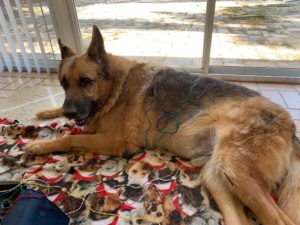
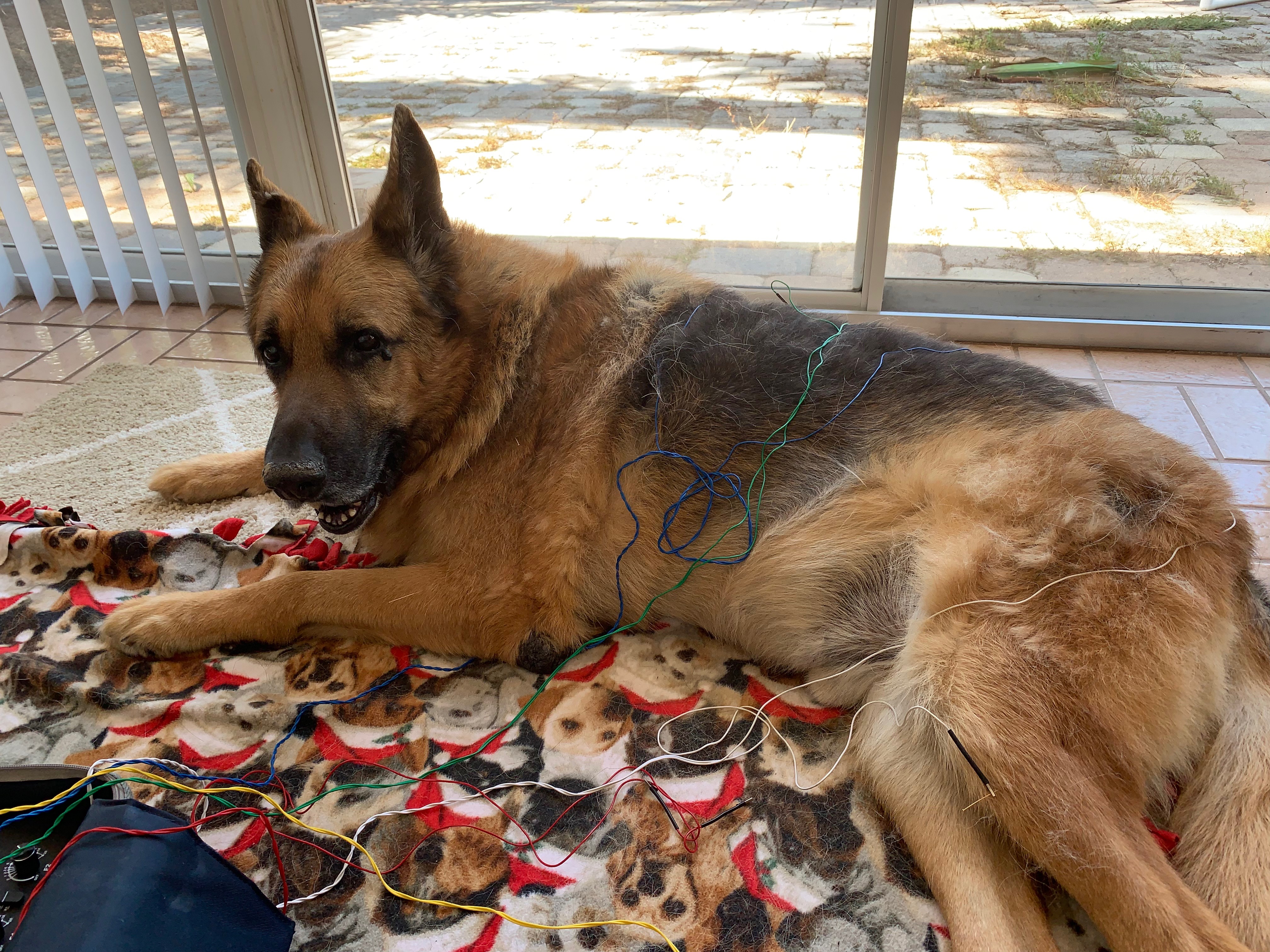
Partly paralyzed German Shepherd gets electro-acupuncture to help his back. Surgery is very risky with 6 ruptured back discs in a row! (see the wires on his side?)
- After 20 years of surgeries, Dr Truli’s Tampa Bay area practice is now 100% house calls with no surgery. “If I recommend surgery, I make zero money from that recommendation. You know I truly feel the surgery is in your pet’s best interest,” says Doc Truli.
-
Get a proper diagnosis
- diagnosis: vomiting versus regurgitation “Vomiting involves active abdominal retching. If it ‘just comes up’ especially after your pet has just been sleeping, it is likely regurgitation. Why does it matter? If it is vomit, we look in the abdomen for the problem. If it is regurgitation, we look in the chest,” says Doc Truli. You might be getting x-rays of the wrong part of the body!
- diagnosis: diarrhea versus constipation “Diarrhea and constipation can look identical. Your dog is doing the squat-walk around the yard and nothing comes out. Most people assume it is constipation. Usually it is diarrhea. Opposite treatment,” says Doc Truli.
- diagnosis: coughing versus choking “Coughing can look like choking. Choking is a life-threatening emergency. If you think your dog is choking, do not hesitate to go to the pet ER,” Doc Truli.
- diagnosis: bacterial skin infection versus yeast infection versus skin cancer “Bacteria, yeast, ringworm, mites and skin cancer can look identical. You need proper non-invasive testing,” says Doc Truli.
-
Ask explicitly about alternatives to surgery
- alternative: new medical treatments “Will acupuncture work just as well as or better than surgery?” asks Doc Truli. What else might work?
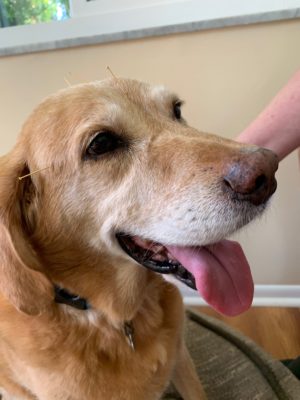
Beau has 2 brain tumors identified on MRI. They are inoperable. He enjoys his acupuncture and it helps him sleep soundly through the night. The specialist gave him 2 weeks to live. We just celebrated week 5!
- alternative: rest and painkillers “Does the surgery improve the outcome, or is it the same? Many times knee surgery can be avoided with rest, painkillers and physical techniques like professional massage and exercises for healing,” sys Doc Truli.
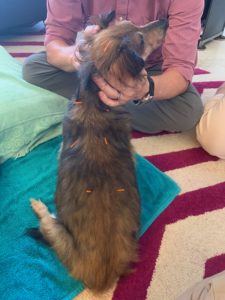
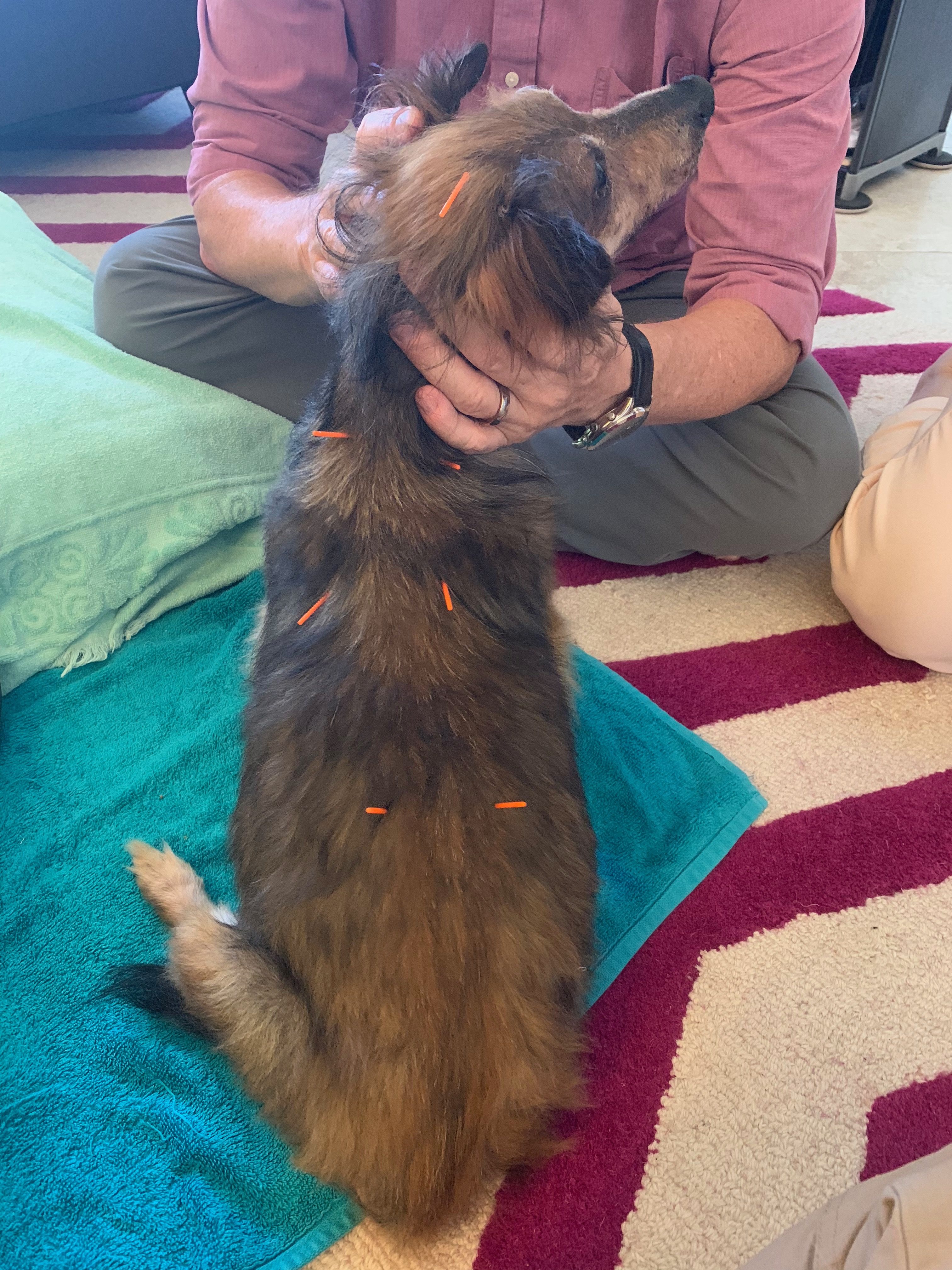
Acupuncture has been proven at least as effective as back surgery in many studies.
- alternative: how many dogs get better on their own? If you do nothing, will your dog get better? The classic example is ear hematoma surgery. A dog will likely get better on its own without surgery, but it can be painful and take longer than if you have a surgery performed.
- alternative: new medical treatments “Will acupuncture work just as well as or better than surgery?” asks Doc Truli. What else might work?
-
Can the procedure be done with local numbing?
- local anesthesia reduces need for deep anesthesia
- many skin tags and small lumps and skin biopsies can be performed with local numbing. A calm, complaint dog that does not mind laying on a table under surgical lights is the ideal patient for non-anesthesia procedures.
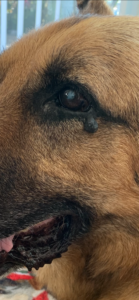
This eyelid lump looks easy to remove. But part of good surgical planning is anticipating and planning for every possible problem. Like “Shepherd no like! Syndrome” rendering surgery impossible mid-way through the procedure.
- many skin tags and small lumps and skin biopsies can be performed with local numbing. A calm, complaint dog that does not mind laying on a table under surgical lights is the ideal patient for non-anesthesia procedures.
- your dog needs help to decrease anxiety and pain with local anesthesia “Local anesthesia numbs the sensation from the area. But most dogs do not understand the hospital environment and feel anxious. Anxiety increases perception of pain,” says Doc Truli
- local anesthesia reduces need for deep anesthesia
-
Can the procedure be done with light sedation?
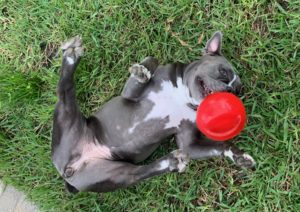
Can surgery be done with light sedation? You tell me!!
- light sedation: lump removal small lumps in a calm dog, especially on an easy to heal area like the trunk of the body or the top of the head are candidates for non-anesthesia surgery
- light sedation: diagnostic testing
- ultrasound usually no sedation is needed. Some dogs fidget or pant and must have a light sedative so the ultrasonographer can see the computer images.
- allergy skin testing is performed with light sedation. It may be more difficult to explain to your itchy dog why they are being shaved in a dermtologist’s office than explaining skin testing to your child.
- diagnostic biopsy, especially bone marrow biopsies can be quite painful and scary. Sedation is considered necessary for bone marrow biopsies.
-
Does my dog need anesthesia?
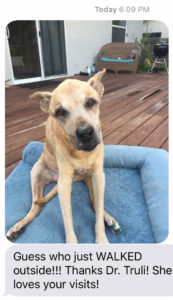
This girl would likely not survive surgery. Happy Patient after massage, acupuncture and injections to help severe arthritis & weakness.
- anesthesia: would the procedure be less stressful for my dog?
- tumor removal in a nervous dog. Will your dog remember the procedure and never accept a veterinarian’s help again unless zonked by sedation? Perhaps it is better to let your dog sleep through this episode, instead of developing a mental complex.
- anesthesia: would the procedure be faster?
- if your dog needs to be held still. Think about your dog standing and sitting, standing and sitting, panting, spinning, while your veterinarian tries to suture closed an incision on your dog’s side. It is likely to take an hour instead of 10 minutes!
- anesthesia: would the results be better?
- more thorough visualization
- ability to move the body parts and get to the area “I admit, back in the day, sometimes I wish I would have put certain dogs under anesthesia instead of taking 4 nurses and an hour to do a 1 nurse 10 minute procedure with only local anesthesia,” says Doc Truli.
- is the procedure impossible without anesthesia?
- dental x-rays. Nope. No. It is not possible to take diagnostic quality dental x-rays in an awake dog. Why? If you ever had dental x-rays, remember when they said, “Now hold your breath for a minute?” That’s why.
- painful surgeries: bone, knee, hip, back. Just grueling. Only battlefield conditions would make me want to do these surgeries without anesthesia.
- anesthesia: would the procedure be less stressful for my dog?
-
What can I expect my dog to go through if they do not have the surgery?
- Always ask yourself and your veterinarian: is the surgery better the problem in the first place? For example, bilateral mastectomy on a 12 year old dog with pre-cancerous lumps. An intensive, extensive large surgery might make her weaker.
- “I saw a dog years ago with a large red lump on the top of his nose. It was a mast cell tumor. Surgery was needed to cure it. But the family did not want his nose disfigured and frankly, it was an expensive surgery. The dog lived 3 more happy years, then suddenly passed from cancer-related disease. 15 was pretty good!” says Doc Truli.
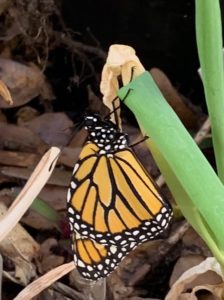
Just because it’s cool: 1 minute old Monarch butterfly just emerged from its cocoon on my spring onion stalk.

Call or email Dr Truli today! Call toll-free (877) 378-7854 or email DrTruli@VetVMD.com
Nom nom nom
Nom nom nom
How to Give a Cat a Pill, and Other Meds like Liquids
Pill Pockets
Pill Pockets are a brand of treat designed with a hole in the center of a soft, yummy chewie treat. You place the pill in the center and pinch the treat “shut.” Greenies Brand makes two flavors for cats: salmon and chicken. These Pill Pockets are incredibly, overwhelmingly tasty to most cats.
“My cat, Mitsy learned to spit out her thyroid medication. I almost gave up medicating her until we found pill pockets. No expense of custom compounding, and she thinks it’s a treat!” says Doc Truli.
Possible down-side to Pill Pockets: if your cat has food allergies (they have a new one for that!), digestive issues, or pancreatitis, your veterinarian can advise you whether pill pockets will be safe for your cat. read more…
How Did That Huge Hole Get in This Cat’s Face?
Including VirtuaVet’s Advice for Catching an Uncatchable Cat
Sometimes you must catch an independent or frightened cat who does not understand why he or she needs to go to the vet.
Sparky Needed to See the Veterinarian
Sparky might not be the handsomest cat in the world, and he hates staying inside all the time. His fur is brittle and dry. His body a little skinny and tough. He wanders the neighborhood and refuses to stay in the house. An unneutered male cat, he runs when anyone tries to pick him up, but otherwise, he purrs, stretches, rubs, and enjoys human companionship.
Sparky risks deadly Feline Leukemia virus (FeLV) from hissing, licking, sex, or fighting with infected cats outside. He also risks Feline Immunodeficiency virus (FIV) from sex and fighting. Since he is one of a group of about 20 cats that come to the back door for plates of food each day, his humans care for him and love him, but cannot offer the preventive care and testing that a pampered house cat might enjoy. Besides, Sparky abhors the car!
So when Sparky showed up with a gigantic hole in the side of his face, his people took a large comforter blanket and quickly scooped him up and put him in a cat carrier even before Sparky knew what was happening!
Tru Tips to Catch a Cat
“Half of my cat appointments each day show up late. At least one a day does not manage to make the appointment at all! Why? Because cats can be very tough to catch. Even when they are sick and need help,” says Doc Truli.
Sometimes you just have to catch a cat for their own good. You might feel like a terrible person for tricking them and upsetting them. Cats often argue and resist help, even when they are very sick. Resolve to help the cat no matter how much he or she complains and resists!
Catch Your Cat for an Appointment by Shutting Extra Rooms Off the Day Before the Appointment
Most cats are not difficult to catch. The cats are not mean and they do not hate their family. The problem with catching the cat lies in the people’s technique and the cat’s lack of experience with being carried. If you carry and life your cat several times a day. Maybe take walks to the food bowl, then catching your cat for a physical is no big deal.
Some cats hate to be lifted or touched, except on their terms. A cat that only comes to you on their own terms is difficult to catch on schedule on the day of a vet appointment!
The night before the appointment, find your cat. Shut your cat into one small room. If that is impossible, then shut all the doors to other rooms. You will cut your cat-finding and cat-digging-out activities considerably! Try to keep the cat out of a room with a large bed under which to hide! (It can be difficult to get them out in the morning!)
If your cat is under the bed, try getting the vacuum out and setting it as if you are going to start vacuuming. Turn it on for noise and most cats will run out from under the bed!
To Catch a Cat: Offer a favorite food and grab the cat
Be rotten. Catch ’em while they are eating! The down-side is this: if you miss, the cat will not trust you for a while, or ever. Do not attempt this technique unless you are sure it will work right the first time; you will not get a second chance.
Habituate the Cat to the Carrier
Be sly. Put the food in a carrier for a week. As your cat gets comfortable with the crate, even if you cannot actually touch your cat or lift your cat, at least Kitty will not panic so much when you finally shut the door. Again, be decisive. If you bungle the door-shutting, kitty is probably done with eating out of that carrier!
Advanced Cat-Catching Technique
The Pillow Case
Be quick. Get an old pillow case. The sturdier the fabric, the better.
Bunch up the pillow case like you do a sock before you put it on your foot.
Slip the case over the cat’s head from above (when he’s not looking, preferably with his head plastered in a food bowl.)
Slide the case over the body; get those hind legs and claws in there quickly!
The Key to the Pillow Case Technique
Then *KEY* slide the cat bundle in a case into a hard-sided cat carrier. If kitty is still wrapped, you may carefully open the case and let the cat turn around and breathe fresh air. At this point, some cats are already carving their way out of the pillow case with their angry stabby claws, and you need not worry about their breathing situation; they will take care of that!
Shut the carrier door before you lose the cat!
Feral Cat / Barn Cat-Catching
Dish Drainer Squish
For professional-strength cats, like a running, feral barn cat, get a plastic coated wire dish drainer. When the cat runs up a wall, quick press-smoosh the cat to the wall. You must press firmly or you will lose the cat. Slide the cat down the wall into a waiting container. Preferably use a container with air holes.
Spring-Loaded Trap
For professional-strength cats with non-agile people, as a last resort, you may catch the cat in a trap. A Have-a-Heart type trap (Brand Name: Havahart) is a wire cage with a weighted bait plate for food. (Hardware stores sell or rent them. Many Animal Control departments loan or rent traps.)
When the cat goes inside and eats, a latch trips and the door behind the cat closes suddenly. You can imagine the terror and shock a feral (wild) cat feels when the door closes. Because the cat could hurt itself, or have a heart attack from fear and panic, do not ever leave a trap unattended for more than a few minutes. It is best if you watch from a house window.
“Be careful with a cat trap. To prevent injury to the cat, do not use these traps in excessively hot or inclement weather or the cat could easily die from stress and exertion.” says Doc Truli.
Sparky’s Cat Bite Abscess

That red spot is a hole with no skin over it!
Sparky came to Doc Truli in a hard-sided carrier. Even though he lived outside all the time, he came for a bowl of canned cat food each morning. When his people saw the wound, the got the carrier right away. While Sparky was still eating, they quietly and calmly picked him up, and put him directly into the carrier they had waiting right by the food dish. He was not happy, but he was safe for transport to the animal hospital.
A huge patch of skin was missing from the side of his right cheek.
“Is it a tooth root abscess?” asked his dad.
“No, this is an infected, old bite wound,” said Doc Truli.
“Do you think an opossum bit him? Or maybe he got in a fight with a rat,” asked dad.
“No, cats care about other cats. An infected bite is almost always from a cat fight,” said the Doc.
Cat Bite Abscess Treatment
Believe it or not, Sparky let Doc Truli clean the wound with dilute iodine antiseptic solution. Some bits of necrotic, grey, dead connective tissue peeked out from the edges of the pink, healing wound. Sparky allowed Doc to trim the grey dead stuff with sterile surgery scissors. Most cats require anesthesia for this cleaning because their fear and pain drives them to struggle to escape. Sparky just sat on the examination table and purred.
A dirty, infected wound of this type cannot be surgically sealed closed without trapping infection inside the body. Plus, the skin can heal amazingly large holes (up to 2 cm across) through biological processes called contraction (pulling the edges in to the center), and re-epithelialization (re- epi – theel – ee – al – i – zay – shun). In re-epithelialization, the body sends new, thin, pink skin cells over the defect. This is not a whole new thick skin with hair follicles and all the skin structures, but the thin pink “scar” serves the purpose of closing the wound without a skin graft surgery.
When Sparky comes for his 2-week recheck, Doc Truli will post the pictures. Sparky’s giant hole in his face might heal without any surgery!
How Could Angel’s Family Respond Perfectly to a Dog Bite Attack?

Cocker Spaniel with swollen leg
When a little Party-Color Cocker Spaniel suffered bite wounds from the neighbor’s dog, her parents did not know how to respond. The neighbor knew some dog first aid and applied his knowledge as best he could. No one thought to go to the animal emergency room, even though they lived in a major metropolitan city in the US, 10 minutes from a 24/7 animal e.r.! Quick thinking and proper urgent care would have allowed Angel to avoid extra pain and heal faster without surgery. read more…