“We don’t know what happened. Roxi’s eye just started bleeding.”
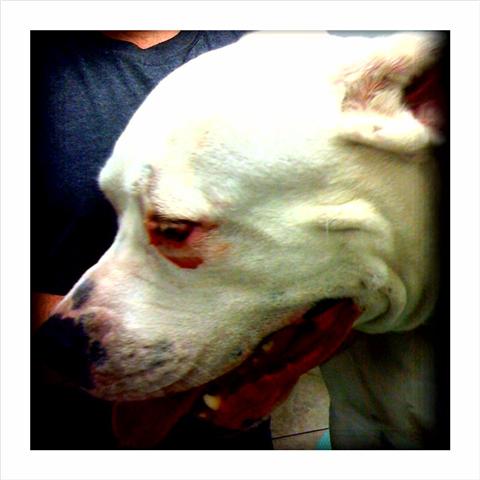
Fresh red blood collected below Roxi's eye
2-year-old female American Bulldog’s eye bled on and off for a week
“We don’t know what happened. Roxi’s eye just started bleeding.”
Before you think, “How terrible! Why didn’t they take her right to the vet’s?” Let’s question further.
“When did you first notice the problem?” said Doc Truli.
“You know, we really noticed it this morning. But when we started talking about it at home, the kids thought maybe they saw something that looked like blood last week. But then it went away,” said the mom.
This happens often. A problem seems horrible. But in hind-sight it came on gradually, or it came and went. Often, you just cannot be certain if there really is a problem or not! Continue reading “American Bulldog Bleeding from the Eye”
How to Check Your Pet’s Prescriptions and Demystifying Common Misunderstandings Reading Medication Label Directions
VirtuaVet’s: How to Check Your Pet’s Medications
Check your pet’s medications when you pick them up! Mix-ups, mistakes, mistaken identity, wrong count, wrong meds, wrong directions, expired medications, or just plain old unclear, confusing directions can leave you out some money and your pet not feeling any better. Be sure you understand the label and the label is clear and correct before you take that medication home with you!
You’d be Surprised How Easy It Is to Misunderstand
The doctor says, “Mom, if I gave you a prescription and told you to give your cat two pills every 12 hours, tell me what you would put in your cat’s body.”
“Okay,” says mom,” I’d give a tablet in the morning at about 8 am and another tablet at night at 8 pm. That’s two tablets every 12 hours, right?”
Gaining weight for no reason is a symptom of illness in an older cat.
Does this cat look healthy to you?
“My old cat is gaining weight!”
A friendly tabby striped cat with white paws peered out through the cat carrier door.
“Doc, my wife’s mother came to visit two months ago and she said Sparky gained weight. We weren’t sure, but it did look like her belly was bigger. So we switched her to Senior weight loss food. But it looks like she’s still gaining weight.”
Actually, Sparky lost muscle over her shoulders, back, and hips while her belly sagged and grew large and pendulous. Over-all, if you picked her up, she would feel heavier. But the weight was in all the wrong places!
Diagnostic persistence returns a canine narcotics officer back to the work he loves to do!
A Canine Officer with Lack of Interest in Work is a Big Problem!
Warning: This is a technical, geeky, post. Have organic green tea or organic coffee before reading! (If you are wondering about tests your vet has ordered on your dog, this post explains many advanced tests.)
Titus looks depressed and sad
Titus, an 8 year-old Curly Coat Retriever sat on my examination table with a forlorn look on his face. (The white fur around his eyes in the picture is normal for him after he had entropian (rolling in of the eyelids) surgery years ago, the new fur grew in white instead of black.) His handler of 6 years from the Narcotics division looked equally dismayed and worried.
“Doc, Titus just doesn’t have his drive anymore. He was the best dog in the unit. Now he just doesn’t want to work sometimes. The other day, he actually just sat down in the middle of a search and refused to move. That’s not like him!” he said, “Maybe he’s upset because I started training the new Malinois.”
Doc Truli agreed Titus had never looked so depressed. Even when he flipped his stomach and bloated a few years before, and then got a hand towel stuck in his intestines two weeks after that. Even then, Titus looked energized and happy to work. Jealousy would not cause the awful “down” look on Titus’ face. We worried he was getting old.
“I hate to have to retire him, he’s my best dog. But if he doesn’t feel like working anymore, then that’s it,” said his handler.
Have your veterinarian examine a sudden, painful lump under or around your dog’s tail.
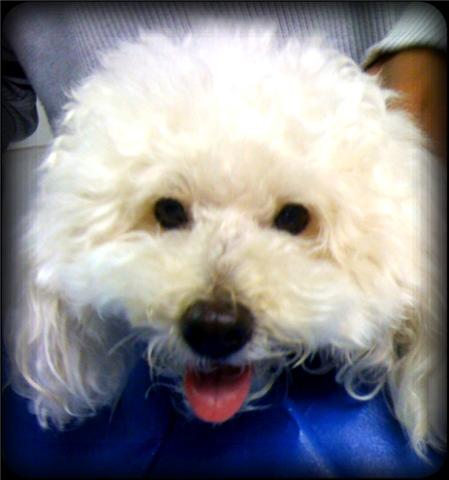
What a Cute Bichon!
Bennie had a bump. A red, painful swollen lump under his tail, just to the left side of his anus. He was miserable!
“Doctor, he was perfect yesterday. Now I see this lump and he doesn’t want to eat today,” said Bennie’s human mom.
Doc Truli responded,”Bennie has a blocked, infected left anal sac, that is about to rupture through the skin.”
“What?” said Bennie’s mom.
Okay, most people do not know about this secret of dog (and cat, and ferret, etc) anatomy. Doc Truli might have paused before signing up for veterinary school if she knew a proportion of each and every workday would be spent examining, feeling, and emptying anal sacs. This is a disgusting, soul-trying part of the job of being a veterinarian.
Why would a veterinarian perform $1,000 surgery for free?
Tucker's a handsome old guy!
Tucker needed surgery. Not because he would die without surgery. Not because he was miserable. Tucker needed surgery because the smelly lump/bump/mass THING growing under his left armpit on the front of his chest had just gotten totally out of control!
Two years has passed since Tucker was diagnosed with a benign (read: not spreading inside his body) skin growth by his left armpit. The lump was cauliflower shaped, pink and white, maybe 1-2 inches across. It really did not bother him, and his human mom elected to leave it be for the time. At twelve years old, Tucker was not young for a Golden Retriever and his mom felt he would be happier and stronger of she took a “wait and see” approach to the lump. In medicine, doctors call this approach “benign neglect.”
“Benign neglect is a term doctors use when a problem or condition is not life-threatening and appears stable. It refers to the approach of monitor without treatment. Most people would call it, wait and see,” says Doc Truli.
If you think the syringe feeding is “difficult” or “time-consuming,” think of the discomfort you may be saving your cat, and the finances you will have freed up for follow-up care for your cat (or yourself!)
A cat will not eat if he or she cannot smell the food, feels too much pain, is frightened the food may have caused the pain (called food aversion), obviously if the food has gone bad (use your sniffer to see if your cat is trying to tell you something), another cat is guarding and patrolling the food bowl (behavior conflict, call the veterinarian!), has a painful or blocked stomach/alimentary situation.
Syringe-feeding saves lives when the reason is not surgically fixed, and the medicine is adequate. Certain cats just need a little help for a while until they get their kitty “mojo” back.
Kidney disease (hyperparathormonemia)
Hypertension (high blood pressure)
Blocked sinuses (any reason)
Sore throat (any reason)
Post intestinal or stomach surgery
Hepatic Lipidosis (fatty liver disease)
Pancreatitis
Liver disease in general
Painful Teeth (Surgery to fix the teeth, and then gentle feeding during healing)
Cancer
Alternatives to syringe feeding include a surgically-placed feeding tube through the nose, pharynx (at the back of the throat), esophagus, into the stomach, or into the jejunum (second part of the small intestine). Obviously, these are doctor-prescribed and performed and monitored happenings.
If you think the syringe feeding is “difficult” or “time-consuming,” think of the discomfort you may be saving your cat, and the finances you will have freed up for follow-up care for your cat (or yourself!)
Syringe Feeding an Exercise in Planning and Execution
“Why Do I Have to Put Myself and My Cat Through Syringe Feeding?”
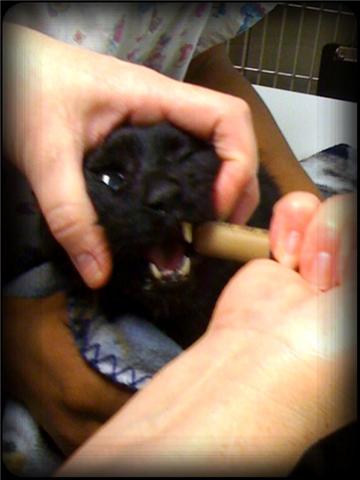
Sometimes the difference between life and death for an unwell cat is nutrition. Syringe feeding is the slow, gentle administration of soft, soupy food through a feeding syringe, into your cat’s mouth in such a way that natural swallowing is encouraged.