Lymphatic Drainage Massage & Tuning Fork Therapy for Dogs
Your dog’s lymphatic system works around the clock — filtering toxins, moving immune cells, and draining excess fluid from tissue. Unlike blood, which the heart pumps automatically, lymph has no pump of its own. It relies entirely on muscle movement, deep breathing, and outside stimulation like massage to keep flowing. For sedentary, senior, post-surgical, or recovering dogs, that can mean sluggish lymph — and sluggish lymph shows up as puffiness, stiffness, slow healing, and a duller immune response.
Two gentle, non-invasive techniques — manual lymphatic drainage massage and tuning fork (acoustic/vibrational) therapy — can help keep that fluid moving. Here’s what each one does, how it’s done, and when to loop in your veterinarian first.
Watch: Manual Lymphatic Drainage & Tuning Fork Therapy Demo
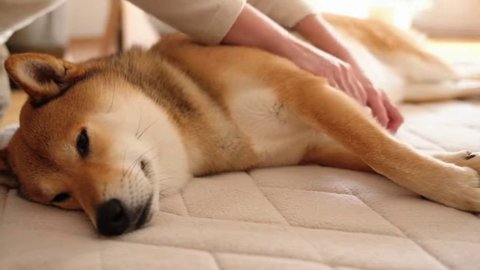
▶ Watch: Manual Lymphatic Drainage & Tuning Fork Therapy Demo (video)
Signs Your Dog’s Lymph Flow Could Use Support
- Mild puffiness or swelling around the paws, hocks, or belly, especially after long periods of rest
- Slower-than-expected healing after a minor injury or after surgery (once your vet has cleared the incision for touch)
- Stiffness or reduced range of motion in senior or arthritic dogs
- General low energy or a coat that looks dull despite good nutrition
Persistent, unexplained, or one-sided swelling — or any new lump — should always be examined by your veterinarian first. Lymphatic work is a wellness and recovery tool, not a way to diagnose or treat swelling of unknown origin. (See our guide on why every new lump deserves a vet check.)
Manual Lymphatic Drainage Massage: How It Works
Manual lymphatic drainage (MLD) uses extremely light, rhythmic pressure — about as much weight as resting a hand on the fur, not a deep-tissue squeeze — to encourage lymph fluid toward the nearest lymph nodes and back into general circulation. Research on massage and lymph flow has shown that light massage can increase lymph flow rate more than tenfold at the treated site, which is why the technique is used so widely in post-surgical and geriatric care.
A Simple At-Home Routine
- Start calm. Have your dog lying down or standing comfortably in a quiet space. This is not a technique to do on a wound, an active hot spot, or a dog who is guarding the area.
- Work the armpits first. Cup your hand gently around the armpit (axillary) area and use slow, light squeeze-and-release pressure. This is one of the two easiest lymph node clusters to reach and drains a large portion of the front half of the body.
- Move to the flank and groin. Repeat the same gentle squeeze-and-release motion in the flank area in front of the hind leg. This clears the rear half of the body.
- Use flat fingers, not fingertips. Along the neck and shoulders, lay your fingers flat and draw them gently downward and toward the heart — never away from it. Direction matters: lymph only flows one way.
- Finish at the head, if your dog enjoys it. Light circular motions behind the ears and along the jawline can help drain the head and sinus area. Many dogs find this deeply relaxing and settle within minutes.
- Keep sessions short. Five to ten minutes, once a day or a few times a week, is plenty. More pressure is not more effective — with MLD, lighter is correct.
Tuning Fork (Acoustic Vibrational) Therapy
Tuning forks come in two types, and the difference matters for how you use them:
- Weighted forks (roughly 32–136 Hz) have small added masses on the tine ends. That extra weight produces a deep, low tone that travels efficiently through bone and fascia when the stem rests directly on the body. The most commonly used is the Otto 128 Hz fork (tuned to the musical note C), favored for pain relief and fascia release. The 136.1 Hz “OM” fork is another popular low-frequency option, known for its calming effect on the nervous system.
- Unweighted forks (typically 256 Hz and higher) ring with a clearer, more audible tone but produce very little physical vibration. These are held a few inches away from the body — often near the ear — so the dog hears and senses the sound without direct contact.
For lymphatic and fascia work, practitioners generally reach for a weighted, low-frequency fork (128 Hz or 136.1 Hz), struck gently against a rubber activator, then either held a few inches from the ear first or rested lightly against the body once the dog is comfortable. The vibration travels through fascia, the connective webbing that surrounds muscles, nerves, and lymphatic vessels. When fascia is tight or “sticky,” lymph and blood flow through it more slowly; the vibration is thought to help release that restriction, similarly to how manual massage does but through sound and vibration instead of pressure.
Common starting points practitioners use include:
- Behind the ears at the base of the skull, to encourage a calming, parasympathetic response
- Along either side of the spine, where dogs commonly hold tension
- Over the shoulders, hips, and thighs for dogs with stiffness or mobility challenges
Before placing a tuning fork directly on your dog, activate it and hold it a few inches from their ear first so they can hear and sense the vibration and decide it’s safe, then move to gentle body contact only once they’re relaxed. Most dogs settle quickly, with panting slowing and eyes softening within a few minutes — a good sign the nervous system is easing.
When to Check With Your Veterinarian First
Both techniques are gentle and low-risk for most healthy dogs, but please coordinate with your veterinarian before starting if your dog:
- Has a diagnosed heart condition, active infection, fever, or blood clotting disorder
- Has a known or suspected tumor — stimulating lymph flow near an undiagnosed mass is not appropriate, and any new lump should be examined and diagnosed first
- Is within the first 72 hours after surgery — your veterinarian or a trained canine rehabilitation professional should guide timing and technique during that early healing window
- Is pregnant, or has any condition your veterinarian is actively managing
Used appropriately, lymphatic drainage massage and tuning fork therapy are wonderful additions to a holistic wellness routine — supporting circulation, easing stiffness, and giving you a calm, hands-on way to check in with your dog’s body regularly. If you’d like a demonstration tailored to your own dog, our in-home Holistic House-Calls include hands-on instruction so you can continue the technique confidently between visits. Ready to book a visit? Call or text (813) 816-1759 or email JLaw@VetVmd.com — we serve Tampa Bay in person and support clients nationwide by virtual consultation.

Comments are closed.