Tucker’s Story
134-pound Great Dane Fights Bone Cancer
Tucker’s Mom Shares His Journey
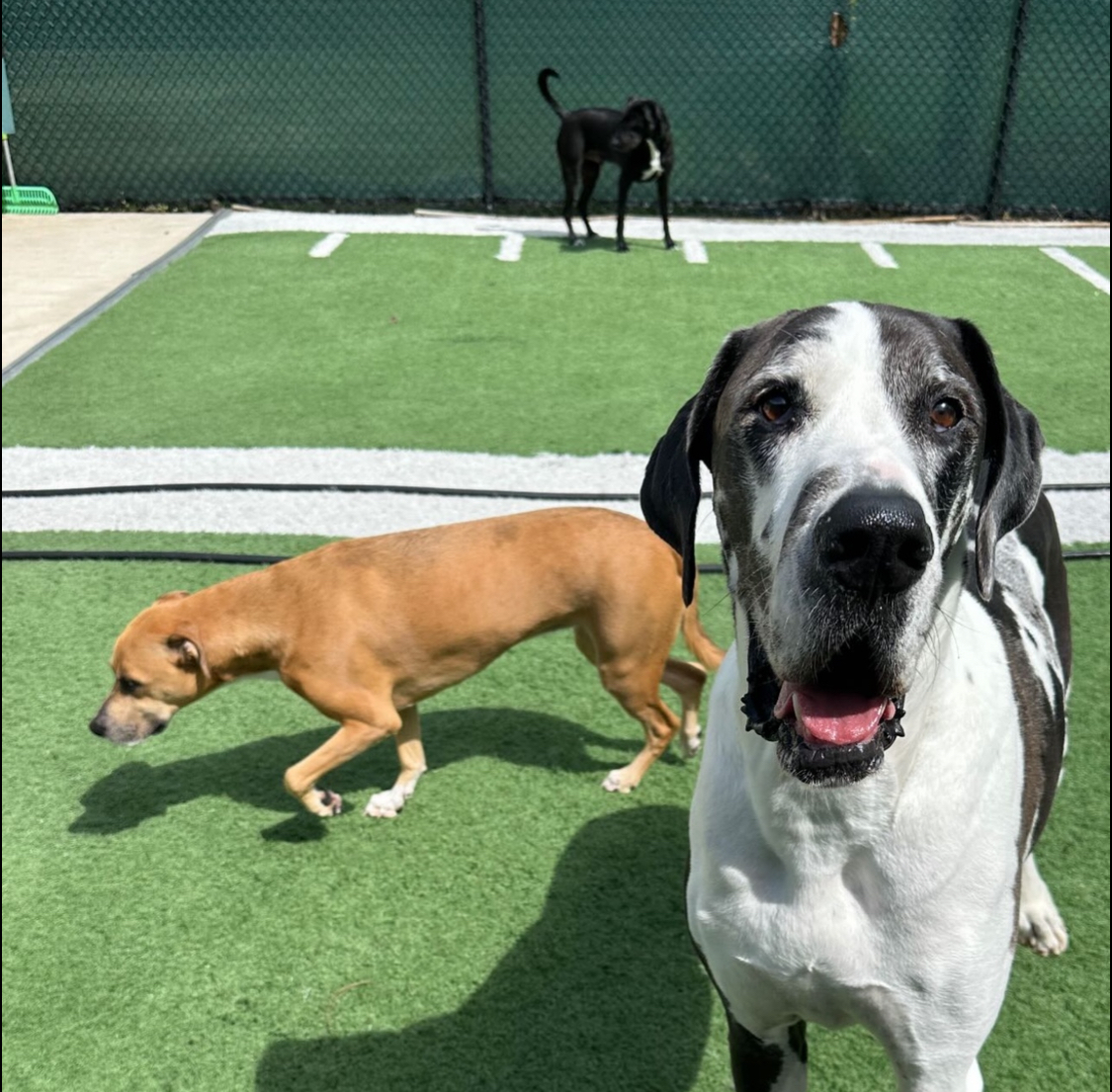
Tucker loves his day care playtime!
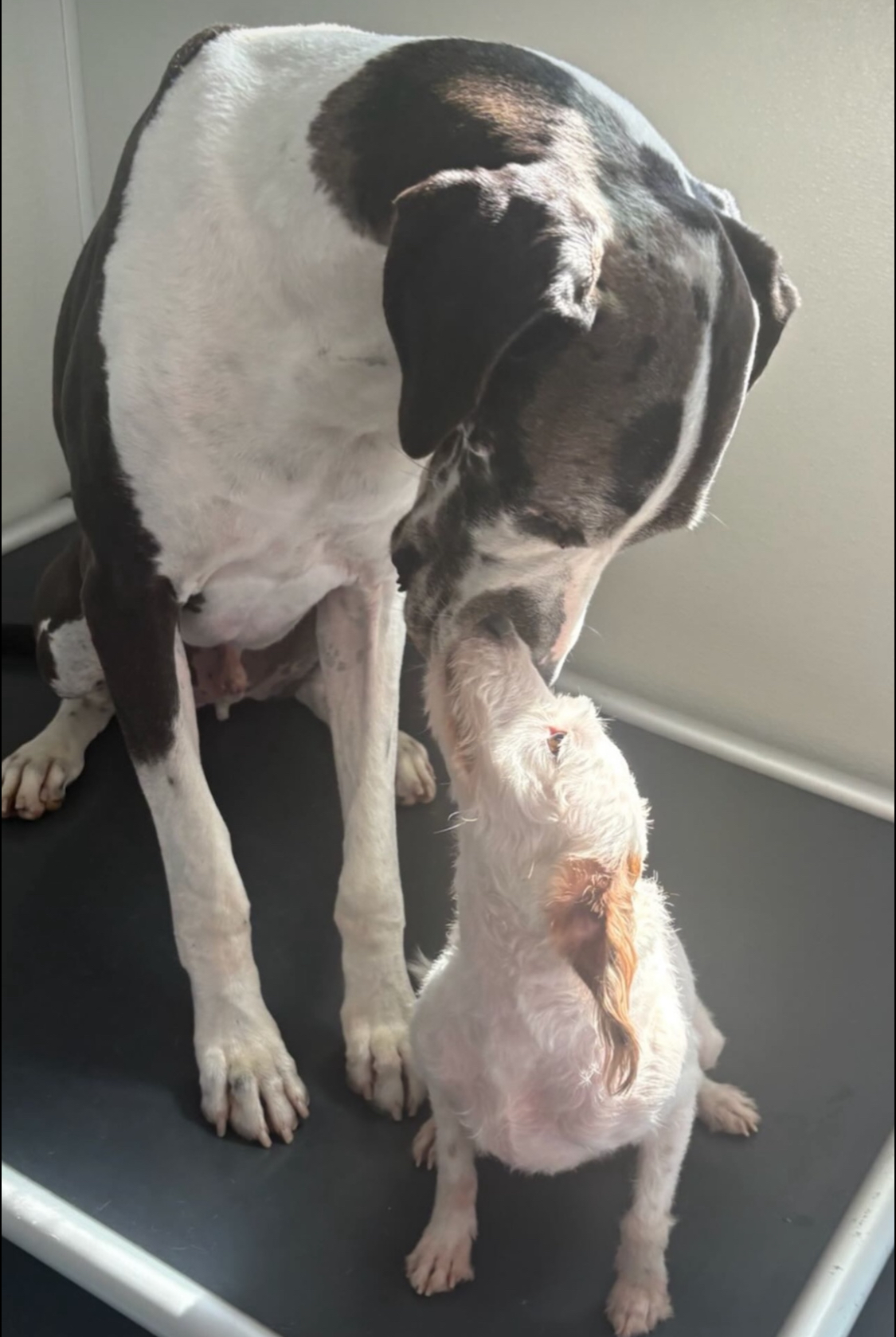
Tucker was a 134-pound Great Dane with a presence you couldn’t miss and a personality that was even bigger. He was the king of daycare—the one who showed new pups the ropes and played gently with dogs of all sizes. A true gentle giant, he would walk the neighborhood outdoor market, get pets from everyone, and happily go wherever we went. He was patient and gentle with everyone he met, and strikingly handsome.
He was active, social, and full of life—running, playing, and deeply part of our everyday world.
But behind that big, happy exterior, Tucker had struggled for years with health issues that never seemed to have clear answers.
For most of his life, he dealt with ongoing gastrointestinal problems—soft stools, occasional vomiting, gas, reflux, and recurring anal gland infections. Some days were better than others, but there was always an underlying sense that something wasn’t quite right. We followed the traditional path for a long time—trying specialty diets, including hydrolyzed and limited ingredient foods, along with medications and supplements. At times, things would improve, but nothing ever truly resolved the root of the issue.
At one point, we were even advised by traditional veterinarians to surgically remove his anal glands—an invasive procedure that would permanently alter his body.
Instead, we chose a simpler, more natural approach. We began incorporating dehydrated carrots into his meals to help support proper digestion and natural expression of the glands.
He never had another anal gland issue again.
That moment stuck with us. It was one of the first times we saw how supporting his body, rather than removing or suppressing something, could lead to real change.
The Osteosarcoma Diagnosis That Changed Everything
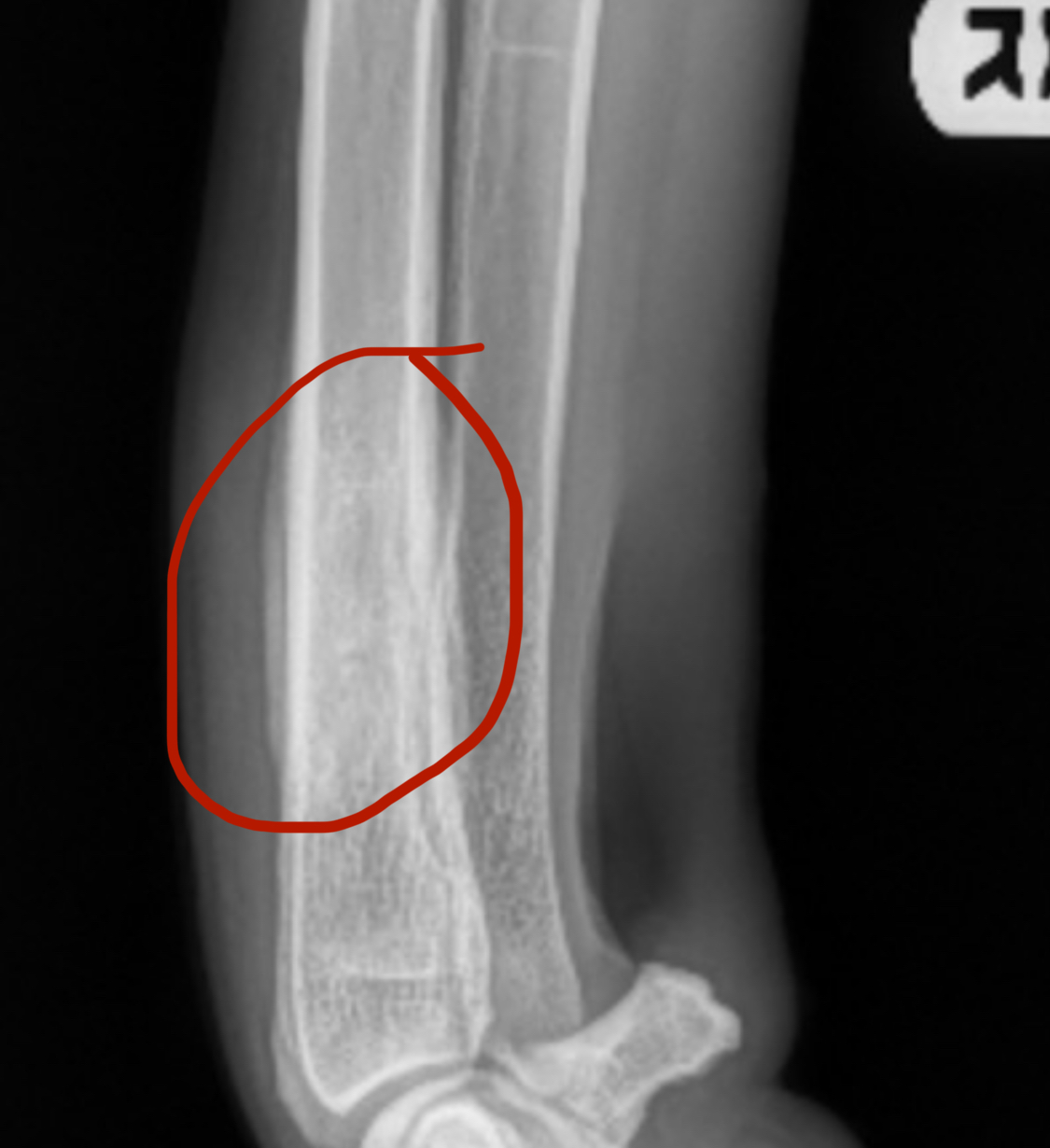
For comparison, the left front leg looks normal on the xray.
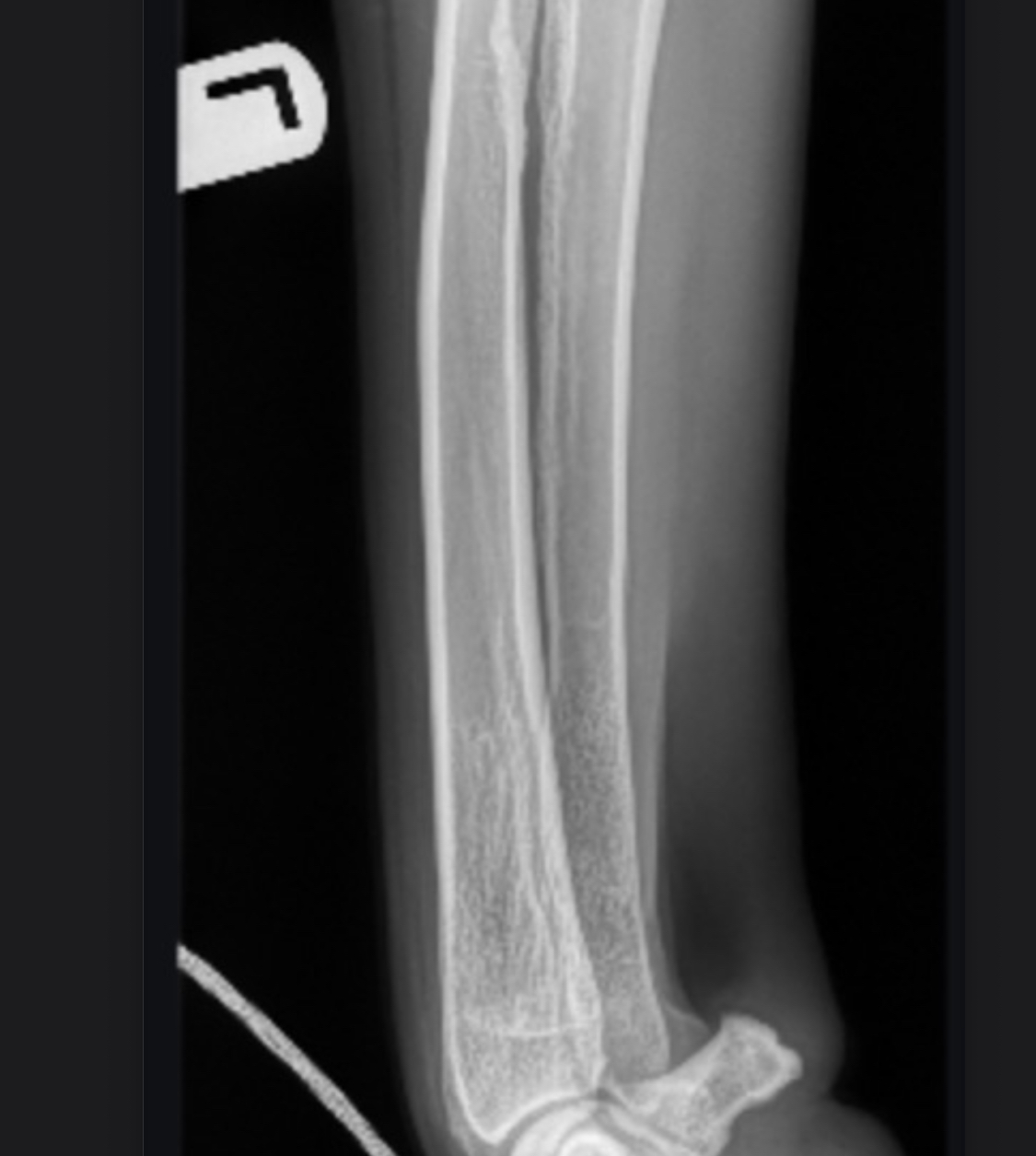
For comparison, the left front leg looks normal on the xray.
Then, in February of 2025, our world changed.
Tucker suddenly developed a limp in his front leg. We took him in for x-rays, and what we heard was devastating. The primary concern was osteosarcoma—an aggressive form of bone cancer. We were told that the only way to confirm it was through a bone biopsy, and the treatment options presented were immediate and life-altering: amputation, chemotherapy, or preparing for palliative care.
But Tucker didn’t match what we were being told.
Even in those early days, his limp resolved quickly, and he remained active, engaged, and full of life. Within days of that appointment, we sought out a different perspective and met Dr. Truli.
We Sought Out a Different Perspective From Dr Truli
From the very beginning, her approach was completely different. She didn’t just look at the x-ray—she looked at Tucker. His history, his energy, his resilience, and the full picture of what his body had been dealing with over time.
Under her care, we chose not to rush into invasive diagnostics or procedures. Instead, we focused on supporting his body—reducing inflammation, strengthening his system, and transitioning fully to a real, whole-food diet.
And what happened next was something we’ll never forget.
At a follow-up, Tucker’s x-rays no longer showed the original lesion.
That left us with a question we couldn’t ignore—bone cancer doesn’t just disappear.
Tucker continued to enjoy his doggy friendships during integrative care for bone cancer.
He continued to return to his normal activity level. He ran, played, and lived his life fully. He was happy, engaged—and he even returned to daycare, right back to doing what he loved.
He didn’t lose his leg. He didn’t go through chemotherapy. He wasn’t recovering from invasive procedures.
He was living.
For a period of time, he truly thrived.
But Tucker’s story didn’t end there.
Tucker Experiences Issues With His Back Leg
Later on, he began to experience issues in his back leg—something entirely separate from the original front leg concern. This time, the presentation was unusual. We consulted with multiple veterinarians, and consistently heard the same thing: they had never seen anything quite like it.
It didn’t behave like typical bone cancer.
Because of that, the leading thought shifted toward the possibility of a fungal infection in the bone—something rare, but potentially treatable. For the first time, we were presented with a scenario where an invasive diagnostic could lead to a targeted treatment with a clear path forward.
With that in mind, we made the difficult decision to move forward with a bone biopsy.
That biopsy ultimately confirmed what we had once hoped wasn’t the case—Tucker’s original front leg and hind leg issue was, in fact, osteosarcoma.
Tucker the Teacher
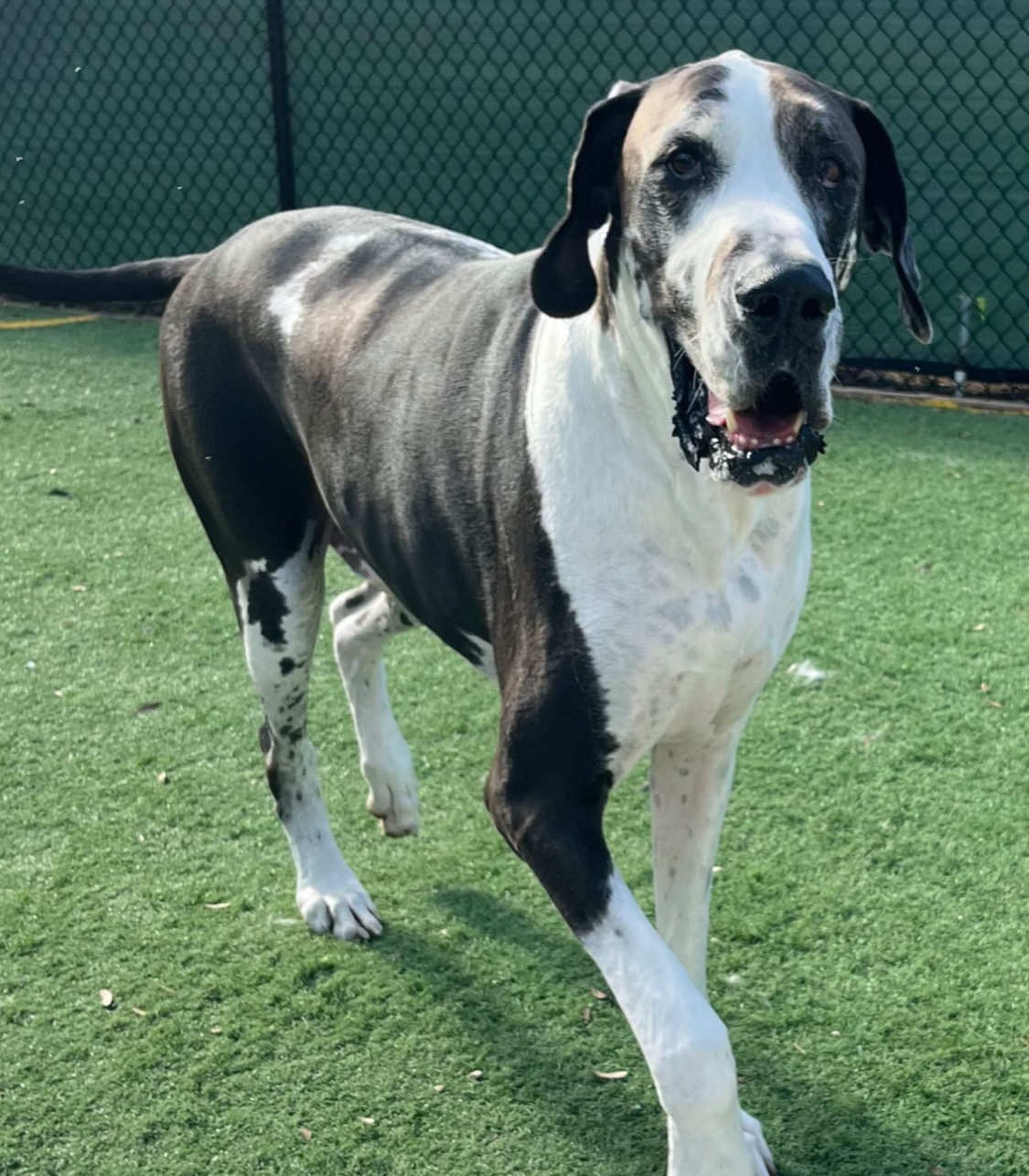
Tucker the Great Dane got to Keep His Legs with Integrative Treatment for Bone Cancer.
Despite everything, he had already lived beyond the typical expectations of an “untreated” osteosarcoma diagnosis, and he did so with a quality of life that never would have been possible had we immediately pursued amputation and aggressive treatment back in February.
We lost Tucker just a few months after the biopsy.
But what matters most to us—and what we hope others can take from his story—is how he lived in that time.
He wasn’t defined by a diagnosis. He wasn’t limited by fear. He was given the chance to keep being himself—to run, to play, to go to daycare, and to simply enjoy his life.
Choosing a holistic path wasn’t about rejecting conventional medicine. It was about asking whether the most aggressive option was the right one in that moment—and being open to another way.
Working with Dr. Truli gave us that perspective. She helped us slow down, look at the full picture, and support Tucker in a way that honored both his body and his quality of life.
Great Danes already have shorter lives—it’s never long enough—but the time we did have with Tucker was full of life, joy, and the things he loved most.
That is something we will always be grateful for.
-Story written and submitted by our guest author, Tucker’s mom, Angela Medlar.


Comments are closed.